Language evolves at an astonishing pace online. If you have spent five minutes scrolling through TikTok, reading Instagram comments, or looking at group chats, you have probably seen the word twin used in a way that has nothing to do with biological siblings.
Understanding digital linguistics requires looking beyond standard dictionary definitions. When someone calls you their twin online today, they are not asking about your family tree. They are extending a specific type of social connection unique to modern internet culture.
Decoding modern slang can feel like learning a completely new language. This guide breaks down the cultural roots, emotional nuances, and exact usage of the term so you can navigate digital conversations with confidence.
Understanding the Shift in Digital Communication
Language used to change slowly across regions over decades. Today, a single viral video can alter global vocabulary overnight.
People search for this term because the context often feels confusing. You might post a photo of your outfit and see three different comments calling you twin from people you have never met in real life.
Why the Confusion Happens
The confusion usually stems from taking the word literally. Traditional English defines a twin as one of two offspring produced in the same pregnancy.
In modern slang, the word shifts from a biological fact to an emotional statement. It bridges the gap between basic friendship and deep personal alignment.
Resolving the Ambiguity
When someone uses the term slang-wise, they are highlighting an instant connection. They are pointing out shared tastes, matching vibes, similar outfits, or identical reactions to a situation.
It strips away the formal barriers of communication. It creates immediate warmth between two people online.
Twin Mean in Slang – Quick Meaning
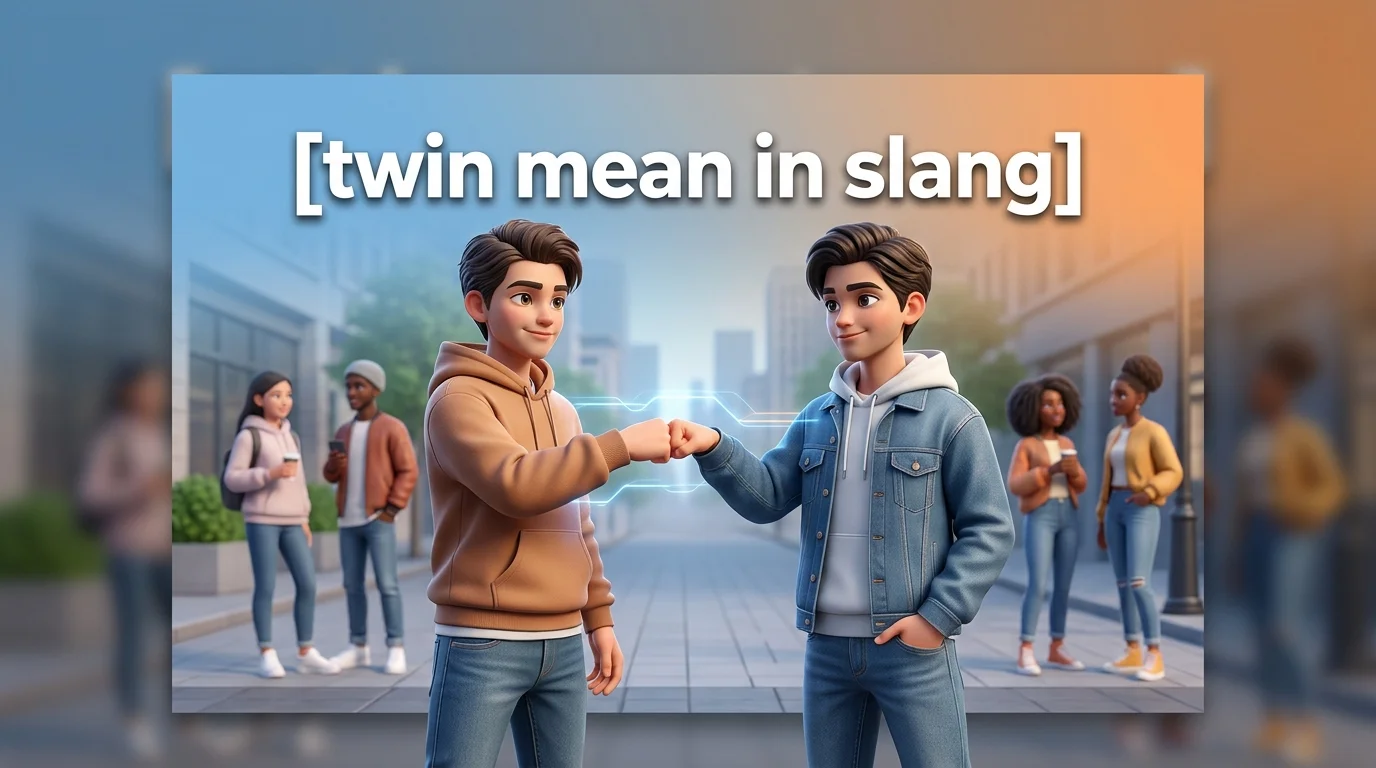
In contemporary slang, twin refers to a best friend, an extremely close companion, or someone who shares identical tastes, attitudes, or appearances with you. It is the ultimate compliment of alignment.
Core Elements of the Term
- Ultimate Validation: Calling someone your twin means you approve of their style, opinion, or behavior completely.
- Instant Chemistry: It signifies that two people think alike or operate on the same wavelength.
- Visual or Behavioral Matching: Used when two people accidentally wear the same outfit or react identically to news.
“Just bought the same jacket as my twin without even asking her first!”
“You got a 90% on the test too? That’s really my twin.”
“Happy birthday to my twin, stay solid forever!”
Origin & Background
Slang rarely appears out of nowhere. It builds on years of cultural history, regional dialects, and musical influences before entering the mainstream digital lexicon.
Cultural Roots in AAVE
The slang usage of twin originates primarily within African American Vernacular English (AAVE). Long before it flooded global social media feeds, urban communities used it to describe deep bonds between trusted friends.
It carried a weight similar to brother or sister. It implied absolute loyalty and shared identity.
Music and Hip-Hop Expansion
Rappers and hip-hop artists played a massive role in pushing the term into mainstream culture. Atlanta hip-hop artists, in particular, popularized using the word as a casual term of endearment for close partners and crew members.
When tracks featuring the phrase topped global charts, listeners worldwide adopted the term into their daily vocabulary.
The Social Media Explosion
Platforms like TikTok, Twitter (X), and Instagram accelerated the term’s spread. Meme culture turned twin into a universal reaction.
Users began posting videos comparing their habits, fashion choices, and daily routines with their friends. The word quickly transitioned from regional slang to a global digital staple.
Real-Life Conversations
Seeing how slang functions in actual text messages helps clarify its tone and context. Here are realistic examples across popular platforms.
WhatsApp Text Message
Person A: Are you going to order the matcha latte or the iced coffee?
Person B: Already ordered the iced coffee with oat milk.
Person A: No way, I just got the exact same thing. You really my twin!
Instagram DM
Person A: Loved that outfit you posted today, where’d you get the sweater?
Person B: Thanks twin! Got it from that small boutique downtown.
TikTok Comments Section
Person A: Why do I always sleep for 10 hours and still wake up exhausted? 😴
Person B: Twin really living the exact same life as me fr 💀
iMessage Group Chat
Person A: Should we cancel tonight and just order pizza?
Person B: I was literally typing that exact sentence right now.
Person A: Great minds! Twin energy is real tonight.
Emotional & Psychological Meaning
Slang is rarely just about words. It satisfies deeper psychological needs for connection, identity, and belonging in an increasingly digital world.
The Desire for Mirroring
Human beings naturally seek validation through mirroring. When someone calls you their twin, they are psychology validating your identity.
It sends a subconscious signal that you are not alone in your preferences, quirks, or opinions. It reinforces social ties without requiring overly emotional or vulnerable conversations.
What it Reveals About Modern Bonding
Modern communication values efficiency and emotional punch. Older generations might write a long message expressing appreciation for a friend.
Gen Z and Millennials condense those feelings into a single word. Twin communicates warmth, affection, and loyalty instantly.
Real-World Example
A few months ago, a friend and I showed up to an event wearing identical vintage leather jackets completely unprompted. We hadn’t talked about our outfits beforehand.
Instead of feeling embarrassed about wearing the same thing, my friend laughed, snapped a photo, and posted it with the caption “Twin opened my closet today.”
That simple interaction transformed an awkward moment into a moment of shared joy and connection.
Usage in Different Contexts
Context determines whether using slang sounds natural or completely inappropriate. Knowing where to use the word keeps your communication effective.
Social Media Platforms
On platforms like Instagram, TikTok, and Snapchat, the word is extremely common. You can use it in comment sections, captions, and direct messages freely. It fits casual visual content perfectly.
Friends & Personal Relationships
Among friends, using the term builds rapport. You can call your best friend your twin, or use it casually with a new acquaintance who shares your specific interests. It creates an atmosphere of warmth.
Professional & Work Settings
Avoid using this slang in professional emails, client meetings, or formal presentations. Calling your supervisor or client twin comes across as overly familiar and unprofessional.
Stick to standard terms like colleague, partner, or teammate in workplace environments.
When NOT to Use It
While the phrase is generally friendly, misuse can lead to awkward moments or misunderstandings.
Serious or Solemn Occasions
Never use casual slang during serious conversations, disagreements, or grieving moments. Dropping internet slang during a solemn discussion undermines the empathy you are trying to express.
Formal Communications
Academic essays, cover letters, legal documents, and official announcements should never contain casual internet slang. It damages your authority and professional credibility.
Forced Connections
Do not force the term on someone you barely know or who maintains a strict personal boundary. If the other person prefers formal interaction, using intimate slang can feel aggressive or disingenuous.
Common Misunderstandings
Misinterpreting slang happens easily when words carry multiple meanings across different generations.
Literal Family Assumptions
Older generations often take the word literally and assume two friends are actually biological twins. This misinterpretation frequently causes funny confusions in family group chats.
Misreading Intentional Satire
Internet users sometimes use the word sarcastically when two people act completely opposite. Missing the sarcastic tone can lead to confusing social interactions.
Equating It With Romantic Intent
Calling someone your twin usually implies platonic closeness, not romantic interest. Conflating it with flirting can cause awkward relational misunderstandings.
Slang Comparison Table
| Term | Tone | Closeness Level | Primary Context |
| Twin | Casual, Warm, Trendy | Very High | Identical tastes, close friends, social media |
| Bestie | Playful, Expressive | High | Close friends, mainstream digital chat |
| Bro / Bruh | Casual, Neutral | Medium | Casual acquaintances, general reactions |
| Main | Romantic or Platonic | High | Priority partner or primary best friend |
| Opp | Hostile, Competitive | None (Rival) | Enemies, competitors, opposition |
Key Insight
While terms like bestie focus heavily on friendship longevity, twin specifically emphasizes shared identity, identical choices, and synchronized energy between two people.
Variations and Types of Twin Slang
Internet subcultures continuously create new variations of popular terms. Here are the most common forms you will encounter online.
1. Twinny
A playful, affectionate diminutive used mostly between female friends or in cute contexts.
2. Twinnin’ (Twinning)
An action verb used when two people dress alike, post similar content, or perform the same action simultaneously.
3. Twinski
A slang variation adding a stylistic suffix, commonly used in urban casual conversations.
4. Evil Twin
A playful phrase used for a friend who encourages your bad habits, funny chaos, or impulsive shopping.
5. Twin Energy
Refers to the matching vibe, mood, or aura shared between two people in a room.
6. Literal Twin
Used online to clarify that two people are actually biologically related, separating it from the slang meaning.
7. Twin Fr (Twin For Real)
An emphatic statement used to confirm deep agreement or complete alignment with someone else’s statement.
8. My Twin
A possessive form showing affection and social solidarity within close group chats.
How to Respond When Someone Calls You Twin
Responding to internet slang depends heavily on your comfort level and personal communication style.
Casual Replies
- “Always, you already know!”
- “Matching energy as usual.”
- “That’s real, stay safe!”
Funny Replies
- “Don’t insult yourself like that!”
- “Who copied who today?”
- “Separated at birth honestly.”
Mature Replies
- “Appreciate you!”
- “Always good connecting with you.”
- “Glad we’re on the same page.”
Respectful Replies
- “Thanks! Right back at you.”
- “Always love the good vibes.”
Regional & Cultural Usage
The global nature of the internet means slang travels across borders quickly, but its adoption varies by culture and generation.
Western Internet Culture
In North America, the UK, and Australia, the term is widely integrated into mainstream youth culture. It moves seamlessly between online discourse and real-life casual conversations.
Asian & Middle Eastern Digital Spaces
In international English-speaking circles, young populations adopt the phrase through social media trends. However, its usage remains largely restricted to digital chats rather than spoken daily dialects.
Generational Differences
- Gen Z: Uses the term naturally across daily spoken English and digital text messaging.
- Millennials: Understand the term clearly, using it primarily online or in playful contexts.
- Gen X & Boomers: Tend to interpret the word literally as a family relation.
Is It Safe for Kids?
From a safety and appropriateness perspective, twin is entirely benign. It carries no innately offensive, sexually explicit, or hateful connotations.
It is simply a modern digital term of endearment that promotes friendship and social connection. Parents do not need to worry when seeing this term in their children’s message logs.
Frequently Asked Questions
What does twin mean when a girl calls you that?
When a girl calls you twin, she is expressing that she feels a strong platonic connection, shares your taste, or relates deeply to your personality.
Is calling someone twin flirting?
Generally, no. The term usually signifies platonic closeness, solidarity, or shared humor rather than romantic interest.
What is the difference between twin and bestie?
Twin emphasizes shared identity, identical style, or matching reactions, whereas bestie simply highlights a long-standing close friendship.
Where did the slang term twin come from?
The phrase originated in African American Vernacular English (AAVE) and was popularized globally through hip-hop culture and social media platforms like TikTok.
Can you call a guy your twin?
Yes, the term is completely gender-neutral and can be used by anyone regardless of gender.
Final Thoughts
Language reflects our ongoing search for human connection. While internet slang shifts rapidly, terms like twin stay popular because they satisfy a genuine social need for validation and belonging.
Using modern slang correctly is not about forcing internet jargon into every sentence. It is about understanding the subtle ways people express friendship, loyalty, and humor in the digital age.
Next time someone comments on your post calling you their twin, take it as the compliment it is meant to be. You have found someone who shares your wavelength in a crowded digital space.