Decoding the Slang: What Does Slime Really Mean?
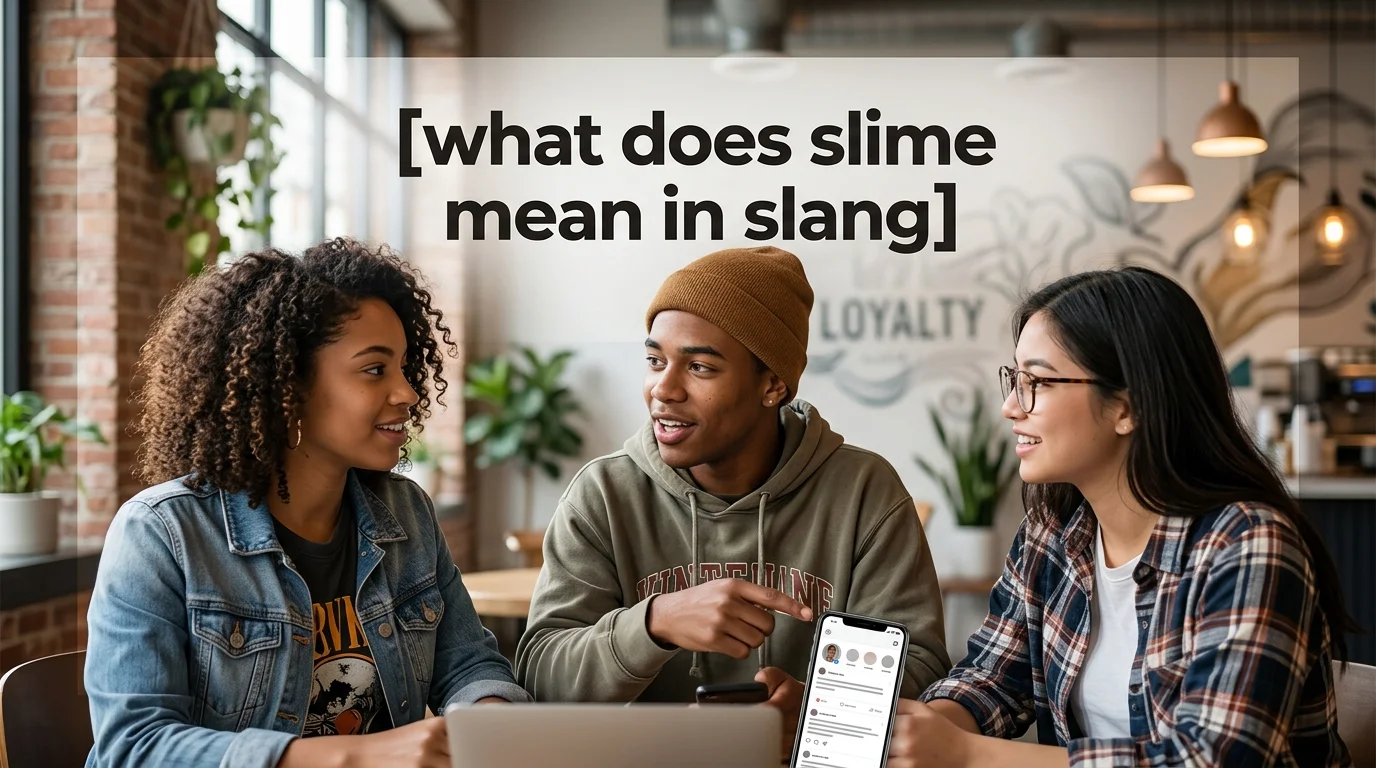
Language moves fast, especially when internet culture and music collide. If you have scrolled through TikTok comments, checked your Instagram DMs, or listened to modern hip-hop, you have likely seen people calling each other “slime.”
At first glance, the word feels unpleasant. It brings up mental images of sticky green goop, creepy creatures, or sneaky backstabbers. But context is everything in modern slang.
People search for this term because the word has flipped its traditional meaning completely. Understanding this phrase bridges the gap between older language habits and current pop culture, saving you from awkward misunderstandings.
What Does Slime Mean in Slang? A Quick Definition
In modern hip-hop culture and street slang, slime is a term of endearment used to describe a close friend, brother, or trusted partner. It is equivalent to calling someone “bro,” “homie,” “dude,” or “bestie.”
Slime = A close, trusted friend or brother-figure.
When someone calls you their slime, they are expressing affection, loyalty, and deep trust.
Quick Everyday Examples
“What’s good, slime? Haven’t seen you in a minute.”
“That’s my real slime right there, he pulled up for me when nobody else did.”
“Happy birthday to my slime! Real loyalty forever.”
Origin and Background: How the Word Evolved
From the Streets of Harlem to Atlanta
The slang term did not originate on TikTok. Its roots run deep within American rap culture, stretching back over two decades.
In the late 1990s and early 2000s, Harlem rapper Vado and Dipset member Jim Jones began popularizing the term in New York. They used it to mean “Street Life Intelligence Models Everything.” It served as an acronym for surviving harsh urban environments alongside people you trusted completely.
S.L.I.M.E. = Street Life Intelligence Models Everything
Young Thug and the Atlanta Trap Era
While New York laid the foundation, Atlanta rapper Young Thug brought the term into the global mainstream around 2014. He adopted the word as a central part of his personal brand, language, and aesthetics.
Young Thug released projects like Slime Season and referred to his entire circle as his slimes. Through his influence, the term transformed from regional street jargon into global youth terminology.
Social Media Amplification
Once the Atlanta music scene normalized the word, platforms like Twitter, Instagram, and TikTok picked it up. Teenagers and young adults worldwide started using it in captions, text threads, and comment sections to signal camaraderie.
Real-Life Conversations: Seeing Slime in Action
To truly grasp how people talk today, look at how the word operates in real text messages and online interactions.
Conversation 1: WhatsApp Group Chat
Jordan: Yo, who’s riding with me to the game tonight?
Malik: You already know I’m in, slime. Pick me up at seven.
Jordan: Say less, I got you.
Conversation 2: Instagram DM
Maya: Thanks for holding down the booth for me today while I ran late!
Devon: Don’t even stress about it, slime! We always look out for each other.
Conversation 3: TikTok Comment Section
User A: (Posts a video of their best friend helping them repair a car)
User B: Real slime behavior right there 🐍💚
User A: You know how we coming! 💯
Conversation 4: Quick iMessage Exchange
Liam: Late night emergency. Can I crash on your couch?
Noah: Door is unlocked, slime. Walk right in.
Emotional and Psychological Meaning
Expressing Loyalty in a Cold World
Slang allows people to create an internal bond within a group. Calling someone “slime” goes beyond a surface-level greeting like “mate” or “friend.”
It carries an underlying message of protection. By using a word traditionally linked to something slippery or deceptive, the speakers flip the meaning, creating a private code that signals deep, tested loyalty.
Why Young People Prefer It
Modern communication relies heavily on informal, affection-based language that does not sound overly emotional or formal. Terms like “my beloved friend” sound stiff to younger generations. “Slime” provides a way to express strong emotional affection while keeping a cool, relaxed tone.
A Personal Observation on Tone Shift
Working as a communication consultant, I once observed a high school mentor session where a teenager told his mentor, “You’re my slime, man.” The mentor looked hurt, assuming he had just been called a sneaky liar.
I stepped in to explain that the student had actually just paid him the highest possible compliment regarding trust. That small moment highlighted how much real-life intent can get lost across generational gaps.
Usage in Different Contexts
Social Media
On apps like TikTok and Instagram, you will often see the word paired with the snake emoji (🐍) or green heart emoji (💚). It acts as a digital sign of approval on posts celebrating friendship.
Friends and Casual Relationships
Use this word freely with close peers, workout partners, or childhood friends. It fits naturally into casual greetings, group chats, and celebratory messages.
Professional and Academic Settings
Do not use this word at work, in job interviews, or in academic papers. Employers and superiors will likely interpret it literally or view it as overly casual and unprofessional.
Casual vs. Serious Tone Matrix
| Context | Appropriateness | Recommended Alternative |
| Texting a close friend | Perfect | Bro, Man, Homie |
| Commenting on a post | Perfect | Bro, King, Legend |
| Emailing a boss | Inappropriate | Best regards, Sincerely |
| Family dinner (grandparents) | Confusing | Friend, Buddy |
When NOT to Use It
Misreading Your Audience
Using street slang without understanding its cultural background can sound unnatural. If the phrase does not match your usual speaking style, forced usage can alienate the listener.
Formal Communications
Avoid using this term in any formal context:
- Professional emails or corporate messages
- Courtrooms or legal proceedings
- Academic writing or essay submissions
- First dates (unless you both share the same slang vocabulary)
Cultural Sensitivity
Understand that “slime” originated within Black American culture and hip-hop communities. Using it mockingly or exaggeratedly can feel disrespectful to the culture that created it.
Common Misunderstandings
Misunderstanding 1: Thinking It Is an Insult
Older generations often confuse “slime” with traditional terms like “sleezebag” or “snake.” While calling someone “a slime” in 1980 meant calling them untrustworthy, today’s slang flips that completely. Context tells you everything.
Misunderstanding 2: Tone Confusion
Saying “What up, slime?” with a warm, relaxed voice is a greeting. Saying “He acts real slimy” uses the traditional adjective meaning deceptive. Pay attention to whether the word is used as a noun for a person or an adjective for behavior.
Comparing Slime to Related Slang Terms
| Slang Term | Core Meaning | Tone / Vibe | Opposite Term |
| Slime | Close friend, loyal partner | Urban, affectionate, cool | Opp (Enemy) |
| Bro / Bruh | Friend, brotherly figure | Universal, casual | Stranger |
| Bestie | Close female/male friend | Upbeat, bright, playful | Rival |
| Fam | Person like family | Warm, protective | Outsider |
| Main Squeeze | Romantic partner | Affectionate, romantic | Ex |
Key Insight
While terms like “bro” or “fam” focus on shared connection, “slime” specifically highlights deep loyalty earned through shared experiences.
Variations and Related Phrases
1. Slimeball
A close friend (can also be used ironically in a lighthearted, teasing way).
2. Sliming out
Backstabbing someone (the inverse usage of the root word).
3. Slime Love All the Time (SLATT)
A popular phrase originating from rapper Young Thug, emphasizing non-stop love for one’s core crew.
4. Real Slime
Someone whose loyalty has been proven through tough situations.
5. Slime Language
A phrase popularized by hip-hop music referring to the private dialect shared by close friends.
6. Free Slime
A phrase used on social media to demand the release of an incarcerated friend or favorite artist.
7. Wipe his nose (Slime phrase)
A related hip-hop phrase that means taking care of business or taking out an opponent.
8. Big Slime
A title given to an older, respected leader within a friend group.
9. Slime Twin
A term reserved for a best friend who feels like a twin soul.
How to Respond When Someone Calls You Slime
Casual Replies
- “What’s good, bro?”
- “Always, man!”
- “You already know!”
Funny Replies
- “Did you just call me goop?”
- “💚🐍 You know it!”
- “Sliding through!”
Mature Replies
- “I appreciate you, man.”
- “Thanks, brother.”
- “Always here for you.”
Respectful Replies
- “Right back at you.”
- “Nothing but love, brother.”
Regional and Cultural Differences
Western Culture (US & UK)
In North America and the UK, the word stays tied to rap music, trap subculture, and urban youth dialects.
Asian Culture
In Asian internet circles, youth borrow the phrase from American rap culture. However, older generations will interpret it literally as dirty or sticky.
Middle Eastern Culture
Globalized youth in urban hubs like Dubai use the term through exposure to gaming and hip-hop culture, though local terms like habibi remain far more common.
Generational Differences
Gen Z / Gen Alpha: "Slime" = Best friend, brotherly connection.
Millennials: Recognize it from hip-hop, use it selectively.
Gen X / Boomers: Interpret it literally as a sticky substance or a dishonest person.
Is It Safe for Kids to Use?
Parents often worry when they hear their children using new slang words. The good news is that calling someone “slime” is generally harmless.
It does not carry inherently explicit, sexual, or violent meanings on its own. It functions as an everyday term for a best friend among middle schoolers, high schoolers, and young adults.
However, parents should make sure children understand tone and context so they refrain from using street slang with teachers or in formal environments.
Frequently Asked Questions
Does slime mean snake?
While the snake emoji (🐍) often accompanies the word in texts, calling someone “my slime” means they are your trusted friend, not a backstabber.
Is slime a bad word?
No, it is not a curse word or vulgar phrase. It is informal street slang used as a positive greeting among friends.
What does SLATT mean in text?
SLATT stands for “Slime Love All the Time.” Rapper Young Thug popularized the acronym to express total loyalty to his friends.
Can you call a girl slime?
Yes, while used more often between male friends, anyone can call a close female friend their slime to show loyalty.
What is the difference between slimy and slime?
Calling someone “a slime” or “my slime” is a compliment meaning friend. Calling someone’s behavior “slimy” means they are untrustworthy and acting like a snake.
Summary
Language keeps moving, transforming negative words into powerful symbols of loyalty. “Slime” has grown from Harlem street culture and Atlanta trap music into a worldwide slang greeting that signals trust and brotherly love.
Understanding these subtle shifts in language helps you stay connected with modern internet culture. Next time someone drops a green heart or calls you their slime in a text thread, take it as a compliment—you have earned a spot in their inner circle.