If you have spent any time scrolling through short-form video feeds or listening to kids chat lately, you have probably stumbled across one word that leaves everyone over twenty scratching their heads: skibidi.
It pops up in captions, bursts out during video game livestreams, and gets tossed around in hallway conversations. One second it sounds like a compliment, and the next, it seems like a totally random nonsense noise.
This word has left millions of parents, educators, and older siblings feeling completely out of the loop. They search for its meaning because standard dictionaries simply cannot keep up with how fast digital culture moves.
This guide breaks down everything you need to know about this internet phenomenon. You will learn where it came from, how its meaning changes based on context, and how to use it without sounding completely out of touch.
Skibidi Mean Slang – Quick Meaning
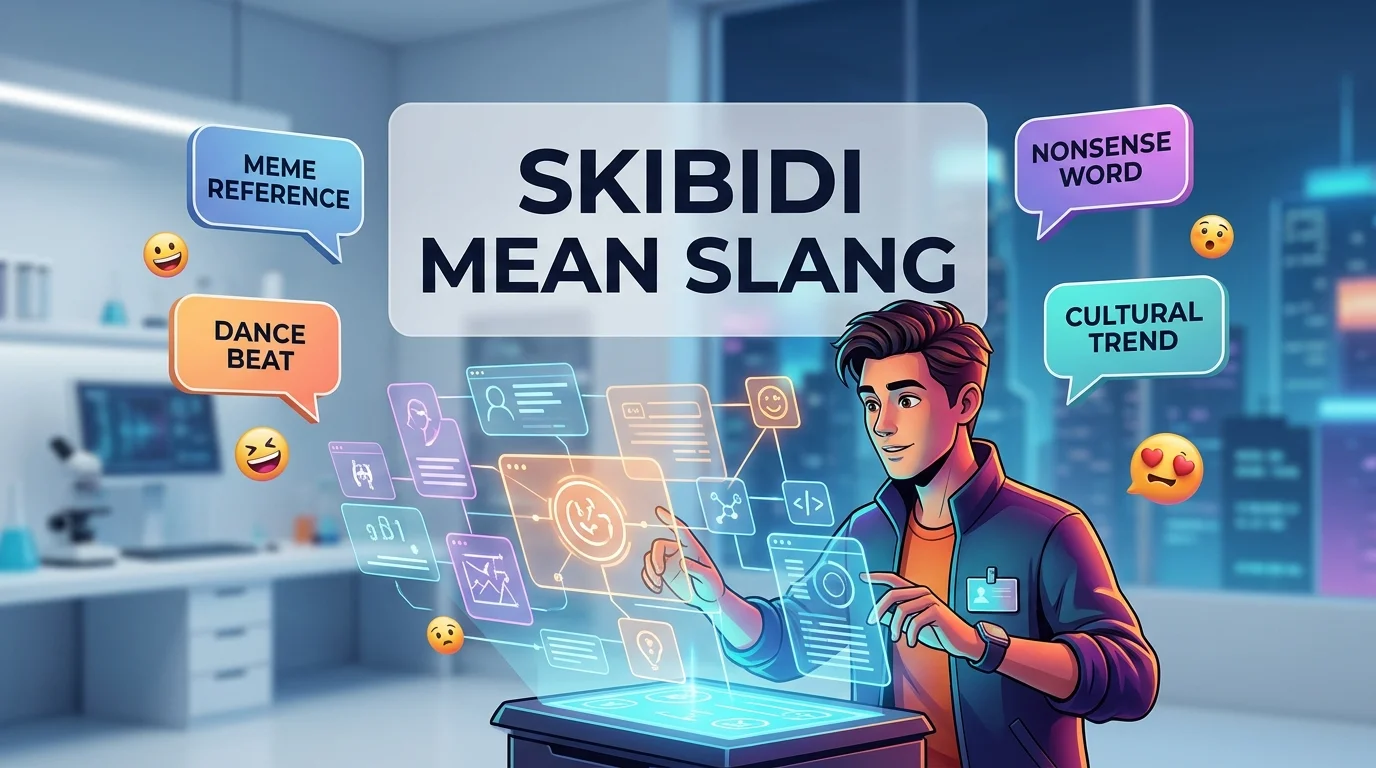
To understand this term, you have to throw out conventional grammar rules. It does not have one fixed dictionary definition; instead, it acts like a linguistic chameleon.
Depending on how someone says it, the word can mean “cool,” “bad,” “weird,” or simply act as a hype modifier to make another word sound more intense.
Defining the Term
At its core, the slang functions as an adjective or an intensifying prefix. Most of the time, younger speakers use it to mean cool, awesome, or impressive.
However, because internet humor relies heavily on irony, people also use it to describe something bizarre, chaotic, or low-quality.
- “That new game skin is totally skibidi.” (Meaning: That game skin is really cool.)
- “Why are you acting so skibidi right now?” (Meaning: Why are you acting so weird or chaotic?)
- “He has that skibidi toilet energy.” (Meaning: He is being strange or unpredictable.)
Origin & Background
Understanding this bizarre term requires looking back at how viral internet culture mutated over the past few years. It did not originate in a classroom or a traditional music studio; it was born in the deep waters of digital remix culture.
Where It Came From
The phonetic root of the word actually traces back to music tracks that used gibberish scat-singing. A Turkish creator named Yasin Cengiz popularized a belly-dancing meme set to a remixed song featuring the bouncy phrase “brr skibidi dop dop.”
The sound was already wildly popular when an animator named Alexey Gerasimov, known online as DaFuq!?Boom!, used it in early 2023. He created a short, surreal animated video using Source Filmmaker featuring a human head popping out of a toilet, singing the bizarre tune.
The Social Media Explosion
That single bizarre video turned into a massive, multi-episode animated YouTube series called Skibidi Toilet. The storyline escalated into an epic war between head-in-toilet monsters and cyborg humanoids with cameras and televisions for heads.
Children and young teens consumed these short, action-packed episodes by the billions. As the series exploded across TikTok, YouTube Shorts, and Roblox servers, the central word broke free from the show and became everyday playground vocabulary.
How the Meaning Evolved
Initially, kids used the term strictly as a direct reference to the animated series or its catchphrase. Over time, Gen Alpha stripped away the original context entirely.
The word morphed into a standalone slang term used to modify other words, mirror internet cool-factor, or express ironic humor. It went from a specific pop-culture reference to a foundational building block of modern youth slang.
Real-Life Conversations
Seeing internet jargon laid out in plain text can still feel confusing. Reading realistic digital exchanges helps clarify how younger generations actually use this word in daily life.
WhatsApp Group Chat
Person A: Are you guys hopping on Fortnite tonight for the new update?
Person B: Yeah, the new battle pass drops in an hour.
Person A: Nice, those new character skins look genuinely skibidi.
Instagram DM
Person A: Look at this vintage leather jacket I found at the thrift shop today.
Person B: Yo, that is actually so skibidi! Fits you perfectly.
Person A: Thanks! Paid ten bucks for it. Absolute steal.
TikTok Comment Section
Person A: Bro tried to do a backflip off the park bench and landed straight in the bushes 💀
Person B: Ultimate skibidi moment right there. Is he even okay?
Text Message Between Siblings
Person A: Can you bring my charger downstairs?
Person B: Only if you ask nicely and give me half your pizza.
Person A: You are being so skibidi bad right now. Just bring it!
Emotional & Psychological Meaning
Beyond the silly sound of the word lies a deeper look at how modern youth culture bonds online. Slang is rarely just about words; it is primarily about belonging.
What Emotion It Expresses
Using this word usually conveys playful excitement, shared absurdity, or modern digital approval. It captures a specific brand of chaotic humor that feels unique to kids who grew up entirely in the smartphone era.
When a teenager calls something by this name, they are often expressing a lighthearted nod to internet culture. It carries a sense of ironic detachment, showing they do not take themselves or the conversation too seriously.
Why People Use It
Kids use social media trends to create an insider language that separates them from adults and older generations. It acts as a digital secret handshake.
By using words that sound completely ridiculous to parents, youth establish their own distinct cultural identity. It creates an instant sense of community among peers who instantly get the joke.
A Real-World Perspective
A middle school teacher recently noticed a shift during group presentations. A student finished showing a impressive science project, and a classmate shouted, “That powerpoint was total skibidi!”
The room did not burst into laughter; instead, everyone simply nodded in agreement. The teacher realized the word was no longer a joke from a meme video. It had become a genuine term of high praise among twelve-year-olds.
Usage in Different Contexts
Context changes everything when dealing with highly flexible slang. Knowing where a word fits—and where it falls flat—is key to understanding digital discourse.
Social Media Platforms
On TikTok, YouTube, and Instagram, the term thrives in comment sections and video captions. Creators use it freely to capture fast attention, boost algorithm engagement, and signal that their content aligns with current meme trends.
Friends and Casual Relationships
Among close peers and classmates, the word acts as everyday banter. Friends drop it into casual conversations to compliment an outfit, laugh at a silly mistake, or add emphasis to an exciting story.
Work and Professional Settings
This term has zero place in a professional environment. Using it in a corporate email, job interview, or client presentation will cause confusion and make you look unprofessional.
Casual vs. Serious Tone
The word is fundamentally lighthearted. Attempting to use it during a serious conflict, an emotional heart-to-heart, or a solemn occasion will come across as disrespectful or out of touch.
When NOT to Use It
Knowing when to keep internet slang out of your vocabulary is just as important as knowing what it means. Using niche slang in the wrong environment can derail your communication entirely.
Inappropriate Contexts
Avoid using this word in formal writing, academic papers, professional workplace messaging, or serious family discussions. It immediately lowers the tone of formal conversations.
Cultural Sensitivity and Audience
Older adults and non-digital natives will have no idea what you are talking about. Using heavy internet jargon with people who do not spend time on social media creates an instant communication barrier.
Risk of Misunderstanding
Because the word can mean something positive, negative, or just plain weird, using it in important situations risks confusing your listener. Clear communication requires precise language, which meme words rarely provide.
Common Misunderstandings
Because this slang evolved so rapidly across short-form media, several misconceptions surround its actual meaning and purpose.
What People Get Wrong
Many adults assume the word is inherently vulgar, inappropriate, or harmful. In reality, the word itself is completely clean nonsense language. The confusion stems entirely from its weird, surreal origins.
Tone Confusion
Outsiders often struggle to tell if the word is being used as a compliment or an insult. The key lies almost entirely in vocal tone, body language, and the overall context of the sentence.
Literal vs. Figurative Meaning
There is no literal meaning to decode. Trying to analyze the word grammatically will only leave you more confused. It exists purely as a figurative vibe check and an emotional amplifier.
Slang Comparison
To see how this word functions alongside other popular internet terms, take a look at this comparative breakdown:
| Slang Term | Primary Meaning | Tone | Origin / Era |
|---|---|---|---|
| Skibidi | Cool, weird, or exciting | Playful, ironic, chaotic | Gen Alpha (2023–Present) |
| Rizz | Charm, charisma, seduction | Confident, casual | Gen Z (2022–Present) |
| Gyatt | Expression of shock or approval | Exaggerated, loud | Gen Z / Twitch Culture |
| Cap | A lie or falsehood | Dismissive, direct | Gen Z / Hip-Hop Culture |
| Lit | Amazing, highly energetic | Enthusiastic, positive | Millennial / Gen Z |
| Sus | Suspicious or untrustworthy | Cautious, sarcastic | Gen Z / Gaming Culture |
Key Insight
Internet terms constantly shift roles, but this specific word stands out because it can replace almost any adjective in a sentence without breaking the emotional rhythm of youth speech.
Variations and Types
Like most viral slang, the core term has spawned dozens of spin-offs and compound phrases. Here are the most common variations you might encounter online:
- Skibidi Toilet: The original animated meme series featuring heads inside toilets, often used to refer to surreal internet culture.
- Skibidi Rizz: An exaggerated way to describe someone who has incredibly smooth charm or social skills.
- Skibidi Ohio: A combined meme term used to describe a place or situation that is insanely chaotic and bizarre.
- Skibidi Bop: A musical or rhythmic variation directly referencing the original viral Turkish dancing song.
- Skibidi Gyatt: A compound slang phrase used to express dramatic shock or high enthusiasm about someone’s appearance.
- Skibidi Sigmas: A satirical label for someone who acts like a cool, independent, smooth operator.
- Skibidi Energy: A phrase describing someone who brings wild, chaotic, or intense excitement into a room.
- Ultra Skibidi: A multiplier phrase used when standard compliments are not strong enough to describe something amazing.
- Skibidi Fanum Tax: A joke phrase combining two huge Gen Alpha memes to describe a friend stealing your food.
- Fake Skibidi: A term used to call out someone who is pretending to be cool or trying too hard to fit in.
How to Respond When Someone Uses It
If a younger family member or online gamer drops this word in your direction, you do not need to freeze up. Here is how you can handle it depending on the mood you want to set.
Casual Replies
- “Fair enough, glad you think so!”
- “You know it!”
- “Always keeping things interesting.”
Funny Replies
- “Did you just cast an internet spell on me?”
- “My rizz is simply too high for this conversation.”
- “I am way too old to understand what you just said.”
Mature Replies
- “I take that as a compliment!”
- “Glad we are on the same page.”
- “Thanks, I think!”
Respectful Boundaries
- “Let us speak in plain English for a second.”
- “Keep the internet speak for your friends, okay?”
- “I hear you, but tell me what you actually mean.”
Regional & Cultural Usage
The spread of global social media algorithms means youth culture is more unified across continents than ever before, though small regional differences still exist.
Western Internet Culture
In North America, Europe, and Australia, the term functions primarily as general youth slang, heavy irony, and a core piece of gaming culture across Roblox and Fortnite communities.
Asian and Middle Eastern Digital Spaces
In regions across Southeast Asia and the Middle East, the term remains heavily tied to the original YouTube animation series and short-form dancing memes rather than general conversational speech.
Generational Divide: Gen Z vs. Gen Alpha
This word serves as the definitive boundary marker between generations. While Gen Z popularized terms like rizz, cap, and no shot, Gen Alpha claims this phrase as their own signature linguistic baseline.
Is It Safe for Kids?
Parents often worry when their children start repeating unfamiliar words endlessly. Fortunately, the term itself is completely harmless nonsense language.
It contains no profanity, sexually explicit meaning, or inherently dangerous themes. It is simply the modern equivalent of 1990s catchphrases like “cowabunga” or “eat my shorts.”
However, because the slang stems from animated YouTube videos featuring mild action violence and surreal monster imagery, parents of very young children may want to monitor the specific media content their kids watch online.
Frequently Asked Questions
Is skibidi a real word in the English dictionary?
No, it is not an official English dictionary word. It is a modern internet slang term born from social media memes and youth culture.
Is skibidi a bad or inappropriate word?
No, the word is not profane or inappropriate. It is clean slang used primarily by kids and teens to describe things that are cool, weird, or funny.
What generation uses skibidi the most?
Generation Alpha (people born from 2010 onwards) uses this term most frequently, though younger Gen Z members recognize and use it ironically.
Does skibidi mean cool or bad?
It can mean both depending on context. Most often it means cool or impressive, but people also use it sarcastically to describe something strange or chaotic.
Where did the skibidi meme originally start?
The phrase originally came from a viral Turkish music video dance trend before being transformed into the massive Skibidi Toilet animated YouTube series in 2023.
Conclusion
Linguistic shifts move faster today than at any other point in human history. Words that start as silly sound bites in short videos can transform into full-fledged conversational slang overnight.
Understanding these viral terms is less about mastering grammar and more about staying connected to how younger generations express themselves. While the word might sound completely bizarre to adult ears, it represents the playful, creative, and fast-moving nature of modern digital communication.
The next time you hear someone drop this term into a sentence, you do not need to feel confused. You now have the full cultural roadmap behind Gen Alpha’s favorite word.