What Does Region Mean and Why Are You Hearing It Everywhere?
Understanding everyday vocabulary often feels straightforward until a familiar term shifts its context. You might encounter the word “region” in a geography textbook, hear it during a broadcast news segment, or see it pop up in a online forum discussion.
People frequently search for this term because context changes everything. A word can describe physical terrain in one breath and administrative boundaries or digital servers in the next.
Clearing up this confusion helps you communicate clearly. Whether reading policy documents, configuring tech settings, or simply chatting online, knowing what a region truly signifies keeps you grounded.
What Does Region Mean? – Quick Meaning
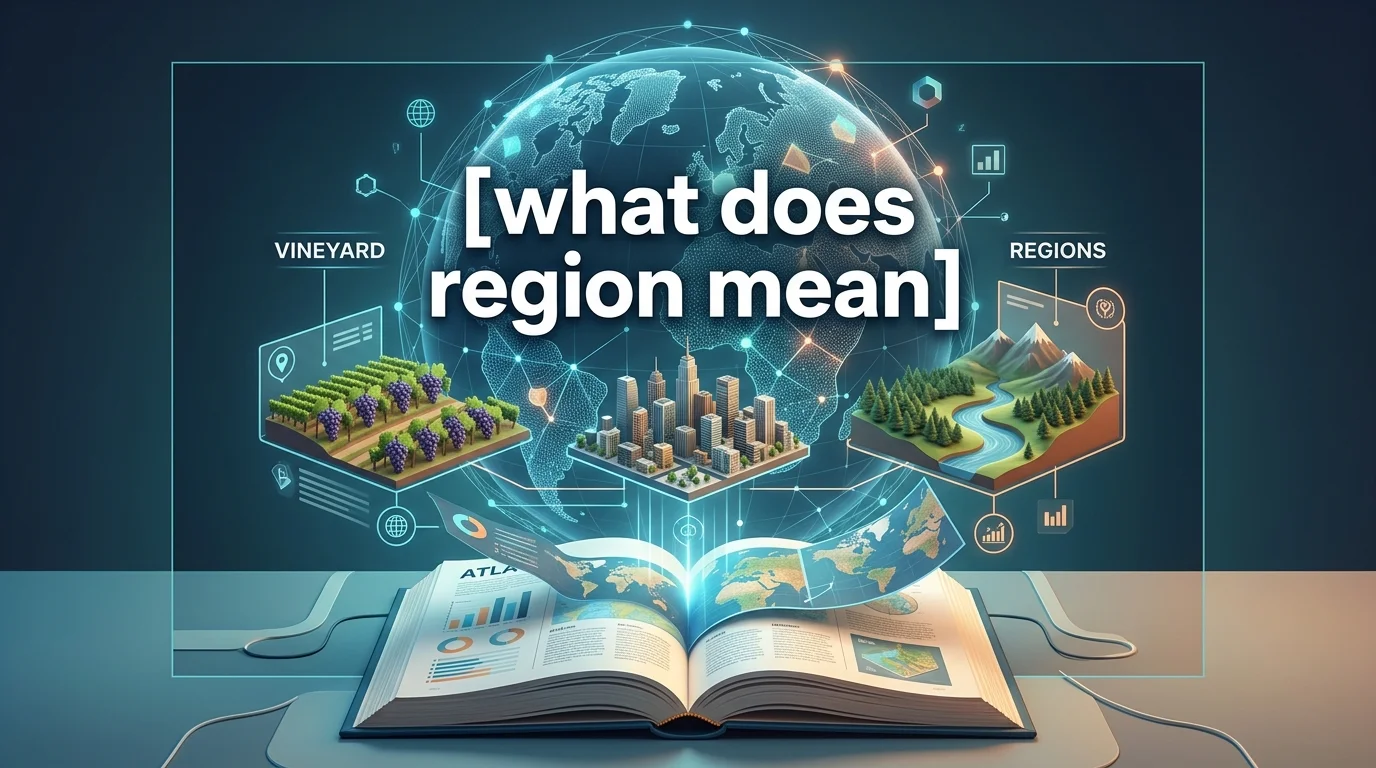
At its core, a region is a distinct area or portion of a larger territory. It is defined by specific unifying characteristics, such as geography, climate, culture, government, or language.
Primary Definitions
- Geographical: An expanse of land possessing common physical features like mountain ranges, coastlines, or ecosystems.
- Administrative/Political: A designated territory governed as an administrative unit, such as a province, state, or district.
- Technical/Digital: A localized group of data centers used by cloud service providers to optimize network speed.
- Anatomical: A specific section or area of the human body, such as the abdominal or thoracic area.
“The agricultural region experienced record rainfall this season.”
“Please select your server region to minimize gaming latency.”
“She felt a sharp, persistent pain in her lumbar region.”
Origin and Background of the Word
The word traces back to the Latin noun regio, which means “direction,” “boundary,” or “district.” That noun derived from the verb regere, meaning “to rule” or “to direct.”
Historical Evolution
Centuries ago, the concept related directly to authority. A ruler’s reach defined their territory. Over time, cartographers and scholars adapted the term to describe natural landscapes independent of political control.
Social Media and Internet Culture
In the digital era, physical distance matters less, yet regional distinctions remain critical. Gaming communities and streaming platforms rely heavily on server territories to group users, sparking frequent online debates about connection speeds and localized content locks.
Real-Life Conversations
Seeing the word used across different communication channels highlights how flexible its daily application can be.
WhatsApp Message
Person A: Why is your shipping fee so high?
Person B: The seller is shipping from a remote region outside the standard delivery network.
Instagram DMs
Person A: Are you going to the music festival this weekend?
Person B: No, it’s blocked for users in my region due to licensing rules.
TikTok Comments
Person A: Your accent sounds super unique! Where are you from?
Person B: Thanks! It’s a very specific dialect from the southern coastal region.
Text Messages
Person A: Did the doctor say what’s wrong with your shoulder?
Person B: Yeah, just muscle tightness in the upper neck region.
Emotional and Psychological Meaning
While “region” sounds like a neutral spatial term, geography deeply impacts human psychology and emotional identity. Place shapes memory, culture, and community bonds.
Boundaries define where we feel at home versus where we feel like visitors. Claiming a specific territory gives people a sense of shared heritage, belonging, and pride.
Years ago, while traveling through a rural mountain district, I asked a local shopkeeper where his neighborhood ended. He smiled, waved his hand toward the ridge, and said, “Where the snow sits past April.” That conversation reminded me that boundaries are often defined by human connection to the land rather than lines on a map.
Usage in Different Contexts
Adapting your tone depends on whether you are talking about global economics, medical symptoms, or personal travel.
Social Media
Online users often talk about localized content, regional accounts, or physical locations when tagging travel photos.
Friends and Relationships
In casual conversation, the word describes general locations without requiring precise addresses, like referring to someone’s hometown area.
Work and Professional Settings
Businesses split operations into sales territories or geographic sectors. Managers routinely assign teams to cover specific areas.
Casual vs. Serious Tone
- Casual: “I’m heading up to the wine region for the weekend.”
- Serious: “The drought in the sub-Saharan region demands immediate humanitarian action.”
When NOT to Use the Term
Precision matters when choosing spatial vocabulary. Using “region” incorrectly can sound vague or confusing.
Inappropriate Contexts
Avoid using it when referring to a small, exact spot. Do not say, “Meet me in the table region of the restaurant.” Use “area” or “section” instead.
Cultural Sensitivity
Lumping distinct cultures together under one broad territorial label can erase unique local identities. Always respect specific national or local names when discussing people.
Situations Causing Misunderstanding
Avoid using the word in technical settings if you mean a specific city or IP address. Server setups require exact terms to avoid deployment errors.
Common Misunderstandings
Clear communication breaks down when people confuse scale or intent.
Confusing Region with Country
A single nation can contain multiple distinct zones, just as a single zone can span across several national borders.
Literal vs. Figurative Meaning
While usually literal, people sometimes use it metaphorically to describe a domain of thought, such as “in the region of possibility.”
Comparison Table
| Term | Scope / Focus | Tone | Example Usage |
| Region | Broad geographic or administrative area | Formal / Informative | “The mountain region gets heavy snow.” |
| Zone | Specifically designated functional area | Neutral / Technical | “This is a quiet zone.” |
| Territory | Area under specific control or ownership | Assertive / Official | “Sales representatives managed their territory.” |
| Neighborhood | Small, localized residential community | Casual / Friendly | “We love our neighborhood.” |
| Locality | Precise local position or site | Formal / Legal | “Police searched the immediate locality.” |
Key Insight
Choosing the right spatial term depends entirely on scale; use smaller terms for immediate spaces and broader terms for large, shared zones.
Variations and Types of Regions
Geographers and experts divide territories into specific categories based on how they function.
Formal Region
An area defined by official boundaries, such as a country, state, or city limits.
Functional Region
A central focal point and the surrounding area linked to it by transportation or communication networks.
Perceptual (Vernacular) Region
An area defined by people’s feelings, attitudes, and informal perceptions rather than formal maps.
Climate Region
A major expanse categorized by consistent long-term weather patterns and temperatures.
Economic Region
A territory grouped by shared commercial activities, industries, or trade agreements.
Biogeographic Region
An area identified by its unique ecosystems, native plant life, and animal populations.
Server Region
A physical cluster of data centers hosting cloud infrastructure for digital networks.
Anatomical Region
A specific division of the human body used in medicine to isolate symptoms.
Autonomous Region
A territorial subdivision possessing a degree of self-governance from a central authority.
How to Respond When Someone Uses It
Your response depends on whether the context is technical, travel-related, or casual.
Casual Replies
- “Oh nice, I’ve always wanted to visit that part of the country!”
- “That whole area is known for great food.”
Funny Replies
- “Unless that area has great Wi-Fi, count me out!”
- “My internal GPS gives up once we enter that territory.”
Mature Replies
- “That area faces unique economic challenges that require tailored solutions.”
- “We should consider the environmental impact on that ecosystem.”
Respectful Replies
- “Thank you for clarifying which administrative office handles that area.”
- “I appreciate learning more about the culture of that community.”
Regional and Cultural Usage
Context shifts dramatically depending on global location and generational background.
Western Culture
In North America and Europe, the term often refers to economic sectors, wine-producing areas, or administrative districts.
Asian Culture
Across Asia, regional identities often tie deeply to distinct culinary traditions, local dialects, and historical dynasties.
Middle Eastern Culture
Territorial descriptions in this area often intersect with deep historical routes, trade paths, and cultural heritage.
Global Internet Usage
Online users treat virtual territories as server groups, impacting video streaming rights, language options, and gaming latency.
Generational Differences (Gen Z vs. Millennials)
Older generations use the term primarily for travel or geography. Younger digital natives frequently associate it with gaming servers and geo-blocked online content.
Is It Safe for Kids?
Yes, the word is completely safe and appropriate for children of all ages.
It is a standard educational vocabulary word commonly introduced in elementary social studies, geography, and science classes.
FAQs About the Meaning of Region
What is the simplest definition of a region?
A region is a large, defined area of land that shares common characteristics like climate, culture, or government.
How is a region different from an area?
An area can refer to any space of any size, whereas a region specifically describes a larger territory unified by distinct features.
What does server region mean in gaming?
A server region refers to the physical location of the data center hosting your online game session to minimize lag.
Can a region cross national borders?
Yes, environmental zones like rainforests or mountain ranges frequently span across multiple countries.
What are the three main types of regions in geography?
The three primary geographic types are formal, functional, and perceptual (vernacular) regions.
How do doctors use the word region?
Medical professionals use it to divide the human body into specific sections to identify pain or underlying conditions accurately.
Navigating Modern Language with Confidence
Understanding how words balance technical accuracy with everyday conversation empowers you to communicate clearly. The word “region” bridges physical landscapes, administrative maps, and the modern digital world.
Whether discussing environmental policy, configuring network settings, or exploring world geography, clarity matters. Recognizing these subtle shifts in meaning elevates your reading comprehension and sharpens your everyday writing skills.
Language stays dynamic because our world keeps expanding. Embrace these nuances, choose your terms thoughtfully, and communicate with clarity wherever your conversations take you.