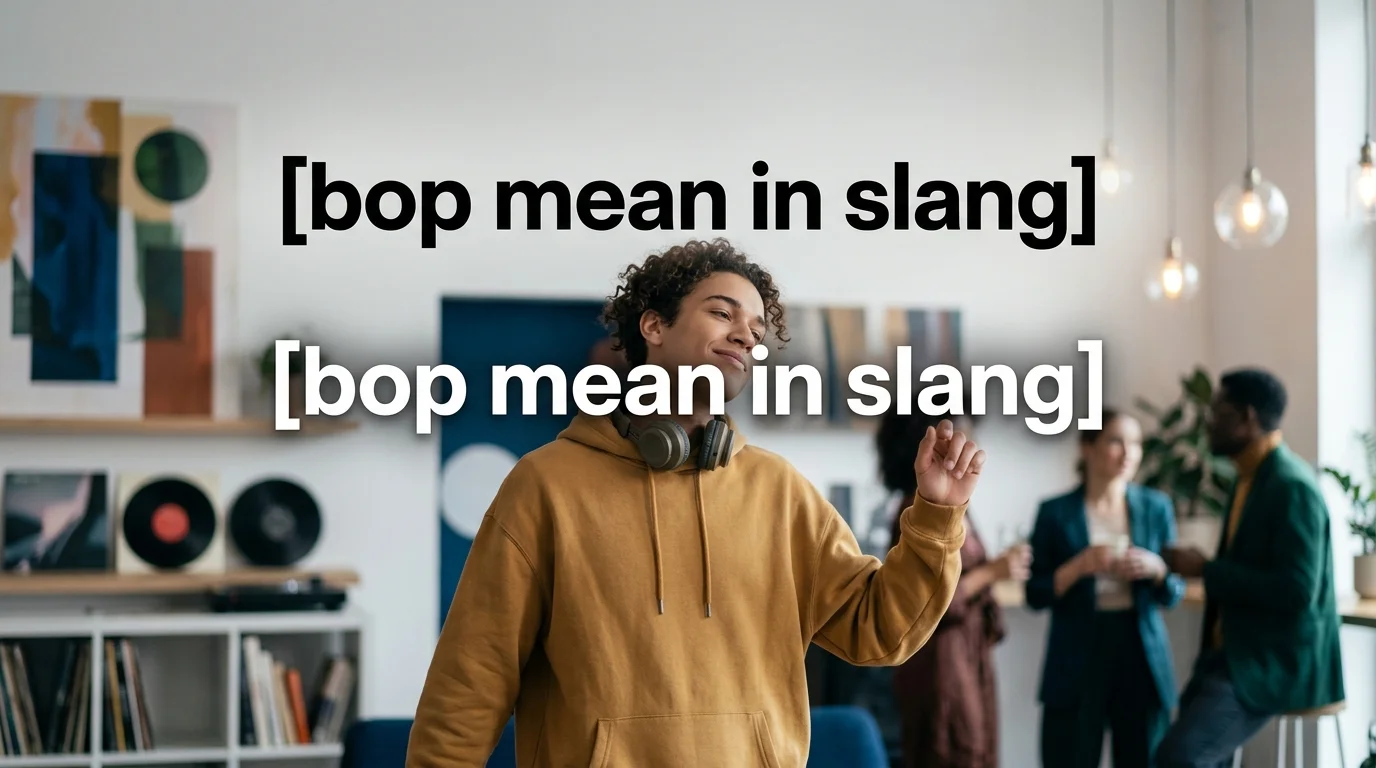
Language evolves at the speed of a single scroll. If you have spent five minutes on TikTok, scrolled through Instagram Reels, or eavesdropped on a group of teenagers talking, you have likely heard the word bop.
Someone might shout that a song is an “absolute bop,” while someone else might whisper the exact same word as a subtle insult in a group chat. That dual usage leaves thousands of people scratching their heads daily.
If you feel completely confused by how one tiny three-letter word can mean two drastically different things, you are in the right place.
Understanding modern slang is not just about keeping up with trends. It is about understanding cultural shifts, digital subcultures, and how young people communicate emotions online.
By the end of this guide, you will master every variation, origin story, and contextual nuance of this popular expression.
Decoding the Meaning Behind the Slang
At its core, bop carries two primary definitions in modern informal language: a wildly catchy song or an insulting label for a promiscuous person.
The positive musical definition dominates global internet culture today. When people call a track a bop, they mean it has an infectious rhythm, great energy, and makes you want to dance immediately.
The secondary definition is derogatory slang used predominantly among younger groups to describe a flirtatious or promiscuous individual, typically a woman.
Understanding which definition applies depends entirely on tone, context, and whether someone is talking about Spotify or social dynamics.
Quick Definition Breakdown
- Musical Meaning: An upbeat, highly entertaining, catchy song that instantly grabs your attention.
- Social Meaning: A derogatory term for someone who flirtatiously shifts attention between multiple partners.
- Action Meaning: Moving your head up and down to a beat, or taking a short, quick journey somewhere.
“Turn that track up, it is an absolute bop!” — Musical context
“Did you hear that song on the radio? Total bop.” — Casual media context
Origin and Background: How the Word Evolved
Words rarely stay in one place. The journey of this specific term spans over eight decades of musical evolution, urban cultural shifts, and digital acceleration.
1940s Jazz Era (Bebop)
       │
       ▼
2000s Hip-Hop & Chicago Scene
       │
       ▼
2020s TikTok & Global Virality
The 1940s Jazz Roots
The word originally emerged during the 1940s jazz era, short for bebop. Jazz musicians used it to describe complex, fast-paced rhythms that made listeners nod their heads in rhythm.
The Chicago Urban Shift
In the early 2000s, the term mutated within urban youth culture, specifically in Chicago’s hip-hop and drill scene. Local youth culture began using the word to describe girls who frequented party scenes.
The Social Media Explosion
With the rise of TikTok, Instagram, and short-form video content, the musical definition skyrocketed globally. Algorithms rewarded catchy 15-second audio clips, solidifying the word as universal internet shorthand for hit music.
Real-Life Conversations
Seeing how words operate in real digital environments helps you grasp tone and timing. Here are realistic examples straight from modern screens.
Scenario 1: Instagram DM (Musical Context)
Alex: Yo, did you listen to the new weekend drop yet?
Sam: Yeah, played it on my commute this morning.
Alex: Thoughts?
Sam: Pure bop. Adding it straight to my summer playlist.
Scenario 2: TikTok Comment Section (Viral Trend)
User_99: Why is this random background music stuck in my head at 3 AM?
TrendSetter: Because it is a certified bop, honestly.
User_99: Fair point, playing it on loop now.
Scenario 3: WhatsApp Group Chat (Social Context)
Jordan: Is Chris coming to the gathering tonight with that new girl?
Taylor: Yeah, but honestly he moves from person to person so fast.
Jordan: Total bop energy, not even gonna lie.
Emotional and Psychological Meaning
Slang is never just about letters. It carries social currency, emotional signaling, and psychological belonging.
Using modern terms gives speakers a feeling of cultural inclusion. It signals that you are active, updated, and connected to contemporary media.
When applied to music, the word expresses pure unadulterated joy, excitement, and shared auditory delight. It bridges the gap between simple liking and genuine enthusiasm.
When applied to people, the term reveals darker dynamics of online judgment and social posturing. Using derogatory terms online often stems from projected insecurities or low emotional intelligence within teenage peer groups.
A Quick Personal Insight
A client once mentioned feeling utterly baffled during a family car ride when her 14-year-old daughter screamed, “Mom, turn this up, this is a bop!” She spent twenty minutes wondering if her daughter was speaking in code.
Once she realized it simply meant a great tune, the tension vanished. Slang forms an invisible barrier between generations, but bridging that barrier requires simple curiosity.
Usage in Different Contexts
Navigating when to use modern terminology saves you from awkward social blunders.
   [Social Media] ──► High Usage (Positive Musical Meaning)
   [Friends/DMs]  ──► High Usage (Casual/Slang)
   [Workplace]    ──► Low Usage (Keep to Music Discussions Only)
Social Media Platforms
On TikTok, X (formerly Twitter), and Instagram, using the word to praise music is universally accepted and encouraged. It boosts engagement and fits perfectly within short-form captions.
Casual Friendships
Among peers, using the term adds lighthearted, modern energy to conversations about playlists, concerts, or radio hits.
Professional Workspaces
Avoid using the derogatory social meaning entirely in professional environments. Discussing music casually (“That radio hit is a bop”) is acceptable in relaxed offices, but keep personal conversations professional.
When NOT to Use It
Contextual awareness prevents unnecessary conflict and embarrassing misunderstandings.
- Corporate Meetings: Avoid throwing slang into formal presentations or client emails.
- Serious Discussions: Do not use casual terms during delicate emotional conversations or conflict resolution.
- Targeting Individuals: Refrain from using the derogatory variation to label people, as it can easily constitute cyberbullying or workplace harassment.
Common Misunderstandings
People frequently misinterpret modern expressions due to rapid linguistic shifts across platforms.
┌────────────────────────┬─────────────────────────────────────────────┐
│ Misconception          │ Actual Reality                              │
├────────────────────────┼─────────────────────────────────────────────┤
│ It only means one thing│ It has dual meanings (Music vs. Person)    │
│ It is always offensive │ The musical context is 100% positive        │
│ Only teenagers use it  │ Widely used across millennials and creators │
└────────────────────────┴─────────────────────────────────────────────┘
The primary confusion arises when older adults assume the term is exclusively negative, or when young users apply the derogatory version without understanding its hurtful weight. Always clarify intent through context.
Comparative Analysis of Modern Slang
To truly understand a word, you must see how it stacks up against its linguistic neighbors.
| Term | Meaning | Tone | Best Used For |
| Bop | Catchy song / Promiscuous individual | Upbeat or Derogatory | Music reviews / Casual chats |
| Banger | High-energy, heavy-hitting music track | Energetic & Enthusiastic | Parties, workouts, rock/EDM |
| Jam | Personal favorite song | Warm, nostalgic, cozy | Casual listening, personal tracks |
| Bop-along | Lighthearted, easy-listening rhythm | Relaxed | Background radio music |
| Flop | A massive failure or boring track | Critical, negative | Content performance, bad songs |
Key Insight
While a banger implies high intensity, heavy bass, and explosive party energy, a bop simply needs an irresistible, rhythmic melody that gets stuck in your head effortlessly.
10 Common Variations and Related Phrases
Understanding semantic variations helps you read digital spaces with ease.
- Certified Bop: A song universally acknowledged by everyone as fantastic.
- Absolute Bop: An intense compliment for an exceptionally catchy musical track.
- Bop Your Head: The physical action of nodding along to a rhythm.
- Bpping Around: Walking or travelling around casually with light energy.
- Mini-Bop: A short audio snippet on TikTok that instantly goes viral.
- Bop Era: A period in an artist’s career where they release constant musical hits.
- Summer Bop: A lighthearted, upbeat song tailored for sunny seasonal vibes.
- Retro Bop: An older track from past decades that retains its catchy charm today.
- K-Pop Bop: A high-production Korean pop song featuring infectious choreography beats.
- Bop Beat: A specific drum or bass pattern designed to make listeners dance.
How to Respond When Someone Uses It
Matching the energy of the conversation keeps interactions natural and fluid.
Casual & Friendly Responses
- “Right? It has been stuck in my head all afternoon!”
- “Added it to my playlist instantly.”
- “That chorus goes so hard.”
Witty & Humorous Responses
- “My head is going to fall off from nodding so much.”
- “My Spotify wrapped is definitely getting ruined by this track.”
- “If loving this track is wrong, I do not want to be right.”
Mature & Professional Responses
- “It certainly has a great melody.”
- “The production quality on that track is top-tier.”
- “It is easy to see why that song is trending globally.”
Regional and Cultural Usage Trends
Slang travels across borders via digital networks, but local culture shapes how terms land.
   North America  ──► Heavy dual usage (Music + Urban Slang)
   Europe & UK    ──► Dominantly Musical Context
   Asia & Global  ──► Associated with Pop Music (K-Pop/J-Pop)
Western Internet Culture
In North America and the UK, mainstream digital culture uses the word overwhelmingly to describe catchy tunes, though regional urban subcultures retain older slang meanings.
Asian Internet Culture
Across Asian digital communities, particularly around K-Pop fandoms on X and Weverse, the word is exclusively positive. Fans use it to celebrate new music releases, comeback albums, and viral dance challenges.
Generational Divide (Gen Z vs. Millennials)
Millennials often default to terms like jam or tune, adopting new terms consciously. Gen Z and Gen Alpha use the word fluidly as a natural element of their daily digital vocabulary.
Is It Safe for Kids?
Parents often worry when unfamiliar expressions pop up in their children’s texts or search histories.
When your child says a song is a bop, there is zero cause for concern. It is entirely harmless musical praise.
However, parents should remain aware of the derogatory secondary meaning. If used to describe peers online, it warrants an open, gentle conversation about digital respect, online bullying, and emotional maturity.
Frequently Asked Questions
Is bop a bad word?
No, the word itself is not inherently bad. While it carries a positive musical meaning 90% of the time online, it can be used as a derogatory slang term for a person depending on context.
What makes a song a bop instead of a banger?
A bop is usually light, insanely catchy, and easy to hum along to. A banger is generally higher-energy, louder, and built for club or gym environments with heavy bass hits.
Is the term used on TikTok frequently?
Yes, it is one of the most common terms on TikTok used to describe trending audio clips, viral dance sounds, and new song releases.
Can a male be called this term?
While the derogatory version was historically directed at females, modern internet usage applies it loosely across genders, though musical contexts remain far more common for everyone.
How old is this slang term?
The word dates back to 1940s jazz music (bebop). However, its current internet meanings evolved throughout the 2000s and exploded globally during the 2020s.
Final Thoughts
Language is a living, breathing ecosystem that constantly mirrors human connection, media trends, and cultural shifts.
While words can split into multiple meanings across different subcultures, context always reveals the true intent behind the message. The next time you hear a track that instantly lifts your mood and gets your feet moving, you can call it what it is with total confidence.
Embrace modern expressions, stay curious about linguistic evolution, and keep adding great music to your life.