Decoding the Term: What Does Roofied Mean in Slang?
Language moves fast, especially on the internet. If you have ever scrolled through TikTok, read an intense group chat, or overheard someone at a coffee shop talking about a wild weekend, you might have heard the term “roofied.” It instantly stops people in their tracks.
Many people search for this term because it sits right at the intersection of serious real-world danger and modern online slang. When someone says it, are they reporting a crime, or are they dramatically describing a heavy hangover?
The confusion stems from how digital culture recycles heavy medical and legal terminology into everyday conversational hyperbole. Understanding the difference between its literal definition and its slang usage is crucial for clear communication, personal safety, and social awareness.
What Does Roofied Mean in Slang? A Quick Guide
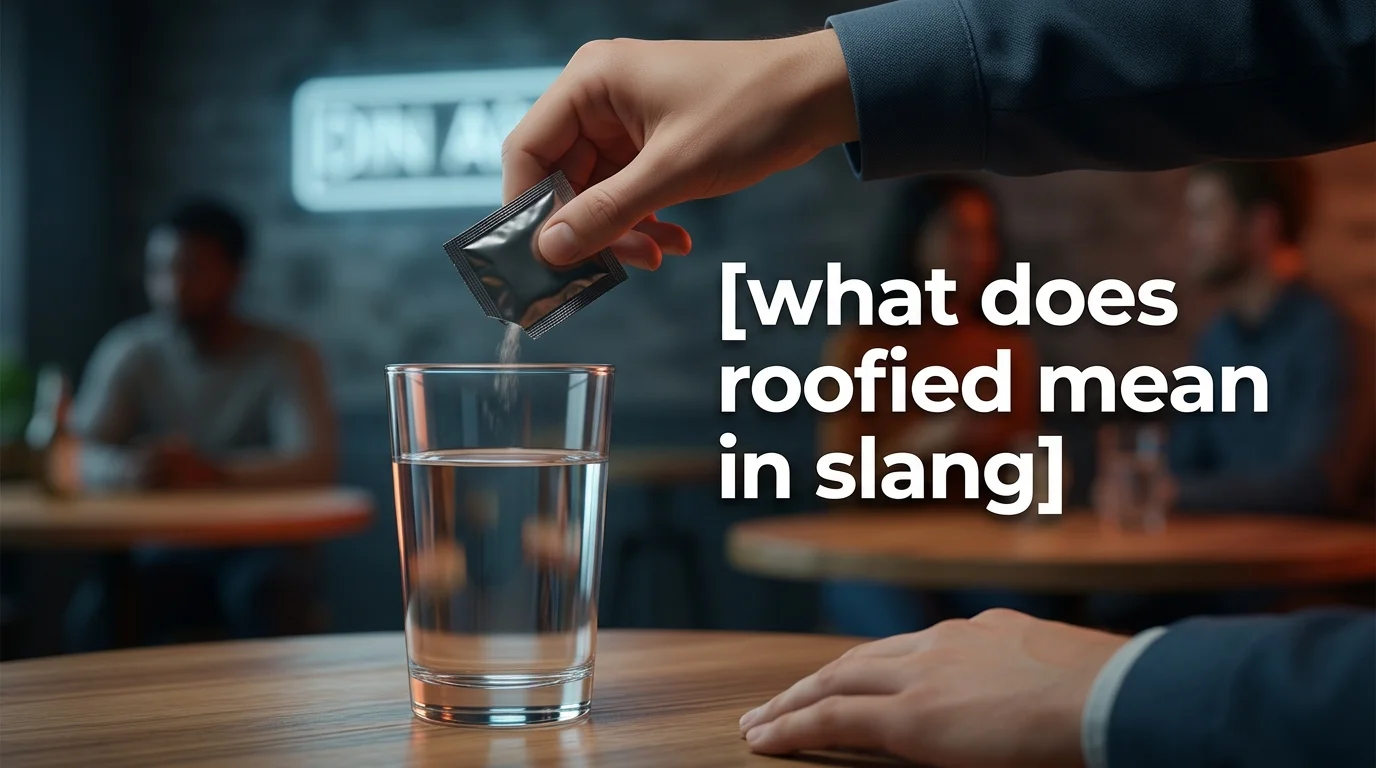
At its absolute core, to be “roofied” literally means to have been surreptitiously drugged without consent, typically via a drink spiked with a sedative like Rohypnol (from which the slang name “roofie” originates).
In modern street slang and internet vernacular, however, the term has evolved a dual identity. While its literal, legal definition always refers to drug-facilitated assault or incapacitation, people frequently use it figuratively to describe extreme exhaustion, sudden memory loss, or feeling completely overwhelmed by an unexpected substance or event.
Quick Definition Breakdown
- Literal Meaning: Having a incapacitating drug or sedative secretly added to one’s drink or food without knowledge or consent.
- Slang / Figurative Meaning: Feeling suddenly, inexplicably incapacitated, utterly exhausted, or experiencing a total mental blackout due to fatigue, stress, or heavy alcohol consumption.
- Primary Tone: Serious and alarming in literal contexts; dramatic, hyperbolic, and self-deprecating in casual slang contexts.
Examples in Everyday Contexts
“I only had two drinks last night, but I woke up with zero memory of the concert—I honestly felt like I got roofied.”
“That 15-minute afternoon nap turned into an 8-hour blackout sleep. I woke up feeling absolutely roofied.”
“Always keep an eye on your glass at crowded venues; getting roofied is a very real danger.”
Origin & Background of the Term
Where the Name Came From
The slang word “roofie” originates from the brand name Rohypnol, a potent benzodiazepine (flunitrazepam) medically prescribed in some countries as a severe sleep aid. Because of its colorless, odorless, and fast-acting sedative properties, it gained notorious infamy during the late 1980s and 1990s as a date-rape drug.
Over time, youth subcultures shortened the complex pharmaceutical name to “roofie” or “roach.” The verb form—”getting roofied” or “roofied someone”—naturally followed to describe the act or experience of being drugged.
Cultural and Social Media Evolution
During the late 1990s and early 2000s, pop culture began embedding the term into movies, stand-up comedy routines, and television shows. This media saturation gradually detached the word from its strict chemical origin.
By the time social media platforms like Twitter, Instagram, and TikTok emerged, “roofied” began undergoing semantic bleaching. Users started using the word as exaggeration to describe sudden, intense physical collapse, extreme hangovers, or overwhelming brain fog.
How the Meaning Evolved Over Time
1990s: Exclusively used as a dangerous street term for Rohypnol administration.
2000s: Expanded in media vernacular to cover any chemical drink-spiking incident (including GHB or Ketamine).
2010s–Present: Dual-usage emerges where internet culture adopts the word casually to describe sudden physical depletion or bizarre blackouts.
Real-Life Conversations
Seeing how a word operates in real text logs highlights the massive shift between casual dramatization and genuine concern.
Text Messages (Casual Exaggeration)
Person A: Yo, you vanished from the party around midnight! What happened?
Person B: Dude, I took one sip of that pre-workout mix and slept for 14 hours straight. I swear I felt roofied by my own energy drink.
Instagram DMs (Concern & Check-In)
Person A: Hey, did Maya make it home okay last night? She went from completely fine to barely standing in 10 minutes.
Person B: Yeah, we got her in an Uber. Honestly, we’re keeping a close eye on her today because that didn’t look like normal drinking. We’re worried she got roofied.
TikTok Comment Section (Hyperbolic Internet Humor)
Person A: Studying for organic chemistry for 6 hours straight felt like getting mentally roofied by my textbook.
Person B: Real. My brain literally shut down on page 3.
WhatsApp Group Chat (Warning & Advice)
Person A: Heading out to the downtown club strip tonight!
Person B: Have fun! Just remember to keep your hand over your glass all night. My cousin got roofied at that strip last month. Stay safe!
Emotional & Psychological Meaning
Language serves as a mirror for human emotion. When people use extreme terms like “roofied” in a non-literal way, they are trying to communicate a loss of agency or control.
What Emotion the Slang Expresses
Using the term figuratively conveys a sense of total, uncontrollable vulnerability. It isn’t just saying “I was tired”; it implies that exhaustion attacked from nowhere and completely wiped out conscious resistance. It expresses helplessness, sudden shock, and physical overload.
Why People Reach for Extreme Language
Modern digital interaction favors high-impact vocabulary. Mild adjectives like “tired,” “dizzy,” or “foggy” often fail to capture how overwhelmed a person feels in a world of constant stimulation. Borrowing dramatic medical or criminal terms amplifies the narrative, grabbing immediate attention in fast-moving conversations.
A Real-World Context Scenario
A few months ago, a friend named Marcus called me after attending a networking mixer. He had consumed exactly one craft beer over two hours, yet woke up the next morning on his couch with his shoes still on, completely disoriented, with a 10-hour gap in his memory.
He wasn’t trying to be funny when he asked, “Is it possible I got roofied?” His voice carried genuine confusion and anxiety. Experiencing an unexplainable physical shutdown triggers deep psychological distress because human beings crave a sense of physical safety and self-control.
Usage in Different Contexts
Navigating when and where to use this term requires strong contextual awareness.
Social Media & Online Communities
On platforms like X (formerly Twitter), TikTok, and Reddit, the word frequently appears in hyperbole. Users tag videos of sudden fatigue or bizarre reactions with dramatic language to drive engagement.
Friends & Relationships
Among close personal friends, the term can swing between playful exaggeration about a tough workout and deeply serious warnings about night-life safety. Context, tone of voice, and body language determine the intent.
Work & Professional Settings
Never use this word in professional or formal environments. Using criminal or traumatic terminology casually in an office setting creates discomfort, violates professional boundaries, and can be easily misinterpreted by human resources or management.
Casual vs. Serious Tone Comparison
| Context | Example Phrase | Intent |
|---|---|---|
| Casual / Hyperbolic | “That melatonin gummy completely roofied me.” | Describing heavy sleepiness |
| Serious / Literal | “She thinks someone roofied her glass at the bar.” | Reporting potential drugging |
| Metaphorical | “The 3 PM crash made me feel roofied.” | Expressing severe mid-day fatigue |
When NOT to Use the Term
Because the primary definition of being roofied involves a traumatic crime, misusing the word can cause significant distress or social friction.
Inappropriate Contexts
- Around Victims of Assault: Casual usage can inadvertently trigger painful memories for survivors of drink-spiking or sexual assault.
- In Professional or Academic Reports: Avoid using slang when describing actual health incidents or policy violations; stick to “unauthorized chemical administration” or “drink spiking.”
- In Mixed or Unfamiliar Company: People who do not know your humor style might take your statement literally and call emergency services or panic unnecessarily.
Cultural Sensitivity and Misunderstanding
In many traditional cultures or older demographics, using crime-related terminology as a joke is viewed as deeply disrespectful or insensitive. Misreading your audience can immediately mark you as immature or callous.
Common Misunderstandings
What People Get Wrong
The single biggest error people make is assuming that “roofied” only refers to Rohypnol. In modern vernacular and medical assessments, the term acts as a catch-all verb for any covert chemical administration, including GHB, Ketamine, high-dose prescription sedatives, or concentrated liquid extracts.
Tone Confusion: Literal vs. Figurative
Another common point of confusion occurs when someone uses the word casually in conversation, leading listeners to think a crime actually occurred. If a friend says, “I got roofied by that exam,” they mean it was impossibly difficult. If they say, “I got roofied at the venue,” they are making a serious safety statement. Always clarify intent if you feel uncertain.
Comparing Slang Expressions
Understanding where this term sits among related street expressions helps refine your overall vocabulary and situational awareness.
| Expression | Primary Meaning | Tone | Severity Level |
|---|---|---|---|
| Roofied | Drugged covertly / Extreme sudden blackout | Serious / Hyperbolic | Very High |
| Spiked | Alcohol or drugs added secretly to a drink | Informative / Cautionary | High |
| Wasted | Extremely intoxicated by choice | Casual / Rowdy | Medium |
| Knocked Out | Slept deeply or rendered unconscious physically | Neutral / Descriptive | Low to Medium |
| Floored | Completely shocked, overwhelmed, or exhausted | Conversational | Low |
Key Insight
Recognizing Contextual Weight
While terms like “wasted” or “floored” focus on intentional self-indulgence or general surprise, “roofied” fundamentally carries an underlying theme of non-consensual physical loss of control, making its communicative weight drastically heavier than standard night-life slang.
Variations and Related Terms
Internet culture and urban dialects have created several variations and spin-off terms surrounding this concept.
- Roofie (Noun): The physical sedative pill or liquid substance used to spike a beverage.
- Drink Spiking (Verb Phrase): The broader, formal term for adding drugs or unauthorized extra alcohol to someone’s drink.
- Getting Roofied (Passive Verb): The state of being unknowingly drugged by an external party.
- Roofie Colada (Noun Slang): A dark, dark-humor pun mixing the cocktail “Piña Colada” with sedatives, often referenced in pop culture.
- Digital Roofie (Metaphorical Slang): A piece of viral content, video, or post so disorienting or hypnotic that it leaves the viewer feeling mentally blank.
- Self-Roofied (Humorous Slang): Accidentally taking too much sleeping medicine or mixing light alcohol with allergy pills, causing an unintended knockout effect.
- Chemical Assault (Legal Term): The formal law-enforcement designation for covertly administering dangerous substances to another human being.
- Liquid GHB / Roofie Water (Street Term): Vernacular for liquid-based sedatives dropped into unattended cups at social gatherings.
How to Respond When Someone Uses It
How you react depends entirely on whether the speaker is joking or genuinely reaching out for help.
Casual & Lighthearted Replies (When used as exaggeration)
- “Breathe, my friend! It sounds like you just hit a massive physical wall.”
- “That wasn’t a roofie, that was just 8 hours of straight studying catching up with you!”
- “Note to self: stay far away from those ultra-strong energy shots.”
Mature & Caring Replies (When genuine safety is a concern)
- “Are you in a safe place right now? Do you need me to come pick you up?”
- “Did you leave your drink unattended at all tonight? Let’s get you checked out by a doctor just to be safe.”
- “Please stay sitting down. I’m bringing you water, and we can call someone you trust.”
Respectful Boundaries (When the word is used inappropriately)
- “Hey, let’s avoid using that word casually. It makes people uncomfortable given how serious it really is.”
- “I know you’re joking about being tired, but that term carries a lot of heavy weight.”
Regional & Cultural Usage
Language shifts radically based on geographic boundaries and demographic background.
Western Culture (US, UK, Australia, Canada)
In Western nations, the term is widely recognized across media and urban populations. Western youth cultures frequently use it both in its tragic literal sense and as hyperbolic internet slang, though awareness campaigns are pushing back against casual usage.
Asian & Middle Eastern Cultures
In conservative societies throughout Asia and the Middle East, direct references to drug-facilitated crimes or clubbing culture carry severe social taboos. The slang version is rarely used casually, and discussing drink-spiking usually happens strictly within formal safety or legal discussions.
Global Internet Culture
Online spaces like Reddit, TikTok, and X have standardized the word among global youth who consume Western media. Non-native English speakers often learn the term through viral clips or memes, sometimes using it without realizing its heavy real-world implications.
Generational Differences: Gen Z vs. Millennials
- Millennials (Born 1981–1996): Remember the direct news media coverage of Rohypnol in the late 90s and early 2000s; they tend to view the word with immediate caution.
- Gen Z (Born 1997–2012): Enters a landscape where the word has already undergone significant internet abstraction, leading them to use it more casually alongside terms like “brain rot” or “trauma dumping.”
Is It Safe for Kids and Teens?
Parents and educators should approach this word with careful context awareness.
Teens will inevitably encounter the term on social media, in gaming chatrooms, or through popular music lyrics. Rather than banning the word outright, parents should use it as a teaching moment to explain two critical lessons:
- Safety Awareness: The real-world danger of leaving beverages unattended at gatherings, parties, or public places.
- Linguistic Sensitivity: Understanding why using severe criminal terms casually can diminish empathy for real-world issues.
Frequently Asked Questions
What drug is behind the term roofied?
The term originates specifically from Rohypnol (flunitrazepam). However, today it is used as general slang for any sedative—such as GHB or Ketamine—used covertly to incapacitate someone.
Is being roofied the same as being overly drunk?
No. Being drunk comes from consuming alcohol intentionally. Being roofied involves the covert, non-consensual addition of sedatives, often causing sudden disorientation, memory loss, and severe loss of motor control far beyond normal alcohol limits.
Can someone use roofied as a joke?
While people often use it hyperbolically to describe extreme tiredness or hangovers, doing so is widely considered insensitive due to the word’s association with severe non-consensual crime.
What are the main physical signs of being roofied?
Key symptoms include sudden severe dizziness, loss of balance, slurred speech, confusion, nausea, total lack of physical coordination, and long gaps in memory despite minimal alcohol intake.
What should you do immediately if you suspect someone was roofied?
Get the person to a safe, supervised location immediately. Do not leave them alone. Seek urgent medical attention or call emergency services, as sedatives can severely suppress breathing and heart rate.
Summary & Mindful Usage
Navigating modern slang requires a balance of cultural literacy and emotional intelligence. While “roofied” has undeniably leaked into modern slang as a shorthand for sudden physical exhaustion or total mental blackouts, its roots remain anchored in serious real-world harm.
Understanding both sides of this word allows you to read between the lines in digital conversations, protect your friends when safety is on the line, and choose your words with confidence and care.