What Does GOAT Mean in Slang and Why Is Everyone Using It?
Language evolves faster today than ever before, leaving many people feeling left behind by modern digital conversations. Seeing the word “goat” used in a text or comment section often leaves readers wondering if it refers to the farm animal or something completely different.
People search for this term because digital context shifts rapidly across social platforms, gaming channels, and group chats. Missing the nuance of popular slang can lead to awkward miscommunications or missed compliments.
Understanding this term bridges the gap between traditional vocabulary and modern pop culture. This guide breaks down everything you need to know about its origin, emotional weight, proper usage, and modern social context.
What Does GOAT Mean in Slang? A Quick Meaning
Core Definition and Acronym Breakdown
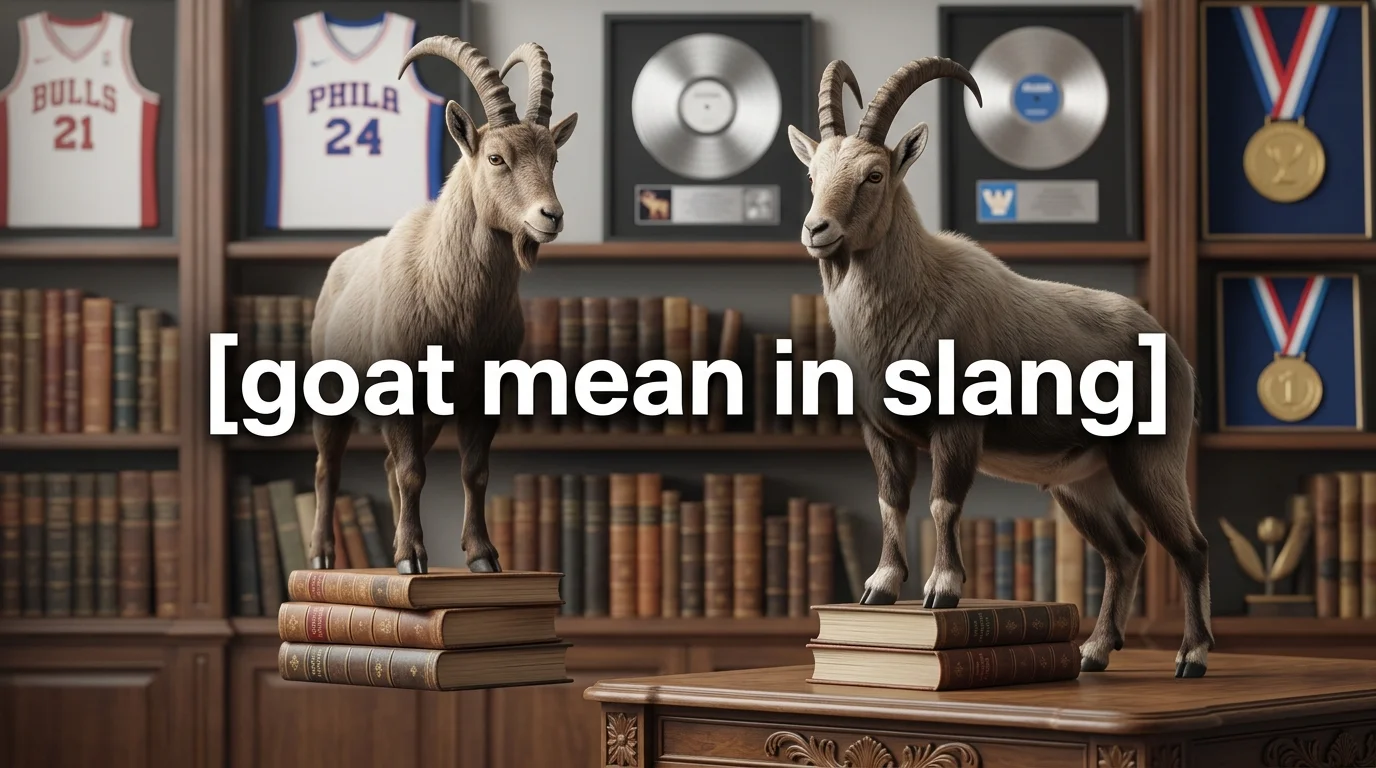
In slang, GOAT is an acronym that stands for “Greatest Of All Time.” It is used as a term of supreme praise to honor someone who stands at the absolute peak of their field, skill, or endeavor.
Unlike traditional adjectives like “good” or “talented,” this label carries an absolute status. Calling someone the GOAT implies that nobody past, present, or future quite matches their impact or ability.
Common Examples in Everyday Language
- “Did you see that last-second shot? He is literally the GOAT!”
- “Thanks for helping me fix my computer on a Sunday, you’re the GOAT.”
- “That new album has zero skippers. Absolute GOAT behavior.”
Origin and Background: From Boxing Rings to Social Media
The Historical Roots of the Term
Long before it became internet shorthand, the phrase was tied to legendary heavy-weight boxer Muhammad Ali. In 1992, Ali’s wife, Lonnie Ali, incorporated “G.O.A.T. Inc.” to manage the legendary athlete’s intellectual property and brand image.
Ali frequently called himself “The Greatest,” laying the foundation for an acronym that would eventually dominate global media culture. The phrase migrated from sports journalism into mainstream music during the late 1990s and early 2000s.
Hip-Hop Culture and Internet Expansion
Rapper LL Cool J popularized the acronym in pop culture with his 2000 album titled G.O.A.T. (Featuring James T. Smith The Greatest Of All Time). Hip-hop culture embraced the term to debate skill, legacy, and artistic dominance.
With the rise of platforms like Twitter, Instagram, and TikTok, the acronym shed its capital letters and periods. The release of the goat emoji (🐐) fully cemented its place as global internet shorthand for excellence.
Real-Life Conversations
Example 1: WhatsApp Group Chat
Alex: Has anyone finished the history project yet? I’m completely stuck on question four.
Sam: Just emailed you my notes with the full outline and sources included.
Alex: You are the GOAT! I was about to stay up all night working on this.
Example 2: Instagram DMs
Jordan: Hey, I managed to get two extra tickets for the sold-out concert tonight! Want to come?
Taylor: Are you serious right now? 🐐🐐🐐
Jordan: Dead serious! Pick you up at seven.
Example 3: TikTok Comment Section
User_99: The way she handled that live performance glitch without missing a single note was wild.
MusicFan22: Queen of professionalism. She’s the absolute GOAT of this generation!
Example 4: Text Message Between Coworkers
Chris: Hey Morgan, I covered your morning shift so you could take your dog to the vet.
Morgan: Thanks a million, Chris! You’re an absolute GOAT for doing that on such short notice.
Emotional and Psychological Meaning Behind the Word
Expressing Supreme Admiration and Loyalty
Using this term goes beyond giving a simple compliment; it expresses profound respect and emotional validation. When you call someone the GOAT, you are elevating them above normal standards of achievement.
It creates a sense of shared culture and belonging among fans, friends, and communities. Celebrating someone else’s excellence fosters connection through shared enthusiasm and respect.
Psychological Context: The Need for Absolute Icons
Human psychology naturally seeks icons of excellence to admire, emulate, and celebrate. In a world full of temporary trends, assigning ultimate status satisfies our desire for lasting quality.
A Personal Perspective:
Standing near the stage during a local music showcase, I watched a guitarist seamlessly fix a snapped string mid-solo without interrupting the rhythm. The audience didn’t just applaud; they immediately chanted “GOAT!” That moment wasn’t just about technical skill—it was a collective release of awe and respect for someone operating under immense pressure.
Usage in Different Contexts
Social Media and Online Communities
On platforms like X (formerly Twitter), TikTok, and Reddit, the term is frequently replaced by the goat emoji (🐐). Comment sections use it liberally to praise content creators, impressive athletic plays, or clever video edits.
Social media tends to hyper-inflate slang, applying the label to daily acts of kindness as readily as lifetime achievements.
Friends, Family, and Casual Relationships
In casual personal relationships, the term operates as warm hype language between peers. It functions as an enthusiastic substitute for “thank you” or “you’re amazing.”
- Helping a friend move boxes on a weekend.
- Sharing clear class notes before an exam.
- Bringing coffee to a tired roommate.
Professional and Workplace Settings
Use caution when applying slang in professional communications. While tech startups and creative agencies might tolerate casual phrasing, corporate boardrooms usually prefer traditional terminology.
Calling a colleague a “GOAT” in a casual Slack message works well, but using it during a formal performance review might sound overly informal.
When NOT to Use It
High-Stakes Professional and Academic Writing
Avoid using this term in academic papers, official business reports, cover letters, or legal correspondence. Slang undermines formal authority and precise communication in serious environments.
Serious or Solemn Occasions
Never use lighthearted slang during moments requiring solemnity, empathy, or formal grief. Using internet terms during serious conflicts or sensitive personal discussions shows a lack of emotional awareness.
Situations Prone to Misunderstanding
Older audiences or individuals unfamiliar with digital slang may interpret the term literally. Calling a boss or client a “goat” without context could accidentally offend them if they associate the word with the animal or historical insults.
Common Misunderstandings and Pitfalls
The Historical “Scapegoat” Confusion
Before the modern acronym caught on, the word “goat” carried a negative connotation in sports culture. A player who made a critical mistake causing a team loss was often called the “goat” (short for scapegoat).
Modern slang has completely inverted this meaning. Today, the term denotes supreme victory rather than embarrassing failure, which can confuse older generations.
Literal vs. Figurative Tone
Slang relies heavily on context and exaggeration. Beginners often worry whether the label must be reserved strictly for historical legends.
In everyday speech, hyperbole is expected. Calling a friend the GOAT for saving you a seat at lunch is playful exaggeration, not a formal declaration of world dominance.
Comparison Table: Modern Slang Expressions
| Slang Term | Core Meaning | Context / Usage | Tone / Energy |
| GOAT | Greatest Of All Time | Ultimate praise for top skill or helpfulness | Enthusiastic, respectful, high praise |
| BOSS | Someone in total control or highly competent | Praising strong leadership or confidence | Confident, assertive, empowering |
| MVP | Most Valuable Player | Thanking someone for crucial help in a task | Practical, appreciative, team-oriented |
| CAP | A lie, falsehood, or exaggeration | Calling out dishonesty or doubt | Skeptical, confrontational, casual |
| MID | Average, mediocre, or unimpressive | Criticizing low quality or overhyped things | Dismissive, unimpressed, critical |
Key Insight
While terms like “MVP” focus on temporary performance within a specific event, calling someone the “GOAT” assigns an enduring status of ultimate excellence that transcends single moments.
10 Variations and Related Slang Expressions
- G.O.A.T. Status: Reaching the absolute peak of a domain or skill level.
- GOATed: Transformed into an icon; receiving widespread recognition for excellence.
- Baby GOAT: A rising young talent predicted to achieve legendary status soon.
- Co-GOAT: Sharing top honors with a rival of equal talent.
- Debatably GOAT: A subject worthy of intense discussion regarding supreme rank.
- GOAT Energy: Exuding supreme confidence, unmatched skill, and effortless composure.
- GOAT Move: Executing a brilliant strategy or helpful favor seamlessly.
- GOAT Debate: An ongoing discussion comparing elite performers across generations.
- GOAT Talk: Engaging in confident dialogue about success, skill, and dominance.
- GOAT Tier: Belonging to the highest possible classification of quality or talent.
How to Respond When Someone Uses It
Casual and Playful Replies
- “Just doing my civic duty!”
- “You know how I roll!”
- “Happy to help anytime!”
Funny and Self-Deprecating Replies
- “Don’t let my ego hear you say that!”
- “Baaah! 🐐”
- “I try my best, but don’t inspect my work too closely!”
Mature and Humble Replies
- “I really appreciate that, thank you!”
- “That’s very kind of you to say.”
- “It was a team effort, but I’m glad it helped.”
Respectful Replies to Peers
- “Takes one to know one!”
- “Right back at you!”
- “High praise coming from you!”
Regional, Cultural, and Generational Usage
Western Internet Culture
In Western digital spaces, the term is omnipresent across sports broadcasting, pop music culture, and video game streaming. It moves fluidly between casual text messaging and mainstream sports journalism.
Global and Cross-Cultural Adoption
Thanks to global platforms like YouTube and Instagram, international youth cultures have adopted the term alongside the goat emoji. In regions where English is a second language, the acronym is widely recognized within gaming and sports communities.
Generational Differences: Gen Z vs. Millennials vs. Boomers
Gen Z uses the term broadly as everyday praise for minor favors, major triumphs, and great media. Millennials tend to use it more selectively, applying it primarily to true career achievements or sports legends. Older generations may still connect the word to its literal animal meaning or the older “scapegoat” idiom, requiring occasional clarification.
Is It Safe for Kids and Online Safety Context?
The acronym is completely safe, PG-rated, and free from inappropriate double meanings. Parents and educators can feel comfortable seeing young people use this slang online or in group texts.
It functions as positive, encouraging language that reinforces appreciation and mutual support among peers.
Frequently Asked Questions
What does the slang word GOAT stand for?
GOAT stands for “Greatest Of All Time.” It honors individuals who display supreme skill, talent, or helpfulness within a specific area.
Is calling someone a GOAT a compliment?
Yes, calling someone a GOAT is one of the highest compliments in modern digital culture, signifying ultimate respect and praise.
What is the difference between GOAT and MVP?
MVP (Most Valuable Player) refers to top performance in a single game or project, while GOAT implies supreme dominance across an entire era or lifetime.
Can GOAT be used for objects or movies?
Yes, people frequently apply the term hyperbolically to favorite albums, classic movies, delicious meals, or reliable cars.
What does the goat emoji 🐐 mean in comments?
The goat emoji serves as digital shorthand for the acronym GOAT, indicating praise, respect, or high quality in social media comments.
Is GOAT an acronym or a real word?
It functions as an acronym pronounced like the animal name, transformed through popular culture into a standalone slang noun and adjective.
Master Modern Slang with Confidence
Language changes constantly, reflecting cultural shifts and bringing people together through creative expression. The word “GOAT” has evolved from a historic boxing label into a global symbol of praise, gratitude, and community connection.
Using modern slang naturally requires understanding its emotional context and appropriate settings. Armed with this guide, you can confidently decode group texts, join online discussions, and hype up friends whenever they deliver legendary results.