Decoding Internet Slang: Why Everyone Is Asking “What Does Glaze Mean?”
If you have spent any time scrolling through TikTok, reading Twitch comments, or looking at a group chat recently, you have likely seen the word “glaze” thrown around. Someone posts a compliment about their favorite athlete, actor, or musician, and immediately five comments drop below it saying: “Stop glazing him” or “Bro is glazing so hard.”
If you grew up associating the word with Krispy Kreme donuts or ceramic pottery, this shift in vocabulary can feel utterly bewildering. Language evolves rapidly online, leaving even seasoned internet users feeling out of the loop.
People search for this term because the tone behind it isn’t always obvious. Is it a harmless joke? A subtle insult? Or genuine feedback?
Understanding modern slang prevents awkward social blunders in text conversations and comment sections. Deciphering “glaze” removes the confusion surrounding Gen Z online humor and helps you grasp the psychological dynamics of modern digital communication.
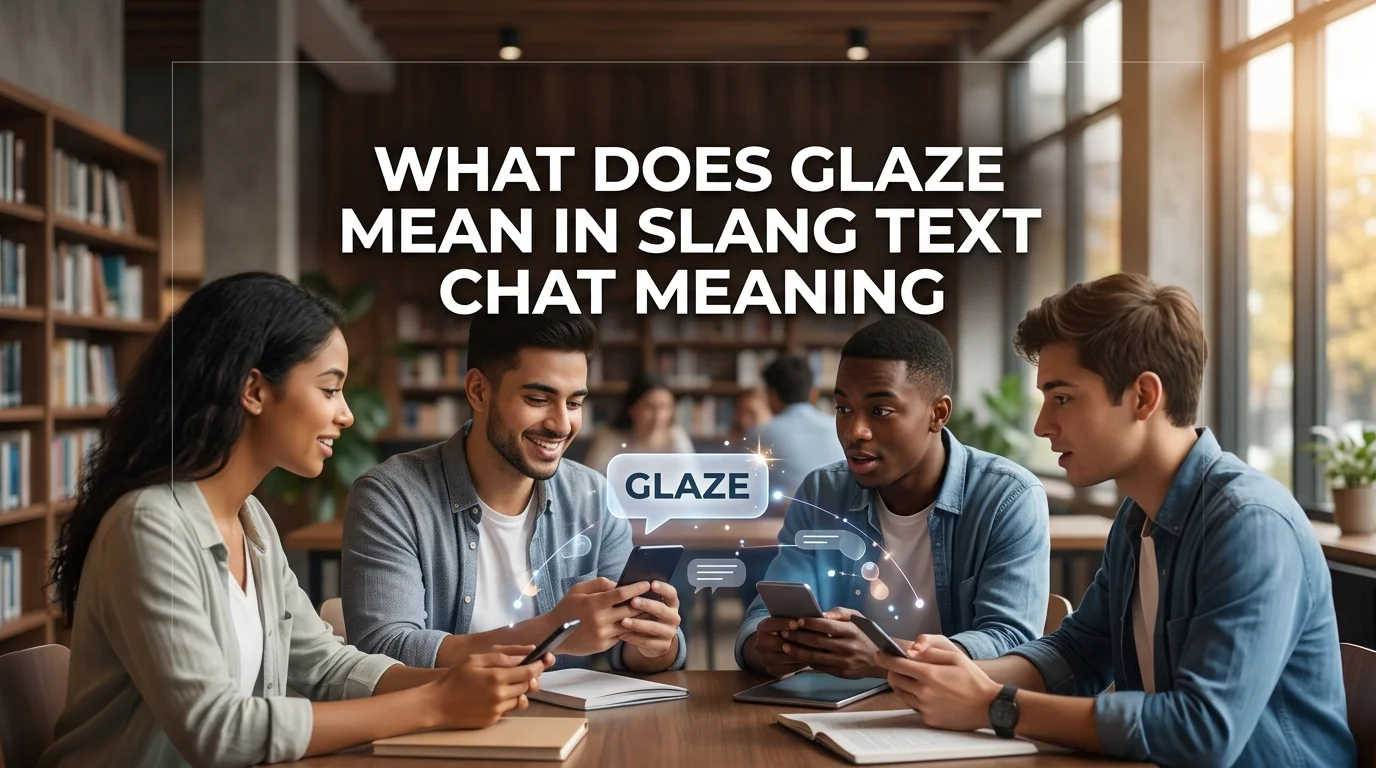
What Does Glaze Mean in Slang Text Chat?
Defining “Glazing” in the Digital Age
At its core, glaze in internet slang means to excessively compliment, flatter, hype up, or praise someone to an embarrassing or insincere degree.
Think of it as the modern, digital equivalent of being a “suck-up,” a “bootlicker,” or a “brown-noser.” When you glaze someone, you are overpraising them so intensely that it makes everyone else in the room—or the chat—cringe.
Key characteristics of glazing include:
- Giving compliments that are vastly disproportionate to reality.
- Defending someone blindly, even when they are clearly wrong.
- Seeking attention or approval from a creator, influencer, or friend through relentless praise.
- Acting like a fanatical admirer who refuses to see any flaws in their idol.
“Bro posted three paragraphs praising his manager’s email. The glazing is out of control.”
“Stop glazing that streamer, he doesn’t even know you exist.”
“I love my best friend, but I won’t glaze her terrible singing voice.”
Origin & Background of the Slang Term
From Niche Gaming Streamers to Mainstream Culture
The term “glaze” didn’t pop up overnight in mainstream dictionaries; it spent years brewing inside online subcultures before blowing up on global social platforms.
The Twitch and Discord Roots
The slang originated around 2021 within urban online communities, particularly on platforms like Discord and Twitch. Gaming communities and live-streamers (notably within the Fortnite and Rap Twitter sub-communities) began using it as a graphic metaphor.
The visual analogy comes from coating a donut in sweet glaze. In internet culture, “glazing” someone implies covering them in layers of sticky, overly sweet praise until it becomes messy and excessive.
The TikTok and Kai Cenat Explosion
By late 2022 and early 2023, high-profile streamers like Kai Cenat, Duke Dennis, and Fanum popularized the term during live broadcasts. Their massive teenage and Gen Z audience quickly adopted the word.
When clip channels shared these stream highlights on TikTok and YouTube Shorts, “glaze” crossed over from niche gaming circles into universal internet vernacular.
Today, it is a staple of digital communication, widely used alongside terms like “rizz,” “cap,” and “gyatt.”
Real-Life Conversations Using “Glaze”
WhatsApp Group Chat Between Friends
Person A: LeBron James is honestly the greatest human being to ever walk the earth. He literally never makes mistakes on or off the court.
Person B: Bro, please take a breath. The glazing right now is astronomical.
Person A: I’m just stating facts!
Person B: You’re acting like he pays your rent. Tone it down a bit.
Instagram DMs About a Fashion Post
Person A: Did you see Sarah’s new outfit post? I left 15 fire emojis and told her she looks like a Vogue supermodel.
Person B: 15 emojis? You’re glazing her so hard 😂 She’s just wearing sweatpants!
Person A: Hey, I’m just trying to be a supportive bestie!
TikTok Comment Section Under a Gaming Video
Person A: This streamer has the highest IQ in gaming history. Nobody else could have made that play.
Person B: He missed five shots right before that. Stop glazing him in the comments, he’s not gonna pin you.
Person C: Major glaze energy here.
Text Message Thread Between Classmates
Person A: Did you see how Marcus kept agreeing with the professor today during class?
Person B: Yeah, it was painful to watch. He was glazing him just to get extra credit on the midterm.
Person A: Totally backfired too. The prof looked super uncomfortable.
Emotional & Psychological Meaning Behind the Word
What Calling Someone Out for “Glazing” Really Signals
Slang is rarely just about words; it reflects underlying social anxieties and cultural values. The explosive popularity of “glaze” highlights how modern youth culture views social authenticity.
Gen Z values perceived authenticity above almost everything else. Unfiltered, honest opinions are respected, while performative enthusiasm is viewed with deep skepticism.
When someone calls you out for glazing, they are calling out perceived insincerity. The term serves as an enforcement mechanism to keep people grounded, humble, and realistic.
The Psychology of Overpraising
People glaze others for several psychological reasons:
- Parasocial Attachment: Fans feel a genuine, albeit one-sided, emotional connection to celebrities and creators.
- Social Climbing: Individuals hope that excessive praise will yield attention, validation, or social status.
- Insecurity: Overcompensating with compliments to hide personal anxiety or secure a spot within a social group.
A Personal Observation from Classroom Dynamics
In my years observing communication patterns among younger students, I noticed a distinct shift in how compliments were received. A few years ago, overly eager praise was simply called “brown-nosed behavior.”
I watched a student repeatedly compliment an instructor’s presentation style in an overly dramatic fashion. The student thought they were building rapport. However, their peers immediately labeled it as “glazing.”
The entire room’s energy shifted. It proved how fast internet slang sets sharp boundaries around what is viewed as genuine respect versus manipulative flattery.
Usage in Different Contexts
Social Media Platforms
On TikTok, Instagram, X (formerly Twitter), and YouTube, “glaze” is usually thrown around in comment sections. It targets super-fans (often called “stans”) who defend public figures blindly.
Among Friends and Casual Relationships
With friends, the word is generally playful. It acts as lighthearted teasing when someone goes overboard boasting about a crush, a favorite musical artist, or their own achievements.
Work and Professional Settings
You should almost never use the slang word “glaze” in a professional email, meeting, or formal document. Calling a coworker or boss a “glazer” in a corporate environment will sound unprofessional, disrespectful, or confusing to colleagues unfamiliar with Gen Z internet subculture.
However, the concept of glazing exists heavily in offices—we just call it “kissing up,” “sycophancy,” or “playing politics.”
Casual vs. Serious Tone
| Context | Tone | Example Usage | Acceptability |
|---|---|---|---|
| Gaming / Discord | Playful / Teasing | “Stop glazing the enemy team.” | High |
| Close Friends | Light Banter | “You are glazing your new boyfend.” | High |
| Workplace | Unprofessional | “John is glazing the boss.” | Extremely Low |
| Formal Essay | Improper | “The author glazes the subject.” | Incorrect |
When NOT to Use “Glaze”
Knowing the Boundaries of Modern Slang
While using slang helps you stay culturally relevant, applying “glaze” inappropriately can hurt feelings or destroy genuine moments of connection.
1. During Moments of Earnest Appreciation
If someone is sharing a deep, vulnerable, and sincere compliment—such as a heartfelt toast at a wedding or a genuine expression of gratitude—calling it “glazing” ruins the moment. It cynicalizes authentic human kindness.
2. In Professional or Academic Environments
Slang changes too fast for formal spaces. Using the word in performance reviews, essays, or client communication undermines your credibility as an authoritative speaker.
3. When It Crosses into Bullying
Teasing a friend for being a huge fan of a movie is fine. Harassing someone repeatedly on social media and spamming “glazer” just because they enjoy an artist can cross the line into online hostility.
Common Misunderstandings About the Term
Literal vs. Figurative Meanings
The most obvious point of confusion is the literal meaning. Older adults often assume the conversation is about pastry glaze, pottery glazes, or medical conditions involving “glazed eyes.”
Tone Confusion: Friendly Banter vs. Genuine Insult
Because internet text lacks vocal inflection, readers frequently mistake the emotional severity of the word.
- In playful banter: It means, “You’re exaggerating, calm down!”
- In toxic online arguments: It means, “You have no critical thinking skills and you’re a mindless follower.”
Context, relationship history, and platform culture dictate whether the term carries friendly humor or harsh judgment.
Comparing “Glaze” with Related Internet Slang
How It Fits into the Digital Lexicon
Understanding how “glaze” interacts with other popular terms helps build a complete picture of modern online communication.
| Term | Definition | Relationship to “Glaze” |
|---|---|---|
| Glaze | To excessively overpraise or flatter someone. | The core term. |
| Simp | Someone who does way too much for a crush who doesn’t care. | Similar motivation, but “simping” focuses on romantic desire. |
| Stan | An obsessive fan of a celebrity or brand. | Stans frequently glaze their favorite stars. |
| Ride-or-Die | A fiercely loyal friend. | Positive version; loyalty based on real love, not fake hype. |
| Dickriding | Vulgar slang for blindly supporting someone. | “Glaze” is the cleaner, social-media-friendly version of this term. |
| Hating | Disliking or criticizing someone unfairly. | The exact opposite of glazing. |
Key Insight
The Sweet Spot Between Glazing and Hating
Modern digital communication operates on a delicate spectrum between “glazing” (excessive, fake praise) and “hating” (excessive, unfair criticism). Internet users constantly police these two extremes, encouraging people to stay balanced in the middle with objective, authentic opinions.
10 Popular Variations and Types of “Glazing”
1. Glazer (Noun)
A person who habitually overpraises others to gain favor or attention.
“Don’t listen to him, he’s a total glazer.”
2. Glaze Session (Noun)
An extended conversation or comment thread dedicated entirely to flattering someone.
“They’ve been in a glaze session for two hours on that livestream.”
3. Meat-Glazing (Slang Variant)
An intensified, vulgar variation emphasizing extreme sycophancy.
“The amount of meat-glazing in those comments is insane.”
4. Self-Glazing (Verb)
Praising yourself excessively or blowing your own horn publicly.
“Posting your own high scores three times today is major self-glazing.”
5. Mutual Glazing (Noun)
Two people continuously showering each other with over-the-top compliments.
“Look at those two in the replies—it’s just mutual glazing at this point.”
6. Corporate Glazing (Noun)
Excessively praising a business, CEO, or brand in hopes of career advancement.
“He’s doing some serious corporate glazing on LinkedIn today.”
7. Professional Glazer (Noun / Joke)
A humorous title given to someone whose admiration for a public figure seems like a full-time job.
“Bro is a certified professional glazer for that football team.”
8. Glaze-Free Zone (Phrase)
A space, chat, or discussion where only honest, unhyped opinions are permitted.
“Give me your real thoughts on this track—this is a glaze-free zone.”
9. Tactical Glaze (Noun)
Flattering someone strategically to get something specific out of them, like a favor or permission.
“She used a tactical glaze on the teacher to get an extension on the essay.”
10. Glazetastrophe (Humorous Noun)
A situation where excessive hype completely ruins realistic expectations.
“The movie wasn’t bad, but the internet glaze made it a total disappointment.”
How to Respond When Someone Accuses You of Glazing
Casual Replies for Friends
- “I’m not glazing, I’m just giving credit where credit is due!”
- “Let me support my friends in peace!”
- “If hype is crime, throw me in jail.”
Funny and Sarcastic Replies
- “I’m not glazing, I’m the entire bakery at this point.”
- “Where’s my paycheck for all this promotion then?”
- “Hold on, let me go get more frosting.”
Mature and Defensive Replies
- “It’s not glazing to point out genuine talent.”
- “I can appreciate good work without it being weird.”
- “There’s a difference between flattery and recognition.”
Respectful Replies for Formal Settings
- “I simply wanted to highlight a strong accomplishment.”
- “My feedback was based on the positive results achieved.”
- “I stand by my recommendation based on the data.”
Regional, Cultural, and Generational Usage
Western Culture (US, UK, Canada, Australia)
In Western internet spaces, the word is deeply integrated into gaming, sports fanbases, and hip-hop culture. It is primarily used as a blunt tool for social policing to prevent people from becoming overly fanatical.
Global Internet Usage & Asian Subcultures
Across global English-speaking communities (including South Asia and Southeast Asia), “glaze” has spread via international gaming servers like Valorant and League of Legends. In these spaces, it is used almost identically to describe teammates who flatter high-performing players.
Generational Differences: Gen Z vs. Millennials vs. Gen Alpha
- Gen Alpha (Born 2010–2025): Uses “glaze” effortlessly alongside terms like “skibidi” and “sigma.” To them, it is basic daily vocabulary.
- Gen Z (Born 1997–2012): Created and popularized the slang context. They use it with clear social nuance to enforce authenticity.
- Millennials (Born 1981–1996): Generally understand the term now, but often substitute older equivalents like “suck-up,” “kiss-ass,” or “fanboy.”
- Gen X and Boomers: Rarely use the term, usually taking it in its literal culinary or artistic sense.
Is “Glaze” Safe for Kids and Teens?
Understanding the Safety and Maturity Level
Parents often worry when new slang appears in their children’s text messages.
Is “glaze” safe? Yes, the word itself is fundamentally safe. It is not an explicit slur, nor does it inherently carry hate speech.
However, parents should keep two minor contextual nuances in mind:
- Origins: The term stems from a somewhat crude visual metaphor, though 95% of young users treat it as totally benign mainstream slang today.
- Online Dynamics: While the word itself is harmless, it can sometimes be used in mild cyberbullying or social exclusion to mock kids who express passionate enthusiasm for hobbies, books, or artists.
Teaching children the difference between friendly banter and mean-spirited teasing is far more important than banning the word itself.
Frequently Asked Questions
Is “glazing” a bad word or offensive?
No, “glaze” is not a curse word or explicit slur. It is informal slang used to tease someone for excessive flattery. However, using it continuously against someone can feel insulting or annoying.
What is the opposite of glazing in slang?
The direct opposite of glazing is hating or dunking on someone. While glazing means giving excessive praise, hating means giving unfair, relentless criticism.
Where did the slang term glaze originate?
The term originated in urban Discord servers, Twitch streams, and Rap Twitter communities around 2021 before being popularized globally by top TikTok creators and streamers in 2022 and 2023.
How do you spell glazer?
It is spelled G-L-A-Z-E-R. It refers to a person who habitually “glazes” or overpraises others.
Can you glaze a girl or a boy?
Yes. The term is completely gender-neutral. You can glaze a friend, a celebrity, an athlete, a teacher, or a crush regardless of their gender identity.
Why do people say “stop glazing”?
People say “stop glazing” when they feel a compliment has crossed the line from honest appreciation into cringe-worthy, desperate, or fake flattery.
Navigating the Ever-Changing Landscape of Slang
Internet culture moves at breakneck speed. Words that start in tiny streaming communities can become global speech trends in a matter of weeks.
Understanding terms like “glaze” is about more than just decoding Gen Z vocabulary. It offers a fascinating window into how modern culture values authenticity, enforces social norms, and navigates relationships in a digital-first world.
The next time you see someone dropping paragraphs of praise in a comment section, you’ll know exactly what’s happening. Just remember: keep your compliments genuine, stay true to your opinions, and don’t glaze too hard!