Decoding the Meaning of OG in Modern Slang
You have likely seen those two letters pop up everywhere online. Someone drops a comment on a throwback photo calling someone an “OG,” or a friend texts you saying, “You’re the real OG for picking up coffee today.” It appears in group chats, social media captions, gaming lobbies, and casual conversations worldwide.
People search for this term because internet slang evolves rapidly, often leaving a gap between how a word started and how it is used today. Sliding into modern digital culture without knowing these nuances can make subtle social cues tricky to navigate.
Understanding this phrase clears up instantaneous confusion about whether someone is offering a deep sign of respect, dropping a playful compliment, or referencing classic pop culture roots. Let me break down the history, psychology, and real-world usage of this timeless expression.
What Does OG Mean? Quick Meaning
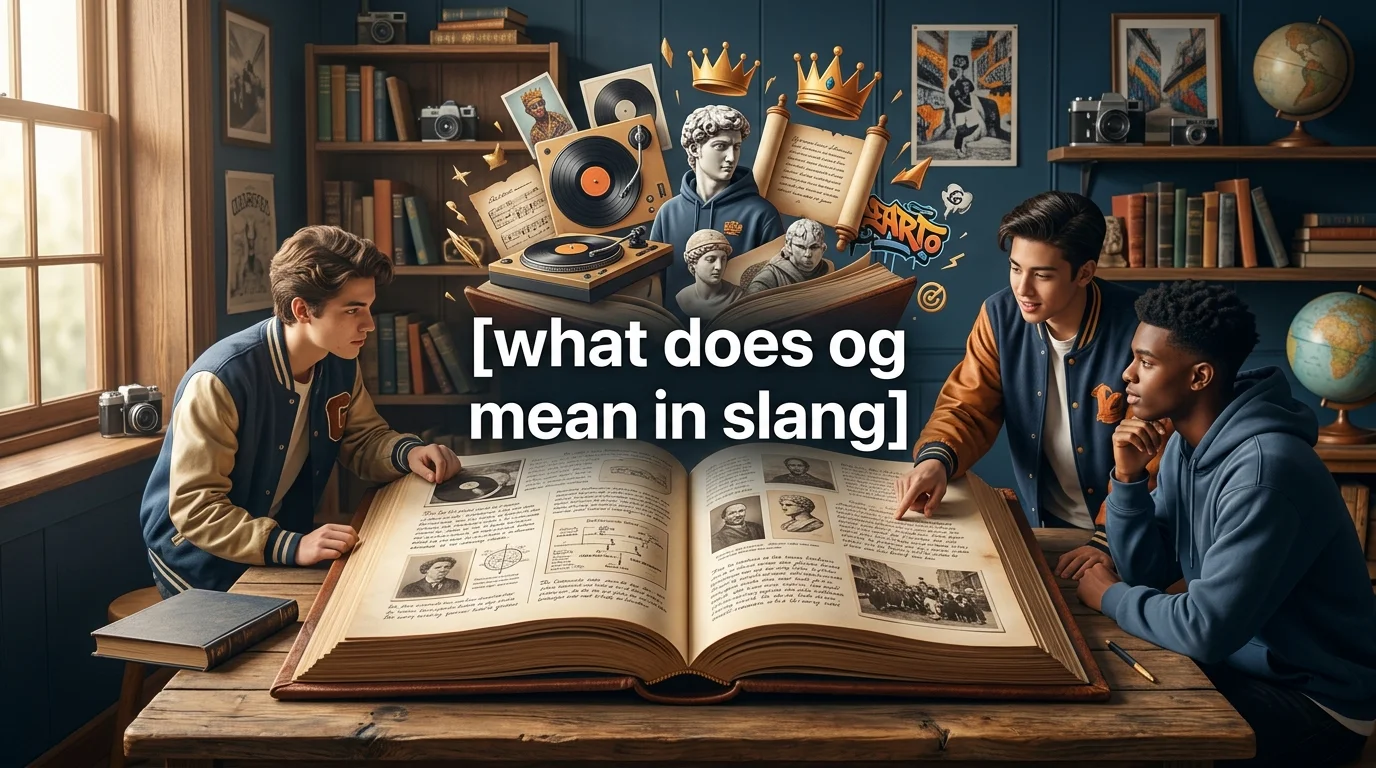
At its absolute core, “OG” stands for Original Gangster.
While the literal phrase originates from early hip-hop and urban culture, its slang meaning has expanded far beyond its original roots. Today, calling someone or something an OG simply means recognizing them as authentic, classic, highly experienced, or pioneer status in a specific lane.
Key Definitions at a Glance:
- An Original Leader: Someone who was there from the very beginning.
- A Master of a Craft: An individual who displays top-tier skills through years of dedication.
- A Dependable Friend: A reliable person who consistently shows up when it matters most.
Here are a few quick examples of how it sounds in everyday speech:
“If you still play original classic games on the original console, you’re an absolute OG.”
“Shoutout to Sarah for bringing snacks to the study group—she’s the real OG!”
“That diner on 5th street is the OG burger spot in town; nothing else comes close.”
Origin & Background
Where It Came From
The term originated during the late 1960s and 1970s within Southern California gang culture, specifically associated with the Crips in Los Angeles. Members used “Original Gangster” to differentiate veteran, established figures from newer, younger recruits.
By the late 1980s and early 1990s, West Coast hip-hop culture adopted the term, catapulting it into mainstream music history. Rap legends popularized the acronym through iconic album titles and tracks, transforming the term into a badge of honor, authenticity, and survival against all odds.
Cultural Evolution & Social Media Impact
As hip-hop grew into a global cultural force, the slang broke free from its street origins. It shifted from describing criminal street prestige to honoring artistic mastery, street credibility, and absolute authenticity in any field.
When social media platforms blew up, the term underwent another evolution. Internet culture stripped away the literal “gangster” connotation entirely. Today, platforms like TikTok, Instagram, and X (formerly Twitter) use it to label vintage trends, legacy creators, or anyone demonstrating high-value loyalty.
Real-Life Conversations
WhatsApp Chat
Person A: Hey, do you know how to fix this spreadsheet formula? It keeps throwing an error.
Person B: Sent you the updated sheet with the fixed script. Check it out!
Person A: You fixed that in two minutes?! You are an absolute OG, thank you so much!
Person B: Haha anytime! Just been doing this way too long.
Instagram DMs
Person A: Look at this photo from our freshman year hall party! We looked so ridiculous.
Person B: Oh wow, that is ancient history! Look at those outfits.
Person A: Right? We’re the last ones from that original group still keeping in touch. Real OGs!
TikTok Comments Section
Person A: I’ve been following your channel since you only had 50 subscribers back in 2016!
Person B: No way! That means you’re a true OG subscriber. I appreciate you sticking around for the journey!
Text Messages
Person A: Hey, I know it’s late, but my car battery just died at the grocery store. Are you free?
Person B: Say no more. Grabbing my jump cables now, be there in 10 minutes.
Person A: Man, you’re an OG. I owe you big time.
Emotional & Psychological Meaning
What Emotion It Expresses
Calling someone an OG isn’t just a simple label—it carries emotional weight. It expresses deep-seated respect, validation, and heartfelt gratitude. It signals that you recognize a person’s history, their effort, or their unwavering loyalty.
When you receive this compliment, it satisfies a core psychological desire for recognition. It validates that your presence, tenure, or contribution holds enduring value in a world that often prioritizes whatever is new and fleeting.
Modern Communication & Real-Life Context
Language shifts toward shorthand because we live in a high-speed digital environment. Yet, dropping this two-letter acronym packs the emotional punch of a lengthy thank-you note into a quick text.
I remember watching an old friend step up during a chaotic group travel project. While everyone else panicked over canceled reservations, he quietly worked behind the scenes to secure our stay. When someone yelled, “You’re an OG, man!” the room instantly relaxed. That short phrase transformed high stress into shared relief and mutual respect.
Usage in Different Contexts
Social Media & Digital Spaces
Online, the term serves as a stamp of credibility. Creators use it to acknowledge early followers, gaming communities use it to describe players holding rare legacy items, and commenters drop it under throwbacks to honor timeless classics.
Friends & Personal Relationships
Among close friends, it represents deep trust and shared history. Calling a childhood friend your OG implies a bond that time, distance, and life shifts cannot break. It means “you were there before everything else changed.”
Work & Professional Settings
While you shouldn’t drop slang in formal corporate proposals, casual office environments use it lightheartedly. A colleague might call a veteran developer “the resident OG” of a legacy software platform. It acknowledges institutional knowledge with warmth.
Casual vs. Serious Tone
- Casual Tone: Used playfully to thank someone for a minor favor, like bringing extra coffee.
- Serious Tone: Used with genuine emotional weight during speeches, toasts, or heartfelt moments to honor lifelong loyalty or pioneering achievement.
When NOT to Use It
Formal Professional Contexts
Avoid using this slang during job interviews, official legal discussions, executive board meetings, or academic papers. The phrase remains inherently informal and can sound unprofessional or overly casual to leadership.
Misreading the Room
Never force the term into situations requiring serious sympathy, formal condolences, or delicate personal conflicts. Using slang during solemn moments cheapens the conversation and can signal a lack of empathy.
Overuse & Cultural Sensitivity
Dropping the term every five seconds cheapens its impact. Furthermore, be conscious of setting; using heavy urban slang in overly forced, performative ways can come across as disingenuous or culturally tone-deaf.
Common Misunderstandings
What People Get Wrong
A common mistake newcomers make is taking the word “gangster” literally. Seeing a middle school teacher called an “OG” might raise eyebrows if you don’t understand that the term has evolved away from its literal gang origins.
Tone Confusion
Because the term can be used either casually or deeply, listeners sometimes misread the intent. Interpreting a lighthearted compliment as a deeply dramatic statement—or vice versa—can lead to mild social awkwardness.
Literal vs. Figurative Meaning
- Literal: Pertaining strictly to early 1970s Los Angeles street history.
- Figurative: Describing anyone or anything classic, authentic, reliable, or pioneering. Modern conversations almost exclusively use the figurative sense.
Slang Comparison Table
| Term | Meaning | Nuance / Tone | Direct Comparison |
|---|---|---|---|
| OG | Original / Master / Reliable | Respectful, classic, authentic | Focuses on tenure, loyalty, and pioneer status. |
| GOAT | Greatest Of All Time | High praise, skill-focused | Measures supreme skill rather than longevity or history. |
| MVP | Most Valuable Player | Helpful, situational praise | Highlights immediate help in a specific moment. |
| Rookie | Beginner / Newcomer | Opposing concept, light teasing | Directly contrasts the experience level of an OG. |
| Trendsetter | Style Innovator | Forward-looking, modern | Focuses on what’s next; an OG focuses on what started it all. |
Key Insight
While terms like GOAT highlight peak performance and MVP celebrates immediate usefulness, OG stands unique because it honors endurance, loyalty, and foundational history over temporary wins.
Variations & Related Types
The Real OG
Refers to the ultimate, undisputed pioneer in a specific group or field, leaving no doubt about their legendary status.
OG Status
A conceptual rank given to someone who has earned absolute respect through years of consistent reliability and presence.
OG Member
Describes an individual who belonged to a group, startup, platform, or community from its initial founding days.
OG Flavor / Product
Refers to the original recipe, design, or release of a product before company reformulations or redesigns took place.
OG Gamer
A player who played a gaming franchise during its original release long before remastered versions appeared.
OG Squad
Your core, long-term group of friends who stayed connected through every phase of life.
Triple OG
An amplified variation used to show intense respect for someone who has maintained respect across multiple generations.
OG Content
Digital videos, articles, or art styles produced during the early days of a specific platform or internet era.
Low-Key OG
Someone who quietly possesses massive experience, wisdom, or history without ever bragging about it publicly.
How to Respond When Someone Calls You an OG
Casual Replies
- “Appreciate it! Just doing what I can.”
- “You know how it is—always got your back!”
- “Haha, thanks! Just showing up as usual.”
Funny Replies
- “Don’t call me an OG, you’re making my knees ache thinking about how old I am!”
- “Shh, don’t let everyone know how long I’ve actually been around here.”
- “Does this mean my legendary status comes with free lunch?”
Mature & Professional Replies
- “Thank you, that means a lot coming from you.”
- “I really appreciate the recognition; happy I could help out.”
- “It’s been a privilege growing alongside this team for so long.”
Respectful Reciprocal Replies
- “Takes one to know one! You’ve been here holding it down too.”
- “I learned from the best—you’re the real standard around here.”
- “Right back at you! We’ve both been in this for a long time.”
Regional & Cultural Usage
Western Culture
In North America and Western Europe, the phrase is ubiquitous across pop culture, sports commentary, music, and online gaming space, carrying very low friction in everyday language.
Asian Internet Culture
Across Eastern online platforms, youth culture adopts the term primarily through gaming lobbies and hip-hop influences, using it strictly to describe master-level video game players or top-tier fashion icons.
Middle Eastern Digital Spaces
In regional youth hubs, the term blends into multilingual slang. Users drop it into English-Arabic mixed text exchanges to honor loyal friends or classic local hangout spots.
Generational Differences
- Gen Z: Uses the term casually, applying it liberally to aesthetic trends, early internet memes, and favorite childhood shows.
- Millennials: Use the term with balanced nostalgia, applying it to early digital culture, legendary musicians, and friends from school days.
- Gen X & Older: May still associate the phrase strictly with its 1990s hip-hop history or feel slightly confused when it gets applied to mundane modern items like snacks.
Is It Safe for Kids?
Yes, the term is entirely safe for general audiences in its modern context.
While its early origins tie back to street culture, decades of mainstream usage have washed away any vulgar, explicit, or harmful meanings. Today, children, teenagers, and adults use it purely as a positive term for respect, loyalty, and classic status.
Parents do not need to worry if they see their kids using the term in group chats or video games—it simply means they are complimenting a friend or acknowledging something classic.
Frequently Asked Questions
Is OG an acronym?
Yes, it originally stands for “Original Gangster,” though modern usage rarely implies any literal connection to street gangs.
Can you call a woman an OG?
Absolutely. The term is completely gender-neutral in modern language and simply recognizes respect, loyalty, and deep experience.
What is the difference between OG and GOAT?
OG emphasizes history, longevity, and foundational presence, whereas GOAT (Greatest Of All Time) focuses purely on top-level skill and performance.
Is calling someone an OG disrespectful?
No, it is universally considered a strong compliment that signals deep respect, trust, and appreciation for a person’s authenticity.
Can OG refer to objects or places?
Yes, people frequently use it to describe original recipe foods, classic shoe designs, legendary venues, or vintage cars.
How do you use OG in a sentence?
You can say, “Thanks for helping me move today, you’re a real OG,” or “That classic album is pure OG hip-hop.”
Conclusion
Language is a living thing, constantly reshaping itself to help us connect better. What started decades ago as specialized street terminology has naturally evolved into a worldwide expression of respect, authenticity, and enduring connection.
Calling someone an OG is one of the simplest ways to say: “I see your history, I appreciate your loyalty, and I value your presence.” It honors the foundations laid before modern trends took over.
Now that you know the depth, history, and psychology behind these two letters, step into your everyday conversations with confidence. Whether you are acknowledging an old friend, honoring a mentor, or praising a classic throwback, drop the term naturally and keep the respect flowing!