Decoding the Word That Redefined Internet Honesty
Ever found yourself scrolling through TikTok or reading a group chat text and suddenly felt like you needed a translator?
Language evolves fast. The terms teenagers and young adults drop into daily conversation can leave the rest of us feeling entirely left behind.
Among these modern terms, one word pops up everywhere: “cap.”
If you have ever wondered what does cap mean in slang, why people use it to call out lies, or how to use it without sounding out of touch, this guide has you covered.
What Does Cap Mean in Slang? A Quick Meaning
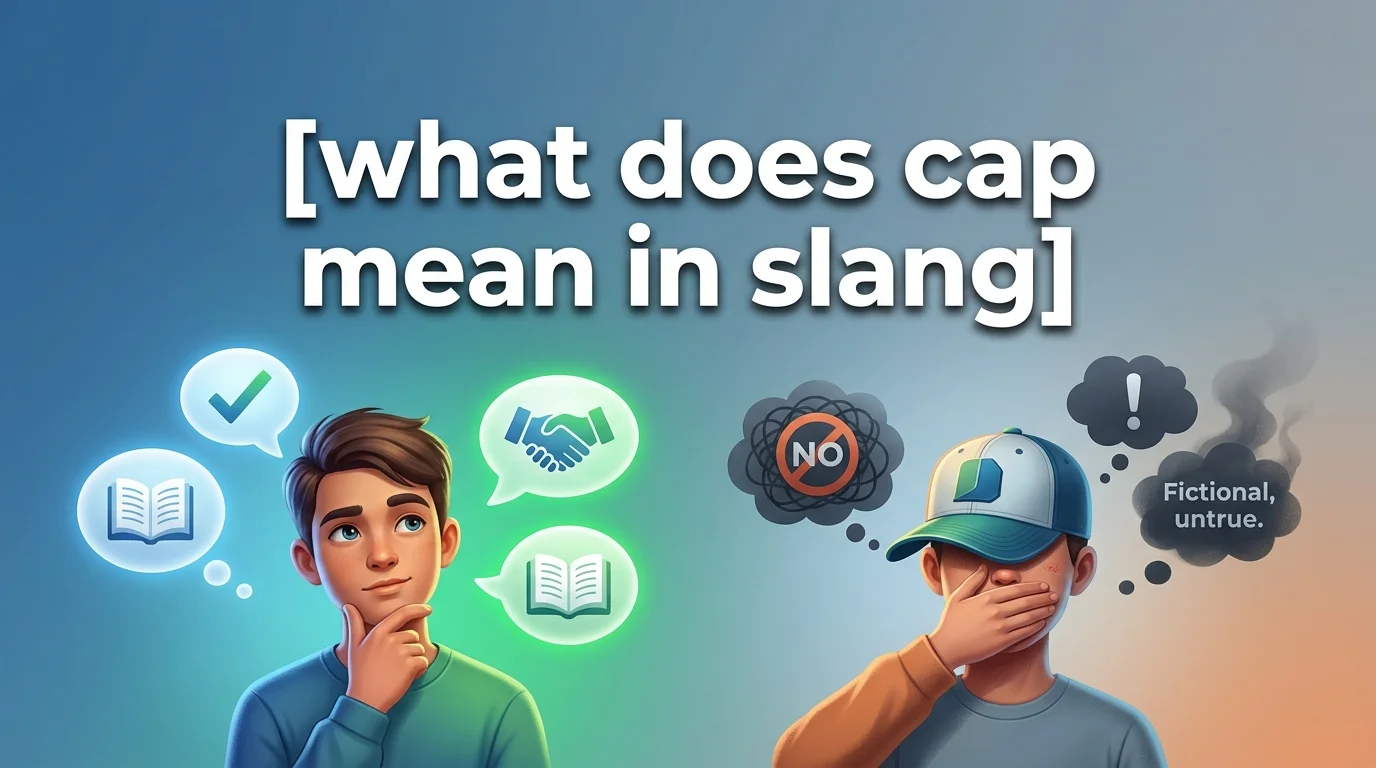
At its core, “cap” is modern slang for a lie, a exaggeration, or complete untruthfulness.
When someone says “that’s cap,” they are calling out dishonesty.
Conversely, “no cap” means “no lie,” “for real,” or “I am being completely serious.”
- “He said he bought a sports car, but that is total cap.”
- “I just ran three miles in fifteen minutes, no cap!”
- “Why are you capping right now?”
Key Definitions Breakdown
- Cap (Noun/Verb): A lie, or the act of lying.
- Capper (Noun): A person who tells lies or exaggerates stories.
- Capping (Verb): Presenting false information or boasting unauthentically.
- No Cap (Adverb/Phrase): Absolute truthfulness, sincerity, or validation.
Origin & Background of the Term
Slang does not just appear out of thin air; it carries rich history and cultural roots.
Black American Culture and Hip-Hop Origins
Long before TikTok made the phrase globally famous, “capping” was rooted in African American Vernacular English (AAVE).
Dating back to the early-to-mid 20th century, “to cap” originally meant to top, outdo, or insult someone in games of verbal wit.
Over decades, Southern hip-hop culture shifted the meaning toward boasting and lying.
Atlanta rappers in the 2010s popularized the phrase across mainstream music, taking it from localized communities to global playlists.
The Social Media Explosion
Around 2018, internet culture fully adopted the term.
Memes featuring the blue baseball cap emoji (🧢) started replacing written text.
Leaving a single hat emoji in a comment section became the universal way to tell a creator, “I don’t believe you.”
Real-Life Conversations
Seeing how slang functions in context makes it much easier to understand.
WhatsApp Group Chat
Alex: I slept two hours last night and still aced the chemistry final.
Jordan: Bro stop capping 🧢 you were asleep by 10 PM.
Alex: I swear I’m not capping! Check my study app time!
Instagram DMs
Sam: Did you see Taylor’s story? She claimed she met Drake at the airport.
Chris: That is major cap. She was literally at home watching Netflix all weekend.
TikTok Comment Section
User_99: I made $10,000 this week trading crypto at age 14!
Commenter_01: The cap on this video is astronomical 🧢🧢🧢
Emotional & Psychological Meaning Behind “Cap”
Slang survives because it fulfills a clear psychological need that formal language misses.
Why We Use “Cap” Instead of “Lie”
Calling someone a “liar” feels aggressive, accusatory, and serious.
Using “cap” softens the strike.
It adds a layer of playful skepticism, allowing people to call out exaggeration without causing a major confrontation.
A Personal Observation on Modern Authenticity
During an online video call last year, a younger colleague casually dropped “no cap” while pitching a project deadline.
At first, it sounded informal for a workplace environment.
Yet, I realized the phrase instantly broke the ice and conveyed genuine sincerity better than standard corporate jargon like “in all honesty.”
Usage in Different Contexts
Adapting your vocabulary requires knowing your audience and setting.
Social Media Platforms
On Instagram, X, and TikTok, the term acts as quick shorthand for skepticism.
Dropping the blue cap emoji is fastest.
Friends & Casual Relationships
Among friends, calling out “cap” keeps people humble.
It is used as light teasing rather than deep disrespect.
Professional and Work Environments
Avoid using “cap” in business meetings or formal emails.
It comes across as unprofessional and overly informal.
When NOT to Use It
Knowing when to keep slang out of your vocabulary is just as crucial as knowing what it means.
- In Serious Legal or Academic Settings: Stick to formal English terms like “misrepresentation” or “untruthful.”
- Cross-Generational Professional Contexts: Elder colleagues may misinterpret the word or find it disrespectful.
- During Serious Emotional Discussions: Calling someone’s genuine feelings “cap” invalidates their emotional reality.
Common Misunderstandings
Misinterpreting tone leads to awkward interactions.
Physical Hats vs. Slang Meaning
The slang term has zero relation to headwear, despite using the hat emoji as a visual symbol.
Aggression vs. Teasing
Many adults assume calling “cap” is an aggressive insult.
In modern speech, it is often playful banter.
Comparison Table: Modern Slang Decoded
| Slang Term | Meaning | Opposite / Counterpart | Best Used For |
|---|---|---|---|
| Cap | A lie or exaggeration | No cap / Facts | Calling out skepticism |
| No Cap | Truth / Zero lies | Cap / Cappin’ | Emphasizing sincerity |
| Bet | Agreement / “You got it” | Nah / Pass | Confirming plans fast |
| Flex | Showing off wealth or skill | Staying humble | Highlighting success |
| Cap-Free Zone | An honest space | Fake environment | Demanding raw honesty |
Key Insight
Slang functions in binary pairs; where “cap” represents skepticism, terms like “facts” and “no cap” restore trust.
Variations and Types of “Cap” Phrases
- No Cap: Absolute truthfulness without exaggeration.
- Cap: A specific lie or false claim.
- Capper: A person who frequently tells tall tales.
- Capping: The ongoing act of fabricating a story.
- Major Cap: An extreme, obvious lie.
- Cap Detector: A joke phrase referring to someone who senses lies instantly.
- Bust a Cap: An older, unrelated 1990s slang term meaning to shoot; do not confuse this with modern internet cap!
- Cap-Free: Pure, unvarnished honesty.
- Cap Artist: Someone who crafts elaborate untruths effortlessly.
- High-Level Capping: Telling lies that require serious effort to maintain.
How to Respond When Someone Uses It
Here are easy ways to respond based on the tone of the conversation:
Casual Replies
- “No cap here, just straight facts!”
- “You know I wouldn’t lie to you.”
Funny Replies
- “Hand me my cap then, because that story was epic.”
- “My cap detector just went off!”
Mature / Clear Replies
- “I can reassure you that what I am saying is completely accurate.”
- “Let me clarify the facts so there is no confusion.”
Regional & Cultural Usage
While the internet makes slang global, cultural nuances remain distinct.
Western Internet Culture
In the US, UK, and Canada, “cap” is standard vernacular among Gen Z and younger Millennials across all demographics.
Global Internet Speech
English speakers in Asia, Europe, and the Middle East pick up the phrase primarily through social media creators and online gaming lobbies.
Generational Differences
- Gen Z: Uses the word fluidly as both a noun, verb, and visual emoji.
- Millennials: Understand the meaning well, though some use it ironically.
- Gen X & Boomers: Often misinterpret the term or mix it up with older definitions.
Is It Safe for Kids?
Yes, “cap” is entirely clean and safe.
Unlike many internet slang terms, it contains no vulgarity, profanity, or inappropriate adult themes.
It simply means lying or exaggerating.
Frequently Asked Questions
What does “that’s cap” mean in simple words?
It means “that is a lie” or “that story is exaggerated.”
What does the cap emoji 🧢 mean in text?
The blue hat emoji represents the word “cap,” signaling that a statement is false or doubtful.
Is “capping” a bad word?
No, it is non-vulgar slang used casually among friends and internet users.
Where did the slang word cap come from?
It originated in Black American culture and AAVE, developing through hip-hop before spreading globally via social media.
What is the difference between “cap” and “flex”?
“Cap” refers to lying, whereas “flex” means showing off. Someone can “flex” truthfully, or tell a “cap” while trying to flex!
Conclusion
Understanding modern slang is not about trying too hard to sound young.
It is about understanding how communication shifts across digital platforms and generational lines.
The next time you spot a blue hat emoji or hear someone shout “that’s cap,” you will know exactly what they mean.
Language keeps growing—no cap!