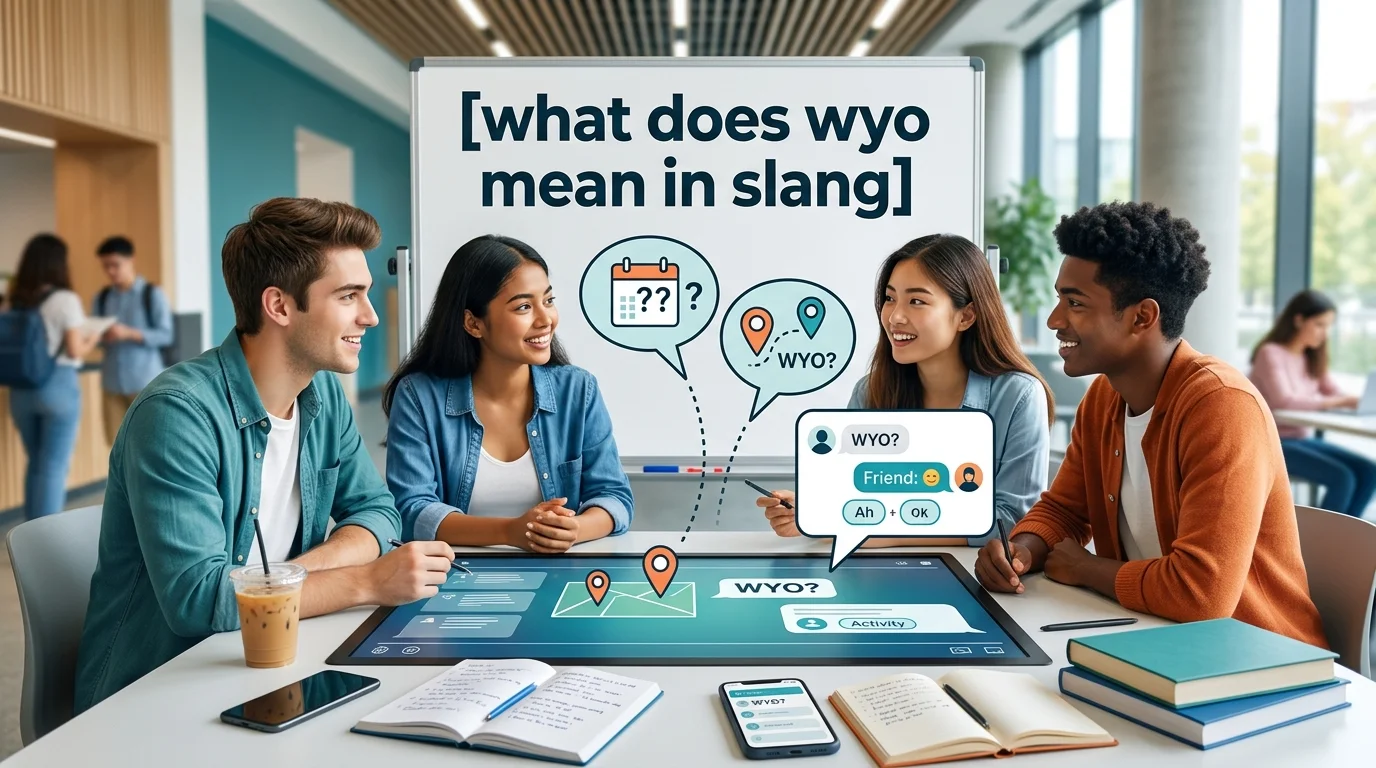
Deciphering Digital Lingo: Understanding What WYO Really Means
You are scrolling through your Instagram DMs or sitting on a sudden text notification, and there it is: a simple, three-letter acronym that leaves you scratching your head. You ask yourself, “what does wyo mean in slang?”
Digital shorthand evolves faster than traditional dictionaries can keep up. Every year, new acronyms spring up across Snapchat, TikTok, and iMessage, leaving people feeling slightly out of the loop.
Understanding this specific piece of texting vocabulary solves the awkwardness of misinterpreting someone’s mood or intent. Decoding it helps you maintain fluid, natural conversations without breaking your flow to ask for a definition.
What Does WYO Mean in Slang? A Quick Overview
At its core, WYO stands for “What You On?” or “What You On About?”
It functions as a modern, hyper-casual way of asking someone what they are currently doing, what their plans are, or what is on their mind.
Core Definition and Essentials
When someone sends you this acronym, they are opening the door for conversation. Think of it as the digital equivalent of leaning against a doorway and asking, “So, what are you up to?”
- Primary Meaning: “What are you on?” (What are you doing right now?)
- Secondary Meaning: “What are you on about?” (What are you talking about?)
- Conversational Function: An informal icebreaker, plan initiator, or mood check.
Quick Text Examples
“Hey, WYO tonight? Free to hang out?”
“WYO? You’ve been quiet all afternoon.”
“Wait, WYO? That story makes zero sense!”
Origin and Cultural Evolution of WYO
Text messaging in the early 2000s forced users to economize characters due to strict SMS limits. While older acronyms like LOL and BRB were born in early chatrooms, WYO emerged much later from urban African American Vernacular English (AAVE) and street slang.
Phrases like “What you on?” were widely used in everyday spoken dialogue long before they hit the keyboard. The phrase naturally compressed into a three-letter acronym as smartphone messaging platforms like Snapchat, Twitter, and Instagram DMs became dominant.
The Rise on Social Media platforms
Social media accelerated the spread of WYO from local regional dialects to global internet language. Platforms built around rapid, short-form interaction naturally favored quick, three-letter check-ins.
TikTok creators and Twitter users popularized the acronym in memes, captions, and short skits. Over time, its usage shifted from localized youth slang to a universal text-based greeting recognized across different countries and demographics.
Real-Life Conversations Using WYO
Seeing slang in context makes all the difference. Here are realistic examples of how this acronym plays out across popular platforms.
Scenario 1: WhatsApp (Making Casual Weekend Plans)
Person A: Yo, WYO right now?
Person B: Just finishing up some work. Why, what’s popping?
Person A: Grabbed an extra ticket for the game tonight. You in?
Person B: Say less, I’m heading over!
Scenario 2: Instagram DMs (Late Night Check-In)
Person A: WYO? Saw you posted a story at the gym at 11 PM.
Person B: Haha, late night grind! Couldn’t sleep.
Person A: Respect. Get that work in.
Scenario 3: TikTok Comment Section (Expressing Confusion)
Person A: Honestly, pineapple belongs on pizza and syrup belongs on spaghetti.
Person B: Bro WYO??? That second half is wild.
Scenario 4: SMS / iMessage (Flirty or Caring Outreach)
Person A: Hey stranger, WYO? Haven’t heard from you all weekend.
Person B: Hey! Just lounging with my dog, watching movies. WBU?
Person A: Mind if I join? I’ll bring snacks.
The Psychological and Emotional Meaning Behind WYO
Language is rarely just about words; it is about human connection. Sending a quick, three-letter text carries a low-pressure emotional footprint that fits seamlessly into modern social dynamics.
Low-Stakes Engagement
Traditional questions like “How are you doing today?” or “What are your plans for this evening?” feel formal. They carry expectations of detailed, polite responses.
Using informal slang lowers the emotional bar. It sends a clear signal: I’m thinking of you, but you don’t need to write me an essay.
Psychological Convenience
Modern communicators often suffer from interaction fatigue. A simple check-in allows users to signal interest without committing heavy cognitive effort upfront.
A Personal Observation on Modern Texting
A few years ago, a close friend went through a tough breakup. He withdrew from our group chat for weeks. Instead of sending a heavy, intense paragraph asking how he was coping, I simply texted him: “WYO bro?”
That simple, low-pressure question opened the floodgates. He replied instantly because the message didn’t demand an emotional performance—it just offered an open door.
Usage of WYO in Different Contexts
Context determines how your text will be received. Using slang in the wrong environment creates friction, while using it in the right context builds instant rapport.
Social Media & Digital Spaces
On platforms like TikTok, Snapchat, and Instagram, this acronym acts as currency for casual engagement. It works brilliantly in public comments, direct messages, and photo captions to boost interaction.
Friends and Casual Relationships
Among friends, peers, and casual romantic interests, the phrase feels natural and relaxed. It signals comfort, familiarity, and informal warmth.
Professional and Academic Settings
Do not use this acronym in professional emails, workplace chat tools like Slack, or academic assignments. Sending a manager or client “WYO?” comes across as overly casual, unprofessional, and potentially disrespectful.
Casual vs. Serious Tone
Casual Tone: “WYO tonight? Want to grab food?” (Lighthearted, open-ended)
Serious Tone: “WYO? You’re acting completely different today.” (Confrontational or deeply concerned)
When NOT to Use WYO
Knowing when to hold back on slang is just as important as knowing what it means.
Professional Boundaries
Avoid using slang with bosses, clients, professors, or older colleagues who may not be familiar with internet vocabulary.
Serious or Sensitive Situations
If someone is sharing bad news, expressing grief, or trying to have a serious emotional discussion, dropping internet acronyms feels dismissive and insensitive.
Clear Communication Needs
When precise scheduling or clear details are required—such as confirming flight times or organizing business meetings—stick to full sentences to avoid tone confusion.
Common Misunderstandings and Tone Confusion
Because slang moves quickly, people often mix up meanings or misread intent.
Literal vs. Figurative Meaning
Some recipients literally interpret “What you on?” as an accusation—asking if someone is under the influence of something. In 99% of text conversations, it simply means “What are you doing?”
Tone Ambiguity
Text messages lack vocal tone, facial expressions, and body language. Depending on the context, a three-letter text can feel friendly, overly blunt, or even aggressive if sent without punctuation or emojis.
WYO vs. Similar Slang Terms
Comparing related slang terms helps clarify subtle differences in meaning and tone.
| Slang Term | Full Meaning | Tone / Nuance | Best Context |
| WYO | What You On? | Casual, direct, inviting | Texting friends, DMs |
| WYD | What You Doing? | Neutral, classic, broad | Everyday casual check-ins |
| WBU | What About You? | Conversational, reciprocal | Keeping a conversation flowing |
| HYD | How You Doing? | Caring, gentle, traditional | Checking in on someone’s well-being |
| WYLL | What You Look Like? | Direct, visual-focused | Snapchat, dating apps |
| NMH | Not Much Here | Passive, quiet response | Answering “WYD” or “WYO” |
Key Insight
The Evolution of Checking In
While older acronyms focused purely on actions, modern variants focus heavily on current state and immediate availability, creating a faster, more dynamic conversational flow.
Variations and Types of WYO Expressions
Internet slang adapts quickly. Here are the most common variations of this phrase you will encounter online.
1. WYO Tonight
Meaning: What are you up to tonight?
Used specifically to ask about evening plans or social outings.
2. WYOD
Meaning: What you on today?
A daytime variation asking about someone’s schedule for the day.
3. WYOB
Meaning: What you on bro?
A masculine or friendly variation used between close peers.
4. WYO RN
Meaning: What you on right now?
Emphasizes immediate availability or current actions.
5. WYOM
Meaning: What you on man?
A casual greeting used primarily in informal group chats.
6. WYO Gang
Meaning: What are you all doing?
Directed at a group of friends in a group chat or public comment.
7. WYOO
Meaning: What you on about?
Used to express confusion or challenge what someone just said.
8. WYO Text
Meaning: A sudden “what are you doing” message.
Refers to a spontaneous late-night text from an ex or casual acquaintance.
How to Respond When Someone Texts You WYO
Your response depends entirely on who sent the message and what kind of conversation you want to have.
Casual Responses
- “Not much, just chilling at home. WBU?”
- “Just finishing up dinner! What’s the move?”
- “Binge-watching TV. What are you up to?”
Funny and Playful Responses
- “Plotting world domination, the usual. You?”
- “On my third cup of coffee pretending to be productive.”
- “Currently staring at my ceiling. Save me from boredom!”
Mature and Direct Responses
- “Just wrapping up my work day. Did you need help with something?”
- “Having a quiet evening in tonight, catching up on reading.”
- “Taking a quick break before my next study session. How are you?”
Respectful Declines
- “Hey! Just relaxing tonight, holding down the couch.”
- “Focused on finishing a project tonight, catch up tomorrow?”
- “Hey there! Exhausted from today, so I’m calling it an early night.”
Regional and Cultural Usage Differences
Slang travels globally, but cultural background shapes how it gets used and understood.
Western Internet Culture
In the US, UK, and Canada, the term is widely integrated into youth culture, urban music, and social media commentary. It carries little to no friction among younger generations.
Asian and Middle Eastern Internet Usage
In regions where English is a secondary language, youth adopt English slang primarily through TikTok and global streaming content. It is used almost exclusively online among English-literate Gen Z populations.
Generational Divide: Gen Z vs. Millennials
Gen Z uses short acronyms effortlessly as a primary form of text communication. Millennials generally recognize the term but may still prefer typing out “What are you up to?” or using slightly older terms like “WYD.”
Is It Safe for Kids and Teens?
Parents often wonder if modern slang carries hidden, inappropriate meanings.
The acronym itself is completely benign. It simply means “What you on?” or “What are you doing?” It carries no inherently explicit, violent, or dangerous connotations.
However, like any open-ended greeting (“WYD” or “Hey”), context matters. Parents should encourage young users to be mindful of who is reaching out and why they are asking about their current location or availability.
Frequently Asked Questions
What does WYO stand for in text messages?
It stands for “What You On?” or “What You On About?” It is a casual way of asking someone what they are doing or what plans they have.
Is WYO the same as WYD?
Yes, they share nearly identical meanings. Both ask the recipient what they are currently doing, though WYO carries a slightly more modern, urban slant.
Can WYO mean “What You On About?”
Yes. In conversational contexts where someone says something confusing or shocking, it means “What are you talking about?”
Is WYO appropriate to use at work?
No. It is informal internet slang and should be kept to personal conversations with friends, family, or social media followers.
How do I reply if a crush texts me WYO?
Keep it light, friendly, and open-ended. Share what you are doing, then flip the question back to them to keep the conversation going.
Master Casual Digital Communication
Understanding modern digital shorthand is less about memorizing letters and more about reading human connection. Language constantly transforms to help us communicate faster, lighter, and more naturally.
Using slang like this effectively comes down to balance and context. Keep your audience in mind, match the energy of the conversation, and use it where it feels natural.
Now that you know what it means, how it works, and how to respond, you can navigate your DMs and group chats with complete confidence.