If you have stumbled upon the term recently—whether in news headlines, social media debates, or casual conversations—you might be wondering: what does open carry mean, and why does it spark such intense discussion?
At its core, the concept is straightforward, yet its legal implications, cultural weight, and social etiquette make it a multi-layered topic. Many people search for this term because the boundary between legal rights, personal safety, and public perception often gets blurry.
Understanding open carry helps clear up confusion between different firearm laws, safety practices, and modern social norms. Whether you are trying to understand local regulations, participating in a civic debate, or simply staying informed, having a clear grasp of this concept is essential.
What Does Open Carry Mean? A Quick Overview
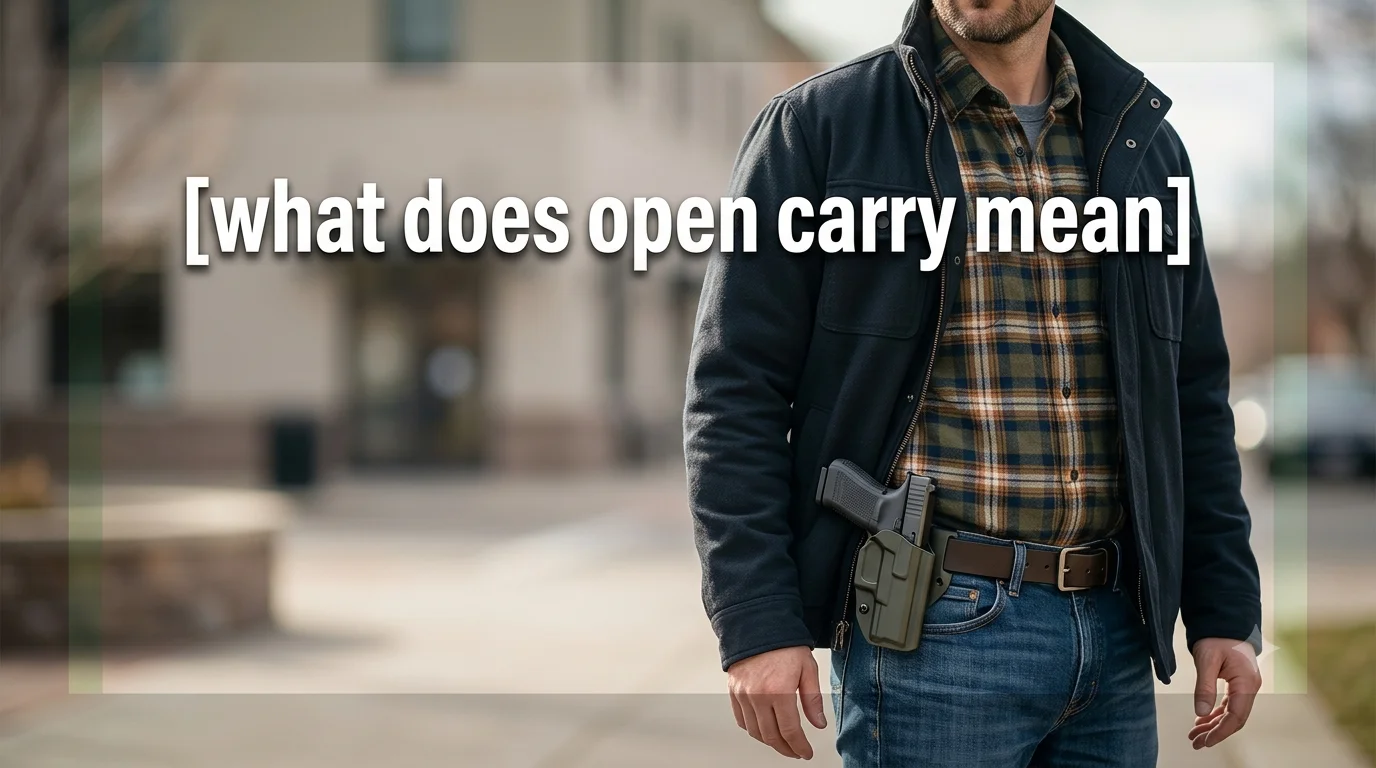
To put it in the simplest terms, open carry refers to the act of publicly carrying a firearm in plain view, rather than concealing it under clothing or inside a bag.
Core Definition and Basic Principles
When a person practices open carry, the weapon—typically a handgun holstered at the hip or a long gun slung across the back—is visible to the general public.
- Visibility: The firearm is not hidden from sight; anyone walking by can see it.
- Holstering: Handguns are typically secured in an external belt holster, chest rig, or shoulder harness.
- Legal Authorization: It is governed by specific state and local laws, which vary widely depending on location.
“Open carry means the firearm remains clearly visible to the ordinary observation of reasonable passersby.”
“Unlike concealed carry, open carry requires zero effort to hide the weapon from public view.”
“It represents a specific legal status where public firearm visibility is explicitly permitted or regulated.”
Origin & Background of Open Carry
The concept of open carry is deeply rooted in American history and legal tradition, stretching back to the early days of the frontier.
Historical Context and Legal Origins
Historically, carrying a weapon in plain sight was considered the noble and honest way to travel. In the 18th and 19th centuries, concealed weapons were often associated with dishonorable intentions or criminal behavior because a hidden weapon implied element of surprise.
Over time, statutory law evolved. As cities grew denser during the 20th century, state legislatures began drafting specific statutes to regulate where, when, and how weapons could be displayed in public spaces.
Social Media Impact and Modern Evolution
In recent decades, digital platforms have transformed open carry from an ordinary legal practice into a subject of viral discourse. Video platforms and social forums frequently host content featuring open carry advocates testing local laws, interacting with law enforcement, or demonstrating gear.
This digital footprint has reshaped public perception, turning a traditional practice into a high-visibility topic of cultural discussion.
Real-Life Conversations Around Open Carry
To understand how people actually discuss this topic in everyday life, let us look at some realistic text exchanges across different platforms.
WhatsApp Exchange: Local Law Curiosity
Person A: Hey, quick question. I saw someone at the gas station with a pistol in a hip holster. Is that legal here?
Person B: Yeah, our state has open carry laws. As long as you can legally own it and aren’t in a restricted building, you can carry it visibly.
Person A: Wow, okay. I was a bit startled because I’m used to seeing people hide them!
Instagram DM: Clarifying Terminology
Person A: Did you see that post about the local policy change? What does open carry mean compared to concealed carry?
Person B: Open carry means everyone can see the gun on your belt or shoulder. Concealed means it’s totally hidden under a jacket or shirt.
Person A: Ah, that makes total sense now. Thanks for breaking it down!
TikTok Comments: Gear Debate
Person A: Why carry open when concealed carry keeps you from drawing attention?
Person B: Some people prefer open carry for comfort or faster access, especially when hiking out in the woods.
Text Message: Travel Planning
Person A: We’re driving through three states this weekend. Are we good with open carry laws?
Person B: Double-check the state line rules! What is legal in one state might require a permit or be completely banned in the next.
Emotional & Psychological Meaning Behind Open Carry
The choice to open carry carries significant emotional and psychological weight for both the carrier and the surrounding public.
What the Practice Expresses
For many practitioners, carrying visibly represents personal responsibility, self-reliance, and the exercise of constitutional rights. It provides a sense of peace, security, and preparedness against potential threats.
Conversely, for members of the general public who are unaccustomed to firearms, seeing a weapon openly displayed can trigger anxiety, discomfort, or hyper-vigilance.
Personal Insight Scenario
While hiking on an isolated mountain trail, encountering a fellow hiker with an openly carried handgun can feel reassuring—a sign of shared safety in the wilderness. However, seeing that same weapon in a busy urban coffee shop can provoke an entirely different psychological reaction. Context heavily dictates emotional response.
Usage of Open Carry in Different Contexts
The appropriateness and legal standing of open carry shift dramatically depending on the setting.
Rural vs. Urban Contexts
In rural areas, farming communities, or wilderness trails, open carry is often viewed as practical utility—protection against dangerous wildlife or property threats. In dense urban areas, the exact same practice often draws immediate public concern and police inquiries.
Professional vs. Personal Environments
- Professional Settings: Uniformed security officers and law enforcement officers regularly open carry as part of their official duties and visible deterrence strategy.
- Personal & Casual Spaces: Private businesses reserve the right to prohibit firearms on their premises, meaning open carry may be restricted inside stores, restaurants, or private venues regardless of state law.
When NOT to Practice Open Carry
Even where legal, there are explicit situations where open carry is inappropriate, illegal, or socially disruptive.
Restricted Locations
- Government buildings, courthouses, and municipal facilities
- Schools, university campuses, and daycare centers
- Private properties with posted “No Weapons Allowed” signage
- Secure airport zones and federal property
Cultural and Social Sensitivity
Carrying a firearm visibly at formal events, peaceful gatherings, or sensitive public forums can escalate tension unnecessarily. Demonstrating situational awareness means recognizing when open display causes undue distress or conflicts with private venue rules.
Common Misunderstandings About Open Carry
Despite its prevalence in public policy debates, several misconceptions persist.
Fact vs. Fiction
- Myth: Open carry means you can carry a gun anywhere without rules.
- Fact: Property rights supersede open carry rights on private land, and federal/state exceptions apply to many public zones.
- Myth: Open carry requires no permit anywhere in the United States.
- Fact: Many jurisdictions require specific licenses, background checks, or training before allowing public display.
- Myth: Open carry is the same as brandishing.
- Fact: Brandishing involves pointing, waving, or displaying a weapon in a threatening manner. Open carry simply means keeping the firearm holstered in plain view.
Open Carry vs. Related Terms: Comparison Table
| Term | Visibility | Permit Required? | Typical Context |
| Open Carry | Fully visible in public view | Varies by state/jurisdiction | Rural areas, open land, specific legal states |
| Concealed Carry | Hidden under clothing/bag | Usually requires permit/license | Everyday urban/suburban self-defense |
| Constitutional Carry | Open or concealed | No permit required by state | States with permitless carry statutes |
| Brandishing | Displayed aggressively | Illegal in almost all contexts | Criminal threat or intimidation |
Key Insight
Open carry focuses entirely on visible presence without active threat, whereas brandishing involves intent to threaten, and concealed carry prioritizes total discretion.
Variations and Related Legal Terms
Understanding the nuances of open carry requires familiarizing yourself with related terminology:
- Permitless Open Carry: The legal right to carry a visible firearm without needing a state-issued license.
- Licensed Open Carry: Carrying a visible firearm legally, but only after obtaining an official state permit.
- Open Carry Retention: Using specialized holsters with locking mechanisms to prevent unauthorized removal of a visible weapon.
- Open Carry Restrictions: State-mandated rules that limit visible carry based on firearm type (e.g., handguns vs. long guns).
- Open Carry Preemption: State laws that prevent local cities from creating their own unique bans on visible carry.
- Urban Open Carry: Visible carry within densely populated city environments, often subject to strict municipal codes.
- Rural Open Carry: Carrying visible firearms in non-incorporated land, farms, or wilderness zones.
- Long-Gun Open Carry: Publicly carrying rifles or shotguns in plain view rather than handguns.
How to Respond When Open Carry Comes Up in Conversation
When discussing open carry socially or encountering it in real life, having thoughtful responses keeps dialogue productive.
Casual Responses
“It is dynamic how different state laws handle open carry across the country.”
Informative Responses
“Open carry just means the firearm is visible in a holster, whereas concealed carry keeps it completely hidden.”
Mature & Balanced Responses
“Everyone views firearm visibility differently based on their background, so understanding both the legal and social sides is key.”
Respectful Responses
“I respect private property owners who set their own guidelines regarding open carry on their premises.”
Regional and Cultural Usage Differences
The perception and legality of open carry vary significantly across domestic and international landscapes.
Regional Variations
[United States]  ---> Highly varied state-by-state legal frameworks
[Western Europe] ---> Strictly restricted; public carry generally illegal
[Asia & Middle East] ---> Heavily regulated; restricted primarily to official forces
- United States: Highly fragmented legal landscape; some states permit open carry without a permit, while others ban it entirely or require strict licensing.
- International Communities: Outside the US, civilian open carry is extremely rare and generally restricted exclusively to active military and law enforcement personnel.
- Generational Perspectives: Older generations often view firearm practices through traditional hunting or rural utility lenses, whereas younger demographics frequently engage with the topic through digital policy debates and modern civil liberties discussions.
Is Open Carry Safe for Discussion with Younger Audiences?
When explaining open carry to children or young adults, context and age-appropriate language are essential.
Focus on explaining the legal definitions and public safety aspects neutrally. Emphasize that firearms are tools governed by strict laws and safety protocols, helping younger audiences understand legal realities without unnecessary fear or misinformation.
Frequently Asked Questions
What is the main difference between open carry and concealed carry?
Open carry means the firearm is clearly visible to the public in a holster or sling. Concealed carry means the firearm is completely hidden from view under clothing or inside a bag.
Do all states allow open carry?
No. State laws vary significantly. Some states allow open carry without a permit, others require a license, and some prohibit open carry of handguns entirely in public spaces.
Can private businesses ban open carry on their property?
Yes. Private property owners and business owners have the legal right to prohibit firearms on their premises, regardless of state open carry laws.
Is open carry considered brandishing a weapon?
No. Open carry is keeping a firearm holstered or slung in plain view. Brandishing involves displaying, pointing, or waving a weapon in a threatening or aggressive manner, which is illegal.
Do you need a background check for open carry?
Obtaining a firearm in the United States generally requires a background check through a licensed dealer, though specific permit requirements for open carry depend entirely on state law.
Final Thoughts on Understanding Open Carry
Navigating the topic of open carry comes down to understanding the intersection of statutory law, personal rights, and public awareness. While the fundamental definition remains simple—carrying a firearm in plain sight—the legal landscape and social expectations surrounding it are constantly evolving.
By learning the distinct definitions, legal boundaries, and cultural perspectives, you can navigate conversations around open carry with confidence, clarity, and informed insight.