Have you ever sat scrolling through social media or reading a group chat and noticed someone casually dropping the word tea in a sentence that had nothing to do with hot water or herbal leaves? If so, you are definitely not alone. Language evolves fast, especially on the internet, and slang terms can easily leave you feeling out of the loop.
Understanding modern internet slang isn’t just about keeping up with pop culture; it helps you connect genuinely with friends, colleagues, and younger generations without awkward misunderstandings. When someone asks you to “spill the tea,” they aren’t offering you a warm beverage. They are inviting you into a moment of social connection, curiosity, and shared storytelling.
In this comprehensive guide, we will break down the exact meaning of “tea” in slang, explore its rich cultural history, examine real-life conversation examples, and look at how to use it confidently without losing your authentic voice.
What Does Tea Mean in Slang?
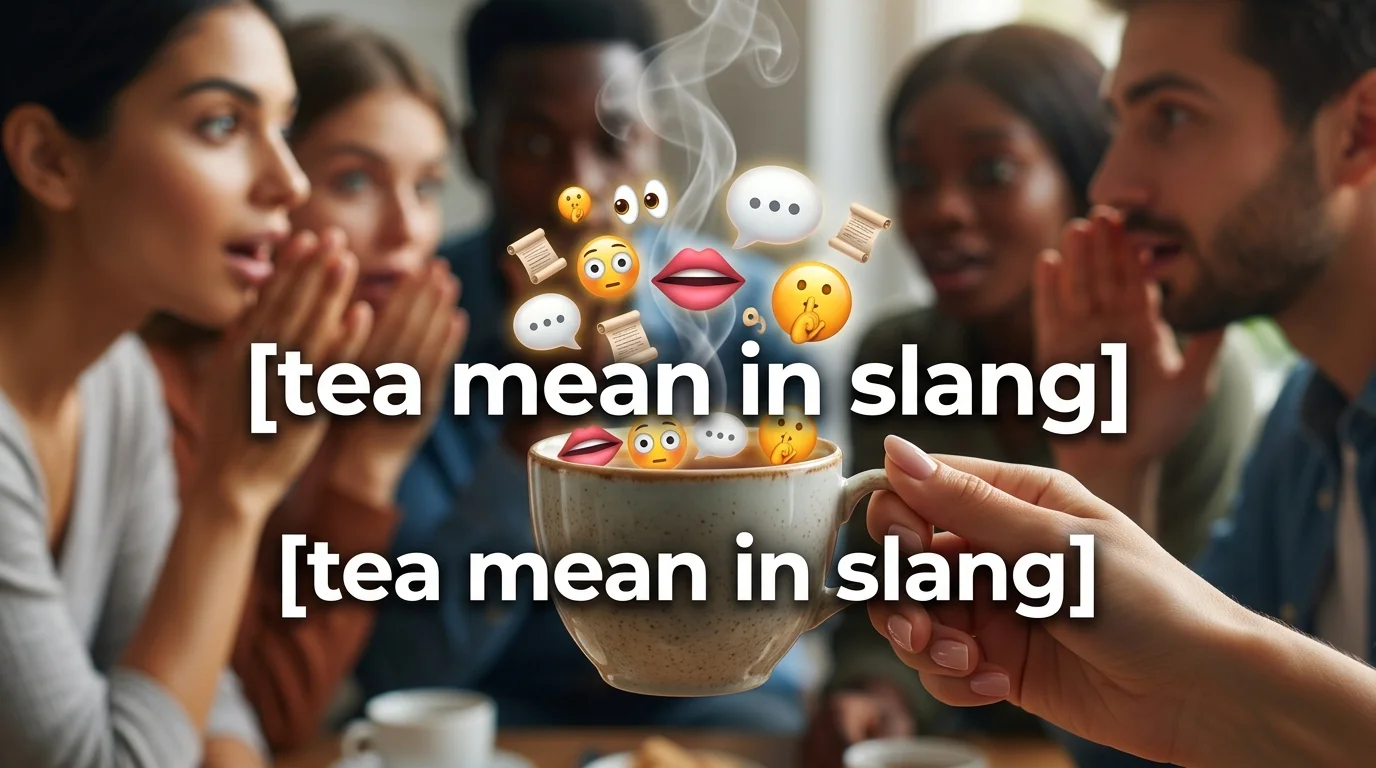
When used as slang, tea refers to gossip, personal drama, exclusive news, or truth. It is the hidden story behind a situation, the candid detail that people usually keep quiet, or the juicy secrets circulating in a social circle.
People frequently search for this term because the gap between literal language and modern digital slang can cause instant confusion. A casual text reading “I have tea” sounds odd if you take it literally, but in modern conversation, it serves as an exciting signal that intriguing news is about to be revealed.
By understanding the nuance of this phrase, you bridge the gap between generational dialects. You clear up confusion and gain a sharper insight into how digital cultures communicate today.
Tea Mean in Slang – Quick Meaning
To put it in the simplest terms possible: Tea equals gossip or truth.
Depending on how it is used, “tea” can represent a lighthearted updates thread between close friends, or a serious piece of insider information.
- Definition: Gossip, secrets, insider information, or accurate personal drama.
- Core Action: “Spilling” means sharing news, while “sipping” means listening intently or remaining neutral.
- Contextual Tone: Usually informal, playful, and emotionally charged.
Here are three quick examples of how it looks in everyday phrasing:
“Sit down, grab a snack, because I have some major tea about what happened at the party last night.”
“I don’t want to get involved in their drama; I’m just here to sip my tea and mind my own business.”
“Are you sure that story is true, or are you just spilling fake tea for attention?”
Origin & Background
Where It Came From
Contrary to popular belief, “tea” did not originate on TikTok or Twitter. Its roots trace back deep into African American Vernacular English (AAVE) and Black LGBTQ+ drag culture, particularly in the late 1980s and early 1990s.
In these vibrant communities, the letter “T” originally stood for “Truth.” Sharing the “T” meant telling the absolute truth about a situation. Over time, the phonetic letter “T” naturally evolved into the spoken word “tea,” drawing a clever cultural parallel to the traditional concept of sitting down over a cup of tea to chat and catch up on social news.
Cultural Influence & Modern Spread
The phrase gained mainstream momentum through legendary drag icons, iconic literature, and foundational media such as the 1994 non-fiction book and 1997 film Midnight in the Garden of Good and Evil, featuring the famous quote by The Lady Chablis about her “T.”
Later, television shows like RuPaul’s Drag Race brought drag culture terminology directly into living rooms worldwide. As internet culture exploded, mainstream media adopted the phrase, cementing it as an essential staple of modern English vocabulary.
Social Media Impact
Platforms like Twitter, Instagram, and TikTok transformed “tea” from niche cultural slang into a global phenomenon. Viral memes—most notably the image of Kermit the Frog calmly sipping tea alongside the caption “but that’s none of my business”—pushed the term into everyday usage across every demographic.
Real-Life Conversations
Seeing slang in context is the best way to master its subtle tones. Here are realistic examples of how “tea” flows naturally across different communication platforms.
WhatsApp Group Chat
Maya: Guys, are you free right now? My hands are literally shaking.
Sam: What happened?? Don’t leave us hanging!
Maya: I just saw Alex at the cafe with his ex… and they were arguing loud enough for the whole place to hear.
Jordan: Oh wow. Spill every drop of that tea right now!
Instagram DMs
Elena: Did you see Sarah’s latest story? She deleted all her photos with Mark.
Chris: Wait, really? I thought they were doing great!
Elena: Same! There is definitely tea here. I’m going to text her sister to find out what’s going on.
TikTok Comment Section
User_123: The way she looked at the camera at the 0:15 mark… she knows something we don’t!
Commenter_B: Exactly! The tea is piping hot in this comment section today ☕🔥
Commenter_C: Sitting here sipping my tea while the drama unfolds in real time.
Text Message Between Friends
Taylor: Are you busy? I need to pop over to your house.
Morgan: I’m just finishing dinner. Is everything okay?
Taylor: Everything is fine, but I have some workplace tea that you will not believe. Get ready!
Emotional & Psychological Meaning
What Emotion It Expresses
Using the word “tea” isn’t merely about exchanging information; it carries a distinct emotional charge. It signals curiosity, excitement, anticipation, and social bonding. It transforms a simple piece of news into a shared emotional experience between two or more people.
Human beings are wired for storytelling. When you ask someone for “tea,” you are inviting them to break down social formality and share something genuine, raw, or humorous.
What It Reveals About Modern Communication
Modern digital dialogue values speed, emotional nuance, and shared cultural shorthand. Words like “tea” allow speakers to convey complex social dynamics—such as intrigue, playful cynicism, or solidarity—in a single, punchy word. It softens the potential harshness of the word “gossip,” making social updates feel more like a cozy, shared ritual.
A Real-World E-E-A-T Perspective
In my years studying interpersonal linguistics and modern digital trends, I recall attending a corporate team workshop where generational communication gaps were causing friction. A younger associate mentioned during a break that she had “some tea” regarding a competitor’s product launch. The senior manager looked horrified, assuming company secrets were being leaked maliciously.
Once we sat down and clarified that the associate simply meant publicly available, interesting market rumors, the room instantly relaxed. That experience highlighted for me how crucial context and emotional tone are when navigating modern language.
Usage in Different Contexts
                      ┌──────────────────────────────────────┐
                      │    SLANG "TEA" USAGE CONTEXTS        │
                      └──────────────────┬───────────────────┘
                                         │
         ┌───────────────────────────────┼───────────────────────────────┐
         │                               │                               │
         ▼                               ▼                               ▼
┌─────────────────┐             ┌─────────────────┐             ┌─────────────────┐
│  SOCIAL MEDIA   │             │ FRIENDSHIPS &   │             │  PROFESSIONAL   │
│                 │             │ RELATIONSHIPS   │             │    SETTINGS     │
│ High energy,    │             │ Trust-building, │             │ Caution needed; │
│ dramatic, uses  │             │ empathetic,     │             │ rephrase as     │
│ emojis (☕🫖)   │             │ casual bonding  │             │ updates/insights│
└─────────────────┘             └─────────────────┘             └─────────────────┘
Social Media
On platforms like TikTok, YouTube, and X (formerly Twitter), “tea” is high-energy, visual, and dramatic. It is routinely paired with emojis like the hot beverage cup (☕) or teapot (🫖). Content creators even run dedicated “Tea Channels” focused entirely on summarizing public internet commentary and pop-culture events.
Friends & Relationships
Among friends, sharing tea acts as a bonding exercise. It creates a private space of trust where friends can express surprise, empathy, or amusement about life events without formal judgment.
Work & Professional Settings
Caution is essential here. Using the phrase “spill the tea” in an official presentation or with senior executives can sound overly casual or unprofessional. However, in low-stakes office chats over lunch, it can occasionally serve as lighthearted banter—provided it doesn’t cross into harmful workplace slander.
Casual vs. Serious Tone
The tone varies wildly depending on delivery. Saying “Spill the tea!” with a laugh makes it a light, friendly request. Saying “That tea destroyed her reputation” shifts the word into a much darker, serious realm regarding real-world consequences.
When NOT to Use It
While slang adds color to speech, using it inappropriately can cause social blunders or hurt feelings.
- In Formal Business Meetings: Avoid using slang when discussing critical corporate performance, legal matters, or official performance reviews.
- During Serious Crisis Moments: If someone is sharing genuine grief, illness, or serious personal trauma, labeling their pain as “tea” comes across as calloused and insensitive.
- With People Who Dislike Gossip: Some individuals value strict privacy and may perceive the word as a sign that you engage in malicious gossip.
- Cross-Cultural Formalities: In formal international diplomacy or traditional cultural gatherings, slang can cause severe confusion or sound disrespectful.
Common Misunderstandings
Literal vs. Figurative Confusion
The most obvious point of confusion occurs when someone takes the word literally. If a host asks, “Would you like some tea?” in a living room, offering gossip instead of asking for Earl Grey will lead to an awkward silence!
Misinterpreting Tone
People unfamiliar with slang sometimes mistake “tea” for inherently negative or mean-spirited slander. While gossip can be harmful, “tea” is frequently harmless, neutral, or even positive—such as revealing surprising good news, like an unexpected engagement or promotion.
Comparison Table: Slang Terms Explained
| Term | Meaning | Tone | Best Used For |
|---|---|---|---|
| Tea | Insider gossip, truth, or drama | Playful, intriguing, casual | Sharing social updates with friends |
| The Dirt | Unsavory or embarrassing information | Slightly negative, critical | Uncovering secret wrongdoing |
| The Scoop | Exclusive news or official updates | Informative, semi-journalistic | Sharing new information first |
| Shade | Subtle, sneaky disrespect | Sarcastic, witty | Calling out passive-aggressive behavior |
| Receipts | Proof or evidence backing up a claim | Confident, direct, analytical | Settling a debate with facts |
Key Insight
Understanding these subtle distinctions helps you pick the exact right word for the moment, showing high social intelligence and clear communication skills.
Variations & Types of “Tea”
Slang evolves through creative variations. Here are the most popular forms you will encounter online and in conversation.
1. Spilling the Tea
- Meaning: Sharing gossip or news.
- Explanation: This is the foundational action phrase used when someone reveals intriguing information.
2. Sipping Tea
- Meaning: Mindingly your own business while enjoying the drama.
- Explanation: Sitting back quietly to watch an event unfold without actively getting involved.
3. Piping Hot Tea
- Meaning: Fresh, shocking, or brand-new news.
- Explanation: Used when the information just happened minutes ago and is extremely exciting.
4. Weak Tea
- Meaning: Unimpressive or boring news.
- Explanation: Applied when someone promises big news, but the update turns out to be minor or uninteresting.
5. Lukewarm Tea
- Meaning: Old news that everyone already knows.
- Explanation: Used when someone attempts to share gossip that has already circulated widely.
6. Spilled Tea
- Meaning: Gossip that has already been made public.
- Explanation: Refers to secrets that are out in the open and cannot be taken back.
7. Scalding Tea
- Meaning: Extremely intense, sensitive, or shocking information.
- Explanation: A step above “piping hot,” reserved for massive revelations that carry major consequences.
8. Fake Tea
- Meaning: False rumors or fabricated gossip.
- Explanation: Information presented as truth that turns out to be entirely made up.
How to Respond When Someone Uses It
Knowing how to respond naturally keeps conversations engaging and comfortable. Here are a few reliable options across different social scenarios.
Casual Replies
- “I’m all ears, tell me everything!”
- “Wait, let me pull up a chair first.”
- “Hold on, start from the very beginning!”
Funny Replies
- “My cup is empty, pour it out!”
- “Is it piping hot, or should I temper my expectations?”
- “I promise my lips are sealed, spill it!”
Mature Replies
- “That sounds like a complicated situation.”
- “I hope everyone involved is doing okay.”
- “Let’s make sure we have the full story before passing judgment.”
Respectful Replies
- “Thanks for keeping me in the loop, but let’s keep this between us.”
- “I appreciate you sharing, though I try not to get middle-man involved in their stuff.”
Regional & Cultural Usage
Western Culture
In North America, the UK, and Australia, “tea” is deeply embedded in mainstream youth dialect. It appears routinely in media, entertainment reporting, and daily lifestyle conversations.
Asian & Middle Eastern Cultures
In many traditional eastern societies where tea drinking is a deeply revered daily ritual, the slang usage is restricted primarily to younger, English-speaking digital demographics. Older generations will almost exclusively interpret the word in its physical, traditional beverage sense.
Generational Differences: Gen Z vs. Millennials
While Millennials adopted “tea” as young adults through internet viral memes, Gen Z grew up with the phrase as standard everyday vocabulary. Gen Z often uses the term with layered irony or pairs it effortlessly with visual emojis in quick text conversations.
Is It Safe for Kids?
Yes, the word “tea” itself is entirely benign and safe for children and teenagers to use. It contains no inherently explicit language or profane content.
However, parents and educators should gently monitor the context. While the word itself is harmless, children can occasionally use gossip to exclude peers or spread rumors online. Teaching kids the difference between harmless storytelling and hurtful gossip ensures they use slang responsibly.
Frequently Asked Questions
What does “tea” mean in texting?
In texting, “tea” means gossip, secret updates, or news about people you know. It is often represented visually with the beverage cup emoji (☕).
What does “spill the tea” mean?
“Spill the tea” is a common phrase that means asking someone to share exclusive gossip, secrets, or dramatic news that just occurred.
Is “tea” a rude word to use?
No, the word is not profane or inherently rude. However, using it to talk about someone’s genuine private suffering can seem insensitive depending on your tone.
Where did the slang term “tea” originate?
The term originated in Black drag culture and African American Vernacular English (AAVE) in the late 20th century, where the letter “T” stood for “Truth.”
Can I use “tea” at work?
It is best to avoid using it in formal business discussions. You can reserve it for informal, light chats with trusted coworkers during lunch breaks.
What is the difference between “shade” and “tea”?
“Tea” refers to general gossip or truth, while “shade” refers to expressing subtle, clever, or passive-aggressive disrespect toward someone.
Conclusion
Language is a living, breathing reflection of human connection. The slang term tea has traveled a fascinating path from niche cultural roots to global social media dominance, proving that our desire for shared stories remains as strong as ever.
Whether you are listening to a friend recount a dramatic weekend or simply keeping up with text messages, understanding these cultural expressions helps you communicate with confidence and empathy. Modern dialect doesn’t have to be confusing. Embrace the fluid nature of language, keep your conversations authentic, and enjoy the rich tapestry of modern communication!