Have you ever stumbled across the letters “NDA” in a contract or during a casual chat and wondered what on earth it stands for? You are certainly not alone. Thousands of people search for what is nda mean every single month to clear up this exact confusion.
Understanding this term matters because it bridges two completely different worlds. On one hand, it is a crucial legal tool used in business. On the other hand, it has exploded into modern internet slang, popping up on TikTok, Instagram, and group chats worldwide.
In this guide, we will unpack both sides of the coin. You will discover its legal roots, its modern digital evolution, real-life conversation examples, and exactly how to respond when someone drops it in conversation.
What Does NDA Mean? A Quick Overview
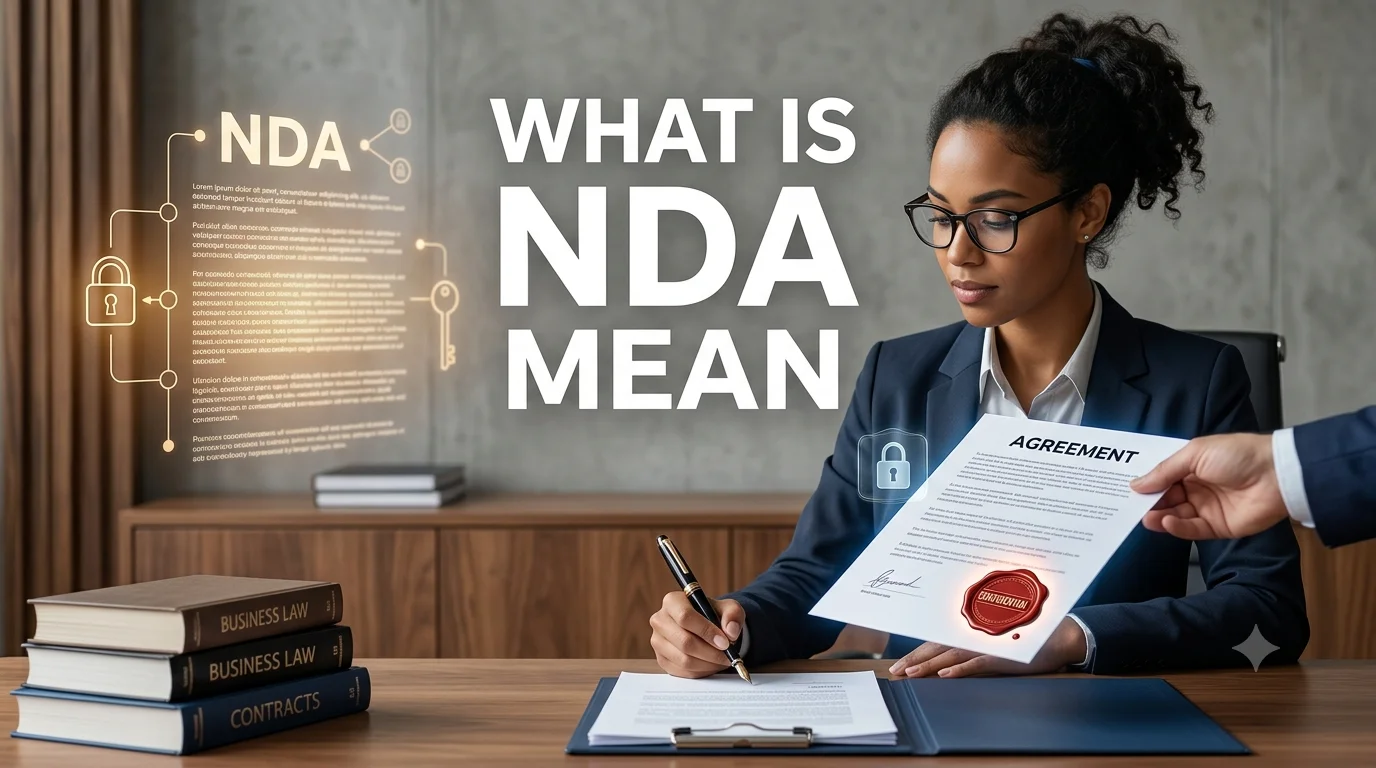
At its core, NDA stands for Non-Disclosure Agreement. In legal and business settings, it is a binding contract designed to keep sensitive information completely confidential between two or more parties.
However, if you saw it in a text message, the meaning shifts dramatically. Online, people use “NDA” figuratively to tell someone, “Keep this secret,” or to joke about having exclusive gossip that cannot leave the chat room.
Core Definitions at a Glance
- Legal Context: Non-Disclosure Agreement (a legal contract protecting secrets).
- Slang Context: An informal pact between friends to keep embarrassing or juicy information quiet.
- Core Function: Preventing the leak of sensitive data, ideas, or personal stories.
“Sign the NDA before I show you this unreleased project.” — Legal/Business Example
“What happened last night stays under a strict NDA, got it?” — Casual/Slang Example
“I’d love to tell you, but I’m basically under an NDA with my best friend.” — Social Media Example
Origin & Background: From Boardrooms to TikTok
To understand how the phrase evolved, we have to look at where it started and how the internet completely reshaped its everyday usage.
The Corporate Roots
The formal Non-Disclosure Agreement originated in corporate law mid-century. As technology and corporate competition grew rapidly, companies needed a legal way to share ideas with potential partners without fear of those ideas being stolen.
The Social Media Shift
Over the past decade, pop culture brought corporate lingo into everyday speech. Celebrity culture played a huge role—stories leaked about famous icons making guests sign actual NDAs before entering private parties or high-profile events.
Modern Digital Evolution
Internet culture took this serious legal term and turned it into a relatable meme. Gen Z and Millennials began using the term humorously to dramatize personal secrets, embarrassing stories, or exclusive friendship tea.
Real-Life Conversations: How People Use It Today
To see how flexible this term is, let us look at some realistic conversations across different platforms.
Scenario 1: WhatsApp Group Chat
Alex: “Guys, I am about to tell you something crazy about yesterday, but I need everyone to agree to an NDA right now.”
Jordan: “Signed. Spill the tea immediately!”
Sam: “My lips are sealed. What happened?”
Scenario 2: Instagram DMs
Taylor: “Did you see who Chris was hanging out with at the coffee shop?”
Morgan: “Yes! But don’t post about it anywhere. Consider yourself under a verbal NDA.”
Taylor: “Haha, fair enough. Your secret is safe with me.”
Scenario 3: TikTok Comment Section
User A: “How do influencers get invited to these secret brand trips months in advance?”
User B: “They have to sign a strict NDA so nobody leaks the location before the product drop!”
Scenario 4: Text Message Between Coworkers
Chris: “Hey, do you have a second to review the draft proposal?”
Pat: “Sure, send it over. Did the client sign the NDA yet?”
Chris: “Yep, legal cleared it this morning.”
Emotional & Psychological Meaning Behind the Term
Language is never just about definitions; it is about human connection and psychology. When people use legal terms in personal lives, it reveals interesting emotional dynamics.
Trust and Exclusivity
Using the phrase informally signals high trust. It creates an psychological “in-group” feeling, making the listener feel special because they are being trusted with sensitive information.
Protecting Vulnerability
Sometimes people use the term to guard themselves. By jokingly placing an “NDA” on a story, a person signals that the information is emotionally sensitive, using humor to set a clear boundary.
A Personal Communication Experience
During a project launch a few years ago, a team member accidentally shared confidential product details with an outside friend. Even though no harm was meant, it created huge friction. That experience taught everyone that setting clear boundaries—whether through formal contracts or clear personal agreements—is essential for maintaining trust.
Usage in Different Contexts
Knowing when and where to use this term keeps your communication clear and appropriate.
Social Media & Pop Culture
On platforms like TikTok or X (formerly Twitter), the term is almost always used dramatically or humorously. It highlights gossip, unreleased music, or exclusive creator events.
Relationships & Dating
In modern dating culture, people might jokingly say, “Our first date was so chaotic we need an NDA.” It adds lighthearted banter while acknowledging a memorable or awkward experience.
Workplace & Professional Settings
Here, the term carries strictly legal weight. You will encounter it during job interviews, freelance onboarding, software testing, or corporate mergers.
| Setting | Intended Tone | Meaning |
| Corporate/Business | Serious / Legal | Enforceable contract protecting trade secrets |
| Social Media | Humorous / Dramatic | Hype surrounding a secret or unreleased content |
| Friendships | Trust-building / Playful | Promise not to share personal gossip |
| Workplace Casual | Semi-formal | Reminder to keep project details internal |
When NOT to Use It
While versatile, using the term incorrectly can lead to awkward misunderstandings or awkward professional moments.
Serious Personal Crisis
If a friend is sharing genuine grief or health struggles, bringing up slang terms like “NDA” can feel cold, sarcastic, or dismissive. Keep your language empathetic and sincere.
Formal Legal Situations Without Contracts
Do not claim you have a “verbal NDA” in a court or legal setting. Unless a legally drafted contract exists and is properly signed, informal promises hold little to no legal weight.
Cultural & Generational Sensitivity
Older generations or non-native English speakers might only know the formal corporate definition. Using it as slang with them might cause confusion rather than playful connection.
Common Misunderstandings
People often confuse what this term actually guarantees, leading to misplaced confidence in legal or personal settings.
Literal vs. Figurative Confusions
The biggest mistake is believing a spoken promise acts as a real legal shield. Slang “NDAs” are just social agreements based on honor, not legally binding documents.
Unilateral vs. Mutual Agreements
In business, people often forget that these contracts can work one way (unilateral) or both ways (mutual). Assuming both parties are restricted without reading the fine print is a common error.
Slang vs. Legal Expressions Comparison
| Term / Expression | Primary Context | Key Difference |
| NDA | Business / Modern Slang | Formally protects information; informally implies deep trust |
| Off the Record | Journalism / Casual Talk | Request not to publish or quote information publicly |
| Keep it under wraps | Everyday Idiom | Traditional phrase for keeping something secret |
| Trade Secret | Purely Legal | Protects specific proprietary business processes indefinitely |
Key Insight
While traditional idioms rely entirely on social goodwill, using modern legal terminology in daily speech reflects how heavily modern media influences our everyday language.
10 Variations and Related Types You Should Know
To fully grasp the landscape around this term, here are the most common variations you will encounter in business and casual conversations.
1. Unilateral NDA
Meaning: A one-way agreement where only one party shares secret information.
Common in job interviews or pitch presentations.
2. Mutual NDA
Meaning: A two-way agreement where both parties share confidential data.
Used when two companies collaborate on a joint venture.
3. Multilateral NDA
Meaning: An agreement involving three or more parties simultaneously.
Common in complex corporate mergers or multi-company tech projects.
4. Verbal NDA (Slang)
Meaning: An informal, unwritten agreement between friends to keep quiet.
Used purely for personal secrets and casual trust.
5. Standard Confidentiality Agreement
Meaning: Another formal name for the legal contract.
Identical in legal function to a corporate agreement.
6. Post-Employment NDA
Meaning: A contract clause preventing former employees from sharing company secrets.
Standard practice across technology and corporate sectors.
7. Product Development NDA
Meaning: Protects unreleased designs, software code, or physical prototypes.
Used heavily by tech companies before product launches.
8. Pre-Nuptial Confidentiality Clause
Meaning: A private agreement between partners before marriage regarding public privacy.
Popular among high-profile celebrities and public figures.
9. Investor NDA
Meaning: A contract tailored for sharing pitch decks with venture capitalists.
Helps founders protect early-stage business models.
10. Social Media NDA
Meaning: Contracts signed by influencers before visiting private marketing events.
Prevents early leaks of products on social platforms.
How to Respond When Someone Uses It
Your response depends entirely on whether you are chatting with a friend online or sitting in a business meeting.
Casual & Playful Replies
- “Consider my lips locked forever!”
- “Don’t worry, your secrets are safer with me than in a vault.”
- “My lawyer will review this tea shortly!”
Funny & Witty Replies
- “Where do I sign? Send the paperwork over!”
- “I take my social contracts very seriously.”
- “Don’t worry, I won’t leak the footage.”
Mature & Professional Replies
- “I understand completely. Please send the document over for review.”
- “We respect your privacy and are happy to sign before we begin.”
- “Rest assured, all information shared today will remain internal.”
Regional and Cultural Usage
How people view and use this term varies around the world, influenced by work culture and media exposure.
Western Internet Culture
In North America and Europe, the term is deeply embedded in social media vernacular. Younger audiences use it casually as a synonym for keeping secrets.
Asian & Middle Eastern Contexts
In many Asian and Middle Eastern regions, the term is strictly viewed through a professional lens. Using it casually in social settings is far less common and might confuse listeners.
Generational Divide (Gen Z vs. Millennials vs. Gen X)
Gen Z heavily uses the word as dramatic social media slang. Millennials understand both the slang and legal meanings equally. Gen X and older generations generally view the term strictly as a legal business document.
Is It Safe for Kids and Teens?
Yes, the term is completely safe. It contains no crude or harmful meanings.
When teenagers use it online, they are almost always using it as lighthearted slang to mean “keep this secret.” Parents and educators can comfortably treat it as harmless digital communication.
Read More: What Does Cringe Mean in Slang? The Ultimate Guide to Internet Awkwardness
Frequently Asked Questions
What does NDA stand for in plain English?
It stands for Non-Disclosure Agreement, which is a formal promise or contract not to share private information with anyone else.
Is a spoken or text-message NDA legally binding?
Generally, no. A legal contract requires specific formal terms, mutual consent, and usually signed documentation to be enforceable in court.
Why do influencers always mention signing an NDA?
Brands require influencers to keep upcoming products, campaign launches, and event locations secret until an official public announcement date.
What happens if a legal Non-Disclosure Agreement is broken?
Breaching a real legal contract can lead to lawsuits, financial penalties, court injunctions, and severe damage to professional reputations.
Can you use the term casually with your boss?
It is best to stick to formal legal definitions at work unless your workplace culture is extremely casual and relaxed.
Conclusion
Understanding what is nda mean helps you navigate both corporate boardrooms and online group chats with complete confidence. Whether it refers to a legally binding business contract or playful social media slang among friends, the core idea remains the same: protecting privacy and building trust.
Now that you know how the term works across every context, you can use it naturally, spot it in conversation, and respond perfectly every time!