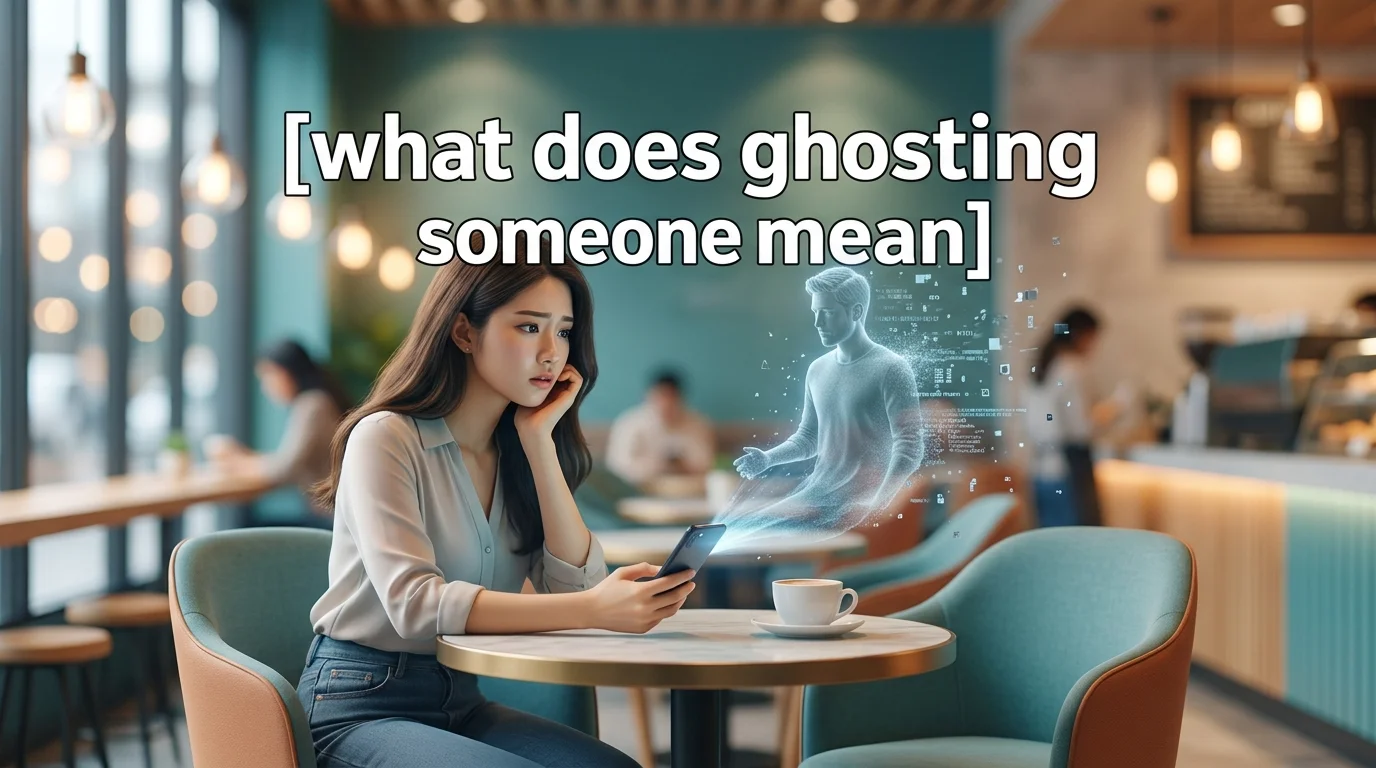
You send a text, hit send, and wait. One hour turns into a full day, then a week. The blue checkmarks are visible, their social media stories are active, but your screen stays completely dark.
Understanding what does ghosting someone mean goes far beyond a simple dictionary definition. It is one of the most frustrating experiences in modern communication, leaving you stuck in an uncomfortable loop of unanswered questions.
People search for this phrase because the silence feels deliberate, confusing, and deeply personal. Knowing the mechanics behind it helps clear up the mystery so you can stop blaming yourself for someone else’s poor communication.
The Reality of Sudden Silence
Ghosting happens when someone abruptly cuts off all contact without any explanation, warning, or closure. It is the digital equivalent of turning invisible in the middle of a conversation.
This modern trend affects modern dating, casual texting, workplace dynamics, and long-term friendships. Understanding its root cause gives you back your peace of mind.
+-------------------------------------------------------------------+
|                        THE GHOSTING CYCLE                         |
|                                                                   |
|  [ Active Connection ]  -->  [ Sudden Silence ]  -->  [ Confusion ]  |
|                                                                |  |
|  [ Moving Forward ]     <--  [ Self-Doubt ]      <--  [ Searching ] |
+-------------------------------------------------------------------+
What Does Ghosting Someone Mean? A Quick Overview
At its core, ghosting means abruptly ending a relationship by stopping all digital and physical communication without a word.
The term reflects the way a person vanishes into thin air like a phantom, leaving no physical trace or verbal explanation behind.
- Total Digital Absence: Ignoring calls, texts, direct messages, and emails completely.
- Social Disconnection: Unfollowing, blocking, or quietly removing someone from social feeds.
- Zero Closure: Leaving the other person without an explanation or final farewell.
“Ghosting isn’t about being busy; it’s a deliberate choice to use silence as a boundary.”
“When someone ghosted me after three dates, the hardest part wasn’t the rejection—it was the complete lack of basic respect.”
“I realized he ghosted when he was actively posting on Instagram while my text sat unread for three days.”
Origin and Background: How the Phantom Term Evolved
The term entered everyday vocabulary in the early 2010s alongside the rapid growth of mobile dating applications and instant messaging.
Before smartphone culture took over, ending a relationship required direct conversation or at least a brief phone call. As communication shifted toward screens, backing out of conversations became effortless.
Social Media Impact
Platforms like Tinder, Instagram, and WhatsApp normalized instant access to people. This constant connectivity created an environment where cutting ties became as easy as closing an app tab.
Cultural Shift in Communication
Modern digital culture values convenience and personal comfort over awkward conversations. The phrase evolved from niche hip-hop slang in the 2000s to an official entry in major dictionaries.
Real-Life Conversations: How Ghosting Unfolds
Seeing ghosting in daily text logs highlights how jarring and sudden the shift actually feels.
WhatsApp Exchange
Person A: Hey! I had an amazing time at dinner last night. Are we still on for mini-golf this Thursday?
Person B: (Read at 9:14 AM)
Person A: (2 days later) Hey, hope everything is okay?
Person B: (Delivered – No Response)
Instagram DMs
Person A: Loved your story from the concert! Which band was that?
Person B: Thanks! It was The 1975, they were incredible live.
Person A: Ah so jealous! We should definitely catch their next show together.
Person B: (Seen)
TikTok Comments Section
Person A: You haven’t replied to my messages in a week, are you ignoring me?
Person B: Bro, stop commenting on my videos. If I didn’t reply, take the hint.
Text Messages Between Friends
Person A: Are you coming to Sarah’s birthday party tonight? We’re all heading over at 8 PM.
Person B: (No reply)
Person A: (Next morning) Saw you tagged in Mark’s story last night. Is everything good between us?
Person B: (No reply)
Emotional and Psychological Meaning
Ghosting is fundamentally an act of emotional avoidance. It reveals a person’s inability to handle temporary discomfort, direct conflict, or emotional vulnerability.
People who ghost often choose short-term relief over long-term integrity. They fear the awkwardness of delivering bad news, so they default to absolute silence.
What Silence Communicates
- Conflict Avoidance: An inability to navigate uncomfortable adult conversations.
- Low Emotional Empathy: Prioritizing immediate personal comfort over another person’s feelings.
- Perceived Disposability: Viewing digital contacts as replaceable options rather than real people.
Experiencing the Disappearing Act
Last year, a close colleague and I worked on a passion project for six months. We spoke daily, shared meals, and built real trust.
Out of nowhere, after I sent over our final drafted proposal, he stopped responding entirely. He didn’t answer calls, skipped scheduled video syncs, but stayed active on LinkedIn.
The initial feeling was anxiety, assuming something terrible had happened to him. Realizing he had simply chosen to walk away without a word was a painful lesson in modern communication dynamics.
Usage in Different Contexts
The context of silence shapes how severe and hurtful the ghosting feels to the person on the receiving end.
+-----------------------------------------------------------------------+
|                         GHOSTING IMPACT LEVELS                        |
+---------------------+-------------------------------------------------+
| CONTEXT             | IMPACT & SEVERITY                               |
+---------------------+-------------------------------------------------+
| Casual Dating       | Expected risk, minor annoyance                  |
| Long-term Dating    | High emotional pain, deep confusion             |
| Close Friendships   | Devastating loss of trust, profound heartbreak  |
| Workplace / Career  | Unprofessional, damages industry reputation     |
+---------------------+-------------------------------------------------+
Social Media & Casual Texting
In casual digital spaces, ghosting often looks like leaving a message on “read” or letting a DM chain die naturally. It carries lower emotional stakes when connections are brand new.
Friendships and Romantic Relationships
In established relationships, ghosting inflicts deep psychological distress. It breaks established trust and leaves the remaining person searching for answers that never come.
Professional and Workplace Settings
Professional ghosting occurs when recruiters cut off communication after multiple interview rounds or clients vanish after receiving project proposals. It damages professional reputations quickly.
Tone Differences: Casual vs. Serious
- Casual Tone: “I got totally ghosted by that guy from Hinge after two dates.”
- Serious Tone: “Ending a five-year business partnership by ghosting is completely unacceptable.”
When NOT to Use the Term
Misusing the term dilutes its real meaning and creates unnecessary drama in healthy relationships.
Inappropriate Contexts
Do not use the term when someone takes a few hours or days to reply because of work, family emergencies, or mental health breaks. Delayed communication is not ghosting.
Cultural and Generational Sensitivity
Older generations may find the term overly informal or dramatic. They often prefer straightforward terms like “cutting ties,” “breaking contact,” or simply “ignoring someone.”
Misunderstandings to Avoid
- Natural Conversation Fade: When a conversation reaches its logical conclusion and both parties stop messaging.
- Safety Boundaries: Cutting off contact with an abusive, toxic, or dangerous individual is self-protection, not ghosting.
Common Misunderstandings About Ghosting
People often confuse healthy communication boundaries with deliberate ghosting behavior.
Ghosting vs. Setting Boundaries
Setting a boundary involves explicitly stating that you need space or want to end contact. Ghosting offers zero explanation and relies entirely on silence to send the message.
Tone and Literal Interpretation
The phrase is figurative; nobody is dealing with literal spirits. It refers exclusively to the phantom-like disappearance of a human being from a digital or real-world space.
Comparing Modern Communication Slang
Understanding related communication terms provides clearer context for modern relationship dynamics.
| Term | Meaning | Primary Context | Emotional Impact |
|---|---|---|---|
| Ghosting | Cut off all contact completely without warning | Dating, Friendships, Work | High confusion and hurt |
| Breadcrumbing | Sending sporadic messages to keep someone interested | Dating & Flirting | Frustrating, misleading |
| Casperization | Soft ghosting where you give a gentle goodbye before vanishing | Casual Dating | Low, offers basic closure |
| Orbiting | Ghosting someone directly while still viewing their social content | Social Media | High confusion, unsettling |
| Zombieing | Returning from the dead with a sudden text after months of silence | Romantic Dynamics | Shocking, disruptive |
Key Insight
While modern terms like breadcrumbing or orbiting describe tricky dating behaviors, ghosting remains the most absolute because it completely cuts off interaction.
Variations and Types of Ghosting
Ghosting takes several distinct forms depending on timing, intent, and digital platforms.
Soft Ghosting
Liking a final text message instead of replying with words, letting the conversation taper off smoothly without a direct exit.
Slow Fading
Gradually increasing response times and giving brief, low-effort answers over weeks until texting stops entirely.
Professional Ghosting
An employer or candidate cuts off communication mid-hiring process without sending a formal status update or rejection email.
Mostly Ghosting
Ignoring primary text messages and phone calls while quietly continuing to watch the person’s daily Instagram or Snapchat stories.
Micro-Ghosting
Briefly disappearing for several days during an active, time-sensitive conversation, then popping back in without acknowledging the pause.
Reverse Ghosting
Intentionally acting distant, dry, or unpleasant so the other person gets frustrated and ends the connection for you.
Mutual Ghosting
Both people quietly stop reaching out at the exact same time, realizing the connection has naturally run its course.
Sympathetic Ghosting
Vanishing out of intense shame or guilt because you waited too long to reply and now feel too awkward to reach out.
How to Respond When Someone Ghosts You
Your response depends on how much time you have invested in the relationship and what outcome you want.
+--------------------------------------------------------------------+
|                         CHOOSE YOUR RESPONSE                       |
|                                                                    |
|  [ Casual ]    -->  "Guessing you're busy! Catch you around."      |
|  [ Direct ]    -->  "Hey, since I haven't heard back, I'm moving on."|
|  [ Mature ]    -->  "I value honesty. Wish you the best."          |
|  [ No Reply ]  -->  ( Delete contact & close the chapter )          |
+--------------------------------------------------------------------+
Casual Replies
- “Looks like you’ve gone full phantom on me! No worries, hope all is well.”
- “Hey! Assuming your schedule got crazy. I’m going to go ahead and make other plans.”
Funny Replies
- “Did you drop your phone in the ocean, or did I just get visited by a ghost?”
- “I didn’t realize I was dating a magician! Nice vanishing act.”
Mature Replies
- “Hey, I haven’t heard from you in a while, so I assume you’ve moved on. I prefer direct communication, but I wish you the best.”
- “It seems like our communication has ended. I enjoyed our time together, but I’m moving forward now.”
Respectful Exit Replies
- “Since we haven’t reconnected, I’m going to close this chapter. Take care!”
- “I value clear communication, so silence tells me everything I need to know. Best of luck with everything.”
Regional and Cultural Usage
The cultural impact of ghosting varies based on societal views on direct communication and confrontation.
Western Culture
In North America and Western Europe, direct communication is highly valued. Ghosting is generally viewed as immature, disrespectful, and emotionally irresponsible.
Asian Culture
In high-context cultures across parts of Asia, indirect communication is often used to preserve social harmony and help others save face. Declining directly can feel overly harsh, making silent exits somewhat more common and less personal.
Middle Eastern Culture
Middle Eastern social dynamics emphasize hospitality and explicit respect. Ghosting among acquaintances or family members is deeply discouraged and socially frowned upon.
Generational Differences
- Gen Z: Views ghosting as an unfortunate reality of digital life, using light humor to cope with its frequency.
- Millennials: Coined much of the terminology and generally prefer direct text closures over complete silence.
Is It Safe for Kids to Use the Term?
The term is completely safe for children, teens, and young adults to use.
It carries no explicit, sexual, or profane meanings. It simply describes a common modern social dynamic that young people frequently navigate on social media and gaming platforms.
Explaining the term to younger users helps them build healthy digital communication habits and learn how to treat others with empathy online.
Frequently Asked Questions
What does ghosting someone mean in simple terms?
Ghosting someone means ending a relationship or conversation by suddenly stopping all communication without warning, explanation, or closure.
Why do people choose to ghost instead of talking?
People ghost primarily to avoid uncomfortable conversations, direct confrontation, guilt, or emotional distress.
Is ghosting ever acceptable?
Ghosting is acceptable when cutting ties with someone who is toxic, abusive, aggressive, or repeatedly crossing personal safety boundaries.
How long must silence last before it counts as ghosting?
Standard communication gaps turn into ghosting after three to seven days of total silence, especially when the person stays active online.
Does ghosting hurt the person who does it?
Yes, habitual ghosting weakens a person’s emotional maturity, damages their long-term integrity, and prevents them from building healthy conflict-resolution skills.
Moving Past the Silence
Understanding what ghosting someone means gives you valuable clarity in an unpredictable digital landscape. Silence from another person is rarely a reflection of your worth; it is a direct statement about their communication skills and emotional readiness.
When faced with a sudden phantom, accept the silence as a definitive answer. Honor your own standards, choose clear communication in your own life, and save your energy for connections built on mutual respect.