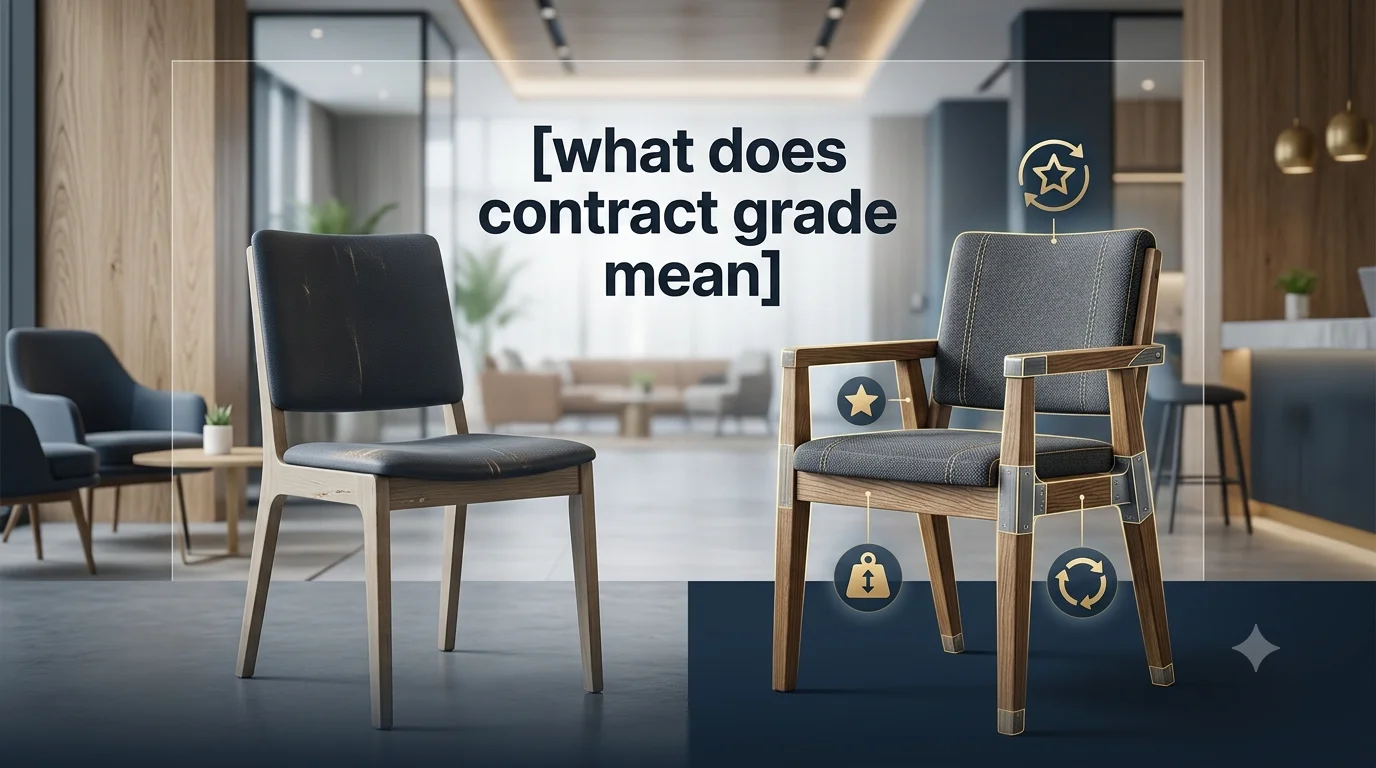
Demystifying Commercial Quality: What Does Contract Grade Mean?
Ever wondered why a restaurant chair feels solid after hundreds of customers sit on it, while your home dining chair wobbles after a year? That difference boils down to a single term: contract grade.
Most people encounter this term when shopping for home furnishings or reading product specifications online. Seeing “contract grade” on a price tag usually means a higher cost, which leaves buyers asking if the upgrade is actually worth it.
Understanding this classification saves you from buying furniture that wears out prematurely. Let’s break down what contract grade actually means, why it matters, and how it transforms everyday durability.
What Does Contract Grade Mean? A Quick Definition
The Core Concept of Contract Grade
Contract grade refers to furniture, fabrics, and materials engineered, tested, and certified to withstand heavy commercial use. When a product earns this rating, it meets strict industry standards set by governing bodies like ANSI (American National Standards Institute) and BIFMA (Business and Institutional Furniture Manufacturers Association).
Unlike residential-grade items designed for a single household, contract-grade products endure relentless daily wear from public spaces.
- High-Traffic Endurance: Built to withstand constant daily use without structural failure.
- Rigorous Lab Testing: Subjected to weight impact, rub counts, and fire safety evaluations.
- Commercial Warranties: Backed by multi-year warranties built for business environments.
“A residential sofa expects three hours of daily sitting; a contract-grade sofa expects twelve hours of continuous use under varying weights.”
“If residential furniture is built for comfort, contract grade is built for endurance without sacrificing comfort.”
“Contract grade is the invisible bridge where safety compliance meets long-term design aesthetics.”
Origin and Background of Commercial Grading
Where the Term Originated
The phrase comes directly from the procurement process of “contracting” design projects. When interior designers outfit commercial properties—like hotels, corporate offices, or hospitals—they execute formal legal contracts specifying strict safety, structural, and fire-code requirements.
Cultural and Market Evolution
Decades ago, commercial furniture looked sterile, heavy, and strictly functional. Office spaces featured grey metal file cabinets and stiff, vinyl-covered armchairs.
As remote work and boutique hotels reshaped modern aesthetics, the line between home comfort and business durability blurred. Residential shoppers began demanding the longevity of commercial spaces, prompting retail brands to offer contract-grade lines directly to consumers.
Social Media Impact
Design influencers on TikTok and Instagram frequently highlight commercial-grade pieces when sharing home renovation tips. Highlighting a “contract-grade dining table” signals smart investing, showing followers how to choose items that survive kids, pets, and hosting duties.
Real-Life Conversations
Scene 1: WhatsApp Chat Between New Homeowners
Person A: Why is this West Elm sofa $800 more expensive than the almost identical one next to it?
Person B: Check the specs. Is one listed as contract grade?
Person A: Yeah, it says “contract grade performance velvet.” Is that actually worth the extra cash?
Person B: 100%. Our dog jumped on our old sofa for six months and ruined the cushions. The contract-grade one we got last year still looks brand new.
Scene 2: Instagram DMs Between Design Clients
Person A: I love those dining chairs for the new cafe, but can we save budget by using residential ones?
Person B: I wouldn’t risk it. If a customer gets hurt because a leg snaps, the liability is on you.
Person A: Wow, good point. Contract grade it is then!
Scene 3: TikTok Comment Section
Person A: My toddler drew on our new couch with permanent marker. Am I crying? Yes.
Person B: Try rubbing alcohol! If your fabric is contract grade performance material, it will slide right off without stripping the color.
Emotional and Psychological Meaning Behind the Choice
The Emotion of Long-Term Peace of Mind
Investing in commercial-quality items reduces anxiety around everyday wear and tear. You no longer flinch when guests spill red wine or kids jump on the furniture. Buying higher-grade items trades temporary financial savings for long-term confidence.
What It Reveals About Modern Consumers
Modern shoppers prioritize sustainability over disposable culture. Choosing commercial-level durability reflects a shift toward buying fewer, higher-quality items that do not end up in landfills after two years of normal use.
A Real-World Scenario
Picture hosting a bustling dinner party. A guest accidentally bumps a heavy dining chair into the wall, then spills a glass of cabernet directly onto the cushion. Instead of panicking or ruining the evening, you wipe the stain away with a damp cloth because the fabric carries a 100,000-double-rub stain-resistant rating. That simple wipe-down is the true value of commercial testing in a residential space.
Usage in Different Contexts
Social Media and Online Shopping
E-commerce sites feature contract-grade filters to help buyers quickly identify durable products. On social platforms, the term acts as shorthand for high quality and lasting value.
Home Decor and Relationships
Couples decorating a shared home often clash over budget versus durability. Reframe the discussion around lifespan: spending slightly more upfront on commercial-quality items eliminates the need to replace furniture every few seasons.
Professional and Commercial Settings
In business environments, contract grade is a non-negotiable legal requirement. Commercial spaces must comply with strict local building codes, fire regulations (such as CAL 133 certification), and disability access standards.
Tone Differences
| Setting | Context Meaning | Tone |
| Architectural Spec Sheet | Legally compliant, ANSI/BIFMA certified | Technical & Authoritative |
| Retail Store | Superior longevity, easy-to-clean materials | Persuasive & Premium |
| Casual Conversation | Heavy-duty, kid-proof, built like a tank | Informal & Practical |
When NOT to Use Commercial-Grade Items
Temporary Living Situations
Buying heavy, expensive commercial furniture makes little sense if you plan to move out of a rental apartment within a year. The added weight makes moving difficult, and the initial investment takes longer to pay off.
Fast-Flipping Design Trends
If you like updating your interior decor every season to match fast-fashion home trends, stick to standard residential pieces. Investing in items built to last two decades limits your design flexibility.
Cultural and Comfort Misunderstandings
Some commercial items prioritize extreme durability over plush softness. A bench built for an airport terminal handles high traffic effortlessly, but it will feel far too rigid for a cozy home reading nook.
Common Misunderstandings About Contract Grade
Myth 1: It Means the Item Is Uncomfortable
Many people assume commercial furniture feels stiff and industrial. Modern manufacturing incorporates high-density memory foam, pocket springs, and soft-touch performance yarns that deliver rich comfort alongside structural strength.
Myth 2: Contract Grade Furniture Is Indestructible
While far tougher than standard home decor, commercial-grade pieces still require basic care. High rub counts prevent fabric tearing, but uncleaned acid spills or razor blades will still damage the surface.
Myth 3: It Only Applies to Wood and Metal
Contract grading covers every component of an item. This includes spring tension systems, joinery methods, foam flame retardancy, powder-coating durability, and textile abrasion resistance.
Commercial vs. Residential Grade Comparison
| Feature | Residential Grade | Contract Grade | Heavy Industrial Grade |
| Primary Target | Single households | Offices, hotels, high-use homes | Factories, public transit, hospitals |
| Fabric Abrasion Standard | 15,000 double rubs | 30,000 to 100,000+ double rubs | 100,000+ double rubs / vinyl coated |
| Frame Construction | Softwood, staples, glue | Kiln-dried hardwood, corner blocks, welds | Reinforced steel, structural composite |
| Weight Capacity | 200–250 lbs per seat | 300–500+ lbs per seat | 500+ lbs / vandal resistant |
| Fire Safety Certification | Basic home standards | CAL 117 / CAL 133 compliant | Extreme flame/smoke retardant |
| Price Point | Budget to Moderate | Moderate to High | High to Custom |
Key Insight
Contract-grade items balance extreme structural endurance with refined interior aesthetics, hitting the sweet spot between flimsy residential items and overly utilitarian industrial gear.
10 Common Industry Variations and Terminology
1. Performance Fabric
Textiles engineered with stain-resistant coatings and colorfast fibers designed for easy cleaning.
2. Double Rub Count (Wyzenbeek Method)
A laboratory test measuring fabric durability; contract fabrics typically score above 30,000 rubs.
3. BIFMA Certified
Furniture that has passed rigorous safety, structural, and environmental tests set by industry regulators.
4. CAL 117 Compliant
Upholstery materials tested and proven resistant to smoldering cigarette fires.
5. High-Density Foam
Interior cushion cores that maintain their shape and support without sagging over years of constant sitting.
6. Kiln-Dried Hardwood Frame
Lumber baked in ovens to remove moisture, preventing warping, cracking, and squeaking over time.
7. Commercial-Grade Finish
Clear coats and powder coatings applied to wood or metal to prevent scratching, chipping, and UV fading.
8. Heavy-Duty Hardware
Reinforced screws, heavy-gauge steel brackets, and commercial glides built to prevent wobble.
9. Martindale Abrasion Rating
The international standard test for fabric wear, where higher cycle counts indicate stronger tear resistance.
10. Antimicrobial Finish
Surface treatments that inhibit bacteria, mold, and mildew growth in shared or high-moisture spaces.
How to Respond When Someone Mentions Contract Grade
Casual Replies
- “Definitely worth the extra cash if you want it to last forever!”
- “Honestly, with kids running around, I will never go back to regular furniture.”
Funny Replies
- “That couch could survive a natural disaster and still look ready for a magazine cover.”
- “My dogs tried their absolute best, but the contract fabric won that war.”
Mature & Knowledgeable Replies
- “It is smart to check the double rub count and frame joinery before spending that much.”
- “The upfront cost is higher, but the lower cost-per-year makes it a great investment.”
Respectful Industry Replies
- “We need to ensure all our specifications satisfy local commercial code and BIFMA standards.”
- “Let’s review the performance specifications to verify they suit high-traffic hospitality spaces.”
Regional, Cultural, and Generational Variations
Western Markets (North America & Europe)
In Western retail markets, terms like contract grade function as major selling points for residential consumers. Popular stores highlight these ratings to justify premium pricing for performance sofas, solid tables, and durable outdoor sets.
Asian and Middle Eastern Markets
In rapidly expanding commercial centers across Asia and the Middle East, commercial ratings prioritize extreme environmental resistance. High humidity, sand exposure, and intense sun require specialized outdoor coatings and heat-resistant adhesives.
Generational Shift: Gen Z vs. Millennials
- Millennials: Actively search for contract-grade pieces when furnishing family homes, aiming to buy durable items that handle children, pets, and remote work.
- Gen Z: Prioritizes sustainability and thrift culture. They view commercial-grade construction as a way to avoid fast furniture and reduce environmental waste.
Is Contract Grade Furniture Safe for Kids and Pets?
Contract-grade items are exceptionally safe and practical for family homes. Commercial standards mandate low chemical emissions (such as GREENGUARD Gold certifications) along with stringent flame retardancy.
Additionally, reinforced frames and rounded, splinter-free edges prevent accidental tips or structural failures during play. Stain-resistant treatments make cleanup easy when dealing with spilled juice, muddy paws, or art supplies.
Frequently Asked Questions
Is contract grade worth the extra money for home use?
Yes, especially for heavily used items like dining chairs, living room sofas, and entryway benches. The extended lifespan easily offsets the higher initial cost.
What is the difference between performance fabric and contract grade?
Performance fabric focuses specifically on stain resistance and cleanability. Contract grade covers the entire item’s construction, including frame strength, hardware, and safety testing.
How many double rubs count as contract grade?
In North America, standard commercial fabrics start at 30,000 double rubs on the Wyzenbeek scale, while heavy-duty commercial applications require 150,000 rubs or more.
Can residential furniture be used in a commercial office?
Using residential furniture in commercial spaces often breaks local safety codes, voids insurance policies, and causes items to break down quickly under heavy use.
How do I verify if a product is truly contract grade?
Check the product spec sheet for ANSI/BIFMA test certifications, CAL 117 fire ratings, kiln-dried hardwood frames, or high double rub abrasion counts.
Final Thoughts on Choosing the Right Grade
Understanding contract grade empowers you to make smarter, longer-lasting purchasing decisions. Looking past surface aesthetics helps you invest in pieces that offer real structural integrity, safety, and long-term value.
Whether outfitting a busy downtown café or searching for a living room sofa that survives daily family life, choosing commercial-grade construction ensures your space handles whatever life throws at it. Spend thoughtfully, inspect the specifications, and enjoy furniture built to stand the test of time.