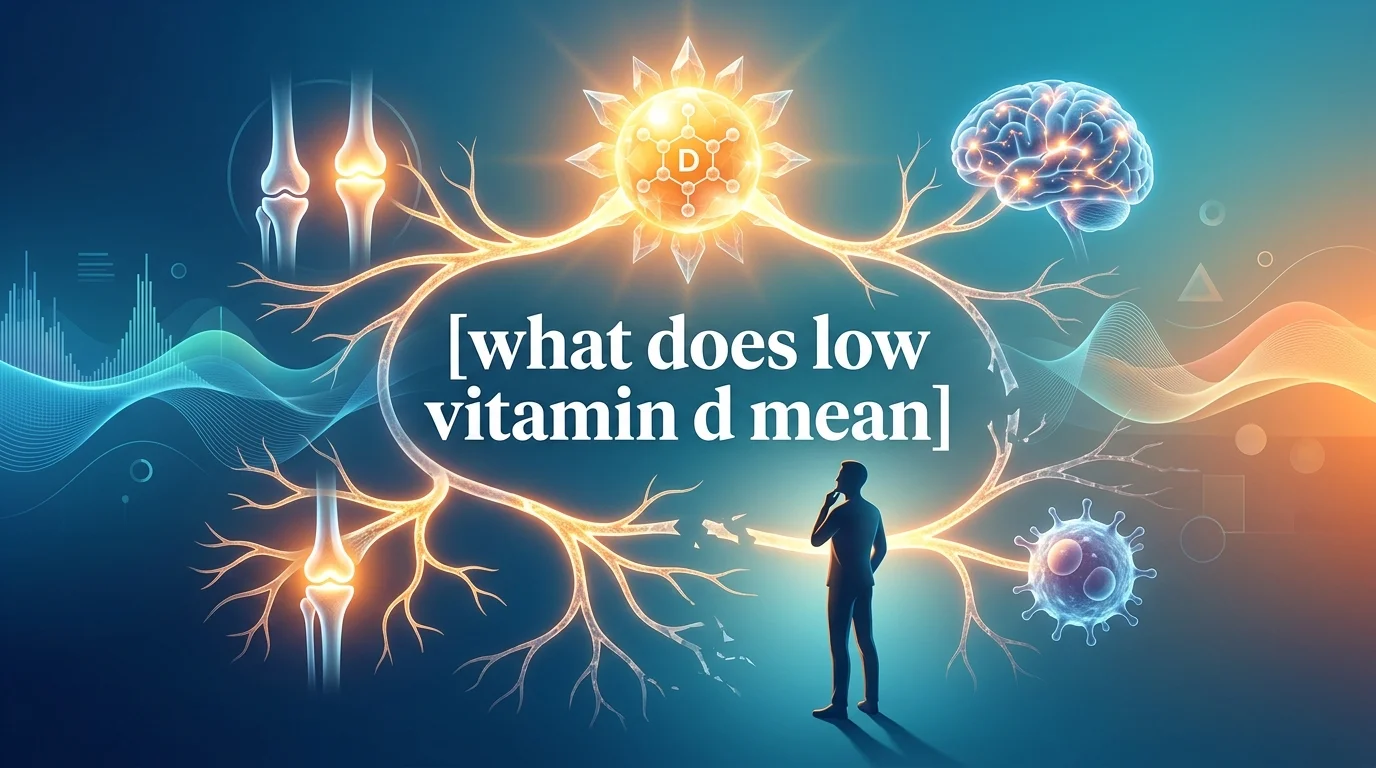
When a routine blood test comes back with a flagged result, or your doctor offhandedly mentions your levels are down, your mind immediately jumps to a simple question: what does low vitamin d mean for your daily life, your mood, and your long-term health?
Understanding this result isn’t just about analyzing a lab number on a piece of paper. It represents a vital signal from your body about your energy levels, bone density, immune strength, and emotional well-being.
Many people search for this term after experiencing unexplained fatigue, persistent joint aches, or sudden winter blues. This guide breaks down the biological, emotional, and lifestyle realities of living with low vitamin D, helping you move from confusion to clear action.
Decoding Your Lab Results
What Does Low Vitamin D Mean? A Quick Meaning
At its core, low vitamin D means your body lacks a sufficient amount of calcifediol (25-hydroxyvitamin D) in the bloodstream to maintain optimal systemic function. Although classified as a vitamin, it actually functions as a key pro-hormone regulating hundreds of genetic and metabolic pathways.
Laboratory Ranges and Classifications
- Severe Deficiency: Less than 12 ng/mL (30 nmol/L)
- Moderate Deficiency: 12 to 19 ng/mL (30 to 49 nmol/L)
- Suboptimal / Insufficiency: 20 to 29 ng/mL (50 to 74 nmol/L)
- Optimal Range: 30 to 50 ng/mL (75 to 125 nmol/L)
“My doctor called and said my level was 14. I thought I was just tired from work, but it turns out my body was literally running without sunlight fuel.”
“When my bloodwork showed insufficiency at 22 ng/mL, my persistent knee pain and afternoon brain fog suddenly made sense.”
Origin & Background of the Modern Deficiency Epidemic
From Rickets to Modern Office Work
Historically, severe vitamin D deficiency manifested as rickets—a debilitating bone-softening condition in children during the Industrial Revolution. As populations moved into smoke-filled cities and indoor factories, natural sunlight exposure dropped dramatically.
Modern lifestyle shifts have recreated this indoor environment on a global scale. We spend over 90% of our time inside climate-controlled buildings, under artificial lighting, staring at screens.
The Impact of Sunscreen and Location
While sunscreen is essential for preventing skin cancer, applying SPF 30 reduces the skin’s vitamin D synthesis by roughly 95%. Living above 37 degrees latitude also means sun rays are too weak during winter months to produce any natural vitamin D, regardless of time spent outside.
Real-Life Conversations
Text Message Conversation
Person A: Hey, got my blood test results back. Doctor says my vitamin D is super low.
Person B: Oh wow, that explains why you’ve been feeling so drained lately! What did they tell you to take?
Person A: A high-dose prescription once a week. Hoping my energy comes back soon.
WhatsApp Group
Person A: Is anyone else taking 5000 IU vitamin D supplements daily?
Person B: Yes! My bloodwork was sitting at 18 ng/mL last autumn.
Person A: Did it actually help with the afternoon fatigue?
Person B: Took about three weeks, but my sleep quality and stamina improved noticeably.
TikTok Comment Section
Person A: I had no idea low vitamin D could cause random bone aches in your shins.
Person B: Right?! I thought I was just getting old, turns out I was just severely sunlight deficient.
Emotional & Psychological Meaning
The Mind-Body Connection
When vitamin D levels drop, your brain’s production of serotonin and dopamine declines alongside it. This biochemical drop often feels like an unexplainable emotional weight or persistent mental lethargy.
People frequently mistake low vitamin D for burnout or chronic mood disorders. Lacking this essential nutrient dampens your biological resilience, leaving you feeling emotionally depleted even when life is going well.
A Real Patient’s Experience
Working in a high-rise office building for ten hours a day left me feeling perpetually exhausted by Thursday morning. I attributed the moodiness and muscle weakness to stress, but routine bloodwork revealed my level was at 11 ng/mL. Addressing that biological baseline completely transformed my baseline energy.
Health Impacts Across Different Systems
Skeletal and Muscular Health
Vitamin D acts as the primary key that unlocks calcium absorption in your gut. Without it, your body steals calcium directly from your skeleton, weakening bones over time.
Immune System Performance
Your immune cells possess direct vitamin D receptors. Deficiencies impair your body’s innate defense mechanisms, making you significantly more susceptible to seasonal infections and respiratory viruses.
Energy and Cognitive Function
Mitochondria—the powerhouses of your cells—require vitamin D to generate energy efficiently. Low levels manifest directly as physical stamina loss and mental sluggishness.
When NOT to Ignore Low Vitamin D
High-Risk Physical Conditions
- Osteopenia or Osteoporosis: Low levels accelerate bone density loss exponentially.
- Autoimmune Flare-ups: Immune dysregulation worsens without adequate serum levels.
- Chronic Kidney Disease: Impairs the body’s ability to convert raw vitamin D into its active form.
Medical Misunderstandings
Self-diagnosing can be dangerous. Never assume fatigue is purely nutritional without consulting a physician, as low levels can coexist with thyroid issues or anemia.
Common Misunderstandings
Myth vs. Reality
- Myth: You can get enough vitamin D through diet alone.
- Reality: Very few foods naturally contain significant amounts, making diet an inefficient primary source.
- Myth: Sitting by a sunny window synthesizes vitamin D.
- Reality: Glass blocks UVB rays completely, stopping synthesis in its tracks.
- Myth: Being tan means your levels are perfect.
- Reality: Higher melanin levels actually reduce the rate of natural vitamin D production in skin.
Comparison Table: Vitamin Deficiencies and Fatigue Symptoms
| Nutrient Deficit | Primary Symptoms | Key Biological Function | Main Source |
| Vitamin D | Bone pain, muscle weakness, mood dips | Calcium absorption, immune function | Sun exposure, supplements |
| Vitamin B12 | Numbness, tingling, severe exhaustion | Red blood cell synthesis, nerve health | Animal products, fortified foods |
| Iron | Pale skin, shortness of breath, cold hands | Oxygen transport in blood | Red meat, legumes, spinach |
| Magnesium | Muscle cramps, anxiety, insomnia | Nerve transmission, muscle relaxation | Nuts, seeds, leafy greens |
Key Insight
Understanding which specific nutrient deficiency causes your symptoms prevents you from taking random supplements that do not address your actual underlying biological needs.
Variations and Types of Vitamin D Deficiencies
- Nutritional Deficiency: Low levels caused directly by inadequate dietary intake and zero sun exposure.
- Malabsorptive Insufficiency: Deficiency stemming from gut issues like Celiac or Crohn’s disease blocking absorption.
- Seasonal Drop: Winter-specific dips due to reduced daylight hours and weaker ultraviolet radiation.
- Renal Inability: Reduced conversion capacity occurring alongside chronic kidney or liver impairment.
- Receptor Resistance: Rare genetic conditions where body cells fail to respond to active vitamin D.
- Melanin-Related Insufficiency: Natural reduction in synthesis due to higher skin pigmentation levels.
- Age-Related Decline: Decreased capacity of aging skin to synthesize vitamin D from sunlight.
- Obesity-Induced Sequestration: Storage of vitamin D inside fat tissue, reducing its availability in blood.
How to Respond and Fix Low Vitamin D
Step-by-Step Action Plan
- Consult a Medical Professional: Obtain a formal 25-hydroxyvitamin D blood test to determine exact levels.
- Follow Target Dosages: Take physician-recommended supplementation (typically Vitamin D3 combined with K2 for optimal calcium placement).
- Optimize Exposure: Spend 10 to 15 minutes in midday sun without sunscreen when UV indices allow.
- Pair with Healthy Fats: Take supplements alongside meals containing healthy fats to maximize gut absorption.
Regional and Demographic Factors
Geographic Variation
Populations living far north or south of the equator face severe seasonal drops during winter months. Indoor working cultures in urban centers globally exhibit near-universal insufficiency rates without proactive supplementation.
Generational Differences
Younger generations spending increased time indoors on digital screens show historically high rates of deficiency. Older adults face compounded risks due to decreased natural synthesis capacity alongside indoor living.
Special Considerations for Children
Children require adequate vitamin D levels for normal skeletal growth and dental development. Growing kids with low levels may experience leg pain, delayed walking, or dental enamel defects, requiring pediatrician-guided supplementation.
Frequently Asked Questions
How long does it take to recover from low vitamin D?
Symptom improvement usually begins within three to four weeks of targeted supplementation, though reaching optimal blood levels takes two to three months.
Can low vitamin D cause weight gain?
While low levels don’t directly cause weight gain, the resulting fatigue and metabolic sluggishness make physical activity difficult, indirectly contributing to weight changes.
What is the difference between Vitamin D2 and D3?
Vitamin D3 (cholecalciferol) is the natural form made by your body and is significantly more effective at raising blood levels than plant-derived D2 (ergocalciferol).
Can you take too much vitamin D?
Yes, because it is fat-soluble, excessive supplementation over long periods can cause calcium toxicity. Always monitor high doses with medical blood tests.
What foods are highest in vitamin D?
Fatty fish like salmon, trout, and mackerel, egg yolks, beef liver, and fortified dairy products contain the highest natural amounts.
Conclusion
A low vitamin D result is not a reason to panic, but it is a clear call to action from your body. Restoring your biological reserves boosts your daily physical energy, strengthens your immune defenses, and clears mental fog.
Take control of your health by speaking with your medical provider, establishing a consistent daily routine, and giving your body the vital light and nourishment it requires to thrive.