What Does Non Monogamous Mean? A Modern Guide to Open Relationships and Ethical Dynamics
Unpacking Modern Relationships: What Does Non Monogamous Mean?
Relationship labels used to be simple. You met someone, went on dates, became exclusive, and eventually settled down in a traditional two-person partnership.
Today, romance looks much more diverse. The phrase “non monogamous” pops up constantly on dating apps like Tinder, Hinge, and Bumble, across social media feeds, and in everyday conversations about modern love.
Many people search for this term because they stumble across it on a dating profile or hear a friend mention it in passing. It can create instant confusion if you grew up assuming monogamy was the only valid blueprint for commitment.
Understanding non-monogamy helps clear up mixed signals, sets healthy personal boundaries, and fosters open communication. Whether you are curious about changing your own romantic path or simply trying to understand a loved one’s relationship choice, knowing what this lifestyle actually entails clears away the noise.
What Does Non Monogamous Mean? – Quick Meaning
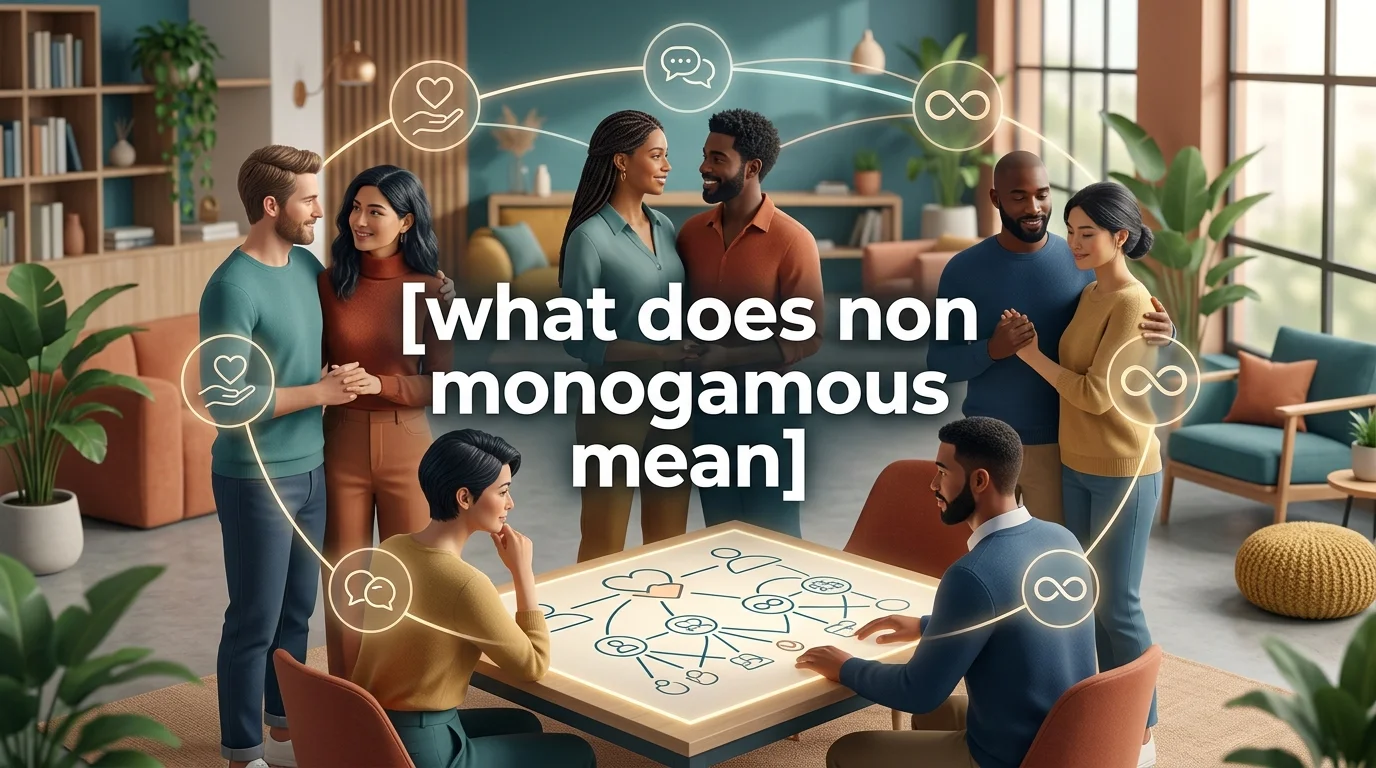
At its core, non-monogamous describes any romantic, emotional, or sexual relationship that does not require total exclusivity between just two people.
Instead of expecting one partner to fulfill every single relational need, non-monogamous individuals consensually explore connections with multiple partners. Honesty, explicit consent, and negotiated boundaries form the bedrock of these dynamics.
Key Non-Monogamy Essentials:
• Mutual Consent: Every person involved knows about and agrees to the setup.
• Open Communication: Expectations, emotional safety, and boundaries are actively discussed.
• Custom Structures: Relationships range from casual multi-dating to long-term committed networks.
To see how people express this concept in real life, consider these casual statements:
“We realized early on that monogamy wasn’t for us, so we built an ethically non-monogamous relationship based on total transparency.”
“My profile states that I’m non-monogamous because I prefer dating multiple people without the pressure of traditional exclusivity.”
“They practice solo polyamory, meaning they prioritize their own autonomy while maintaining meaningful, non-exclusive connections.”
Origin & Background
Where the Concept Originated
Non-monogamy is far from a trendy internet invention. Historically, various human cultures across Africa, the Americas, and Asia practiced non-exclusive family structures, communal child-rearing, and polygamy long before the modern nuclear family became the global standard.
The specific phrase “ethical non-monogamy” (ENM) gained momentum during the late 20th century. Feminist movements and sex-positive advocates began pushing back against traditional patriarchal marriage models, demanding romantic frameworks rooted in mutual autonomy.
Cultural Influence and Social Media Impact
The rise of digital media accelerated this dynamic shift. Shows like Big Love, Polyamory: Married & Dating, and widespread pop-culture discussions introduced alternative relationship models into mainstream households.
TikTok, Instagram, and Reddit completely transformed the dialogue over the last decade. Creators use short-form video content to educate millions on healthy boundary-setting, jealousy management, and relationship design.
How the Meaning Evolved
The meaning evolved from a fringe taboo into a recognized, valid lifestyle choice. Where non-monogamy once implied secrecy or infidelity, today’s definition explicitly requires active consent, emotional maturity, and ethical integrity.
Real-Life Conversations
Understanding the terminology in a dictionary is one thing; seeing how people actually talk about it in everyday digital messaging reveals the real human emotion behind it.
Text Message Conversation
Person A: Hey, I had a great time last night! I noticed your bio says non-monogamous. Can I ask how that works for you?
Person B: Hey! I’m glad you asked. It means I’m open to dating and forming connections with other people too, but honesty is my top priority. I always make sure everyone is on the same page.
Instagram DM Exchange
Person A: Wait, so you and Sam are still together, but you’re going on dates with other people? Isn’t that cheating?
Person B: Not at all! We both agreed to an open structure over two years ago. Cheating happens when you break rules and lie. We share our boundaries openly.
TikTok Comment Section
Person A: I could never do this… my jealousy could never handle sharing my partner 😭
Person B: Honestly, it’s not for everyone! It takes insane amounts of therapy, communication, and unlearning old societal habits. Respect to those who make it work, though!
WhatsApp Group Chat
Person A: Guys, I started seeing someone new, and they practice solo polyamory. What should I expect?
Person B: It just means they value their independence deeply and won’t be on the traditional “marriage and moving in together” track. Focus on enjoying the connection for what it is!
Emotional & Psychological Meaning
Practicing non-monogamy involves much more than simply dating multiple people. Psychologically, it reflects a foundational desire to challenge traditional societal norms and create customized romantic connections.
What the Lifestyle Expresses Emotionally
Choosing non-monogamy often expresses a deep desire for connection without possessiveness. It stems from the belief that love is not a finite resource that must be hoarded or restricted to one individual.
Core Psychological Drivers:
1. Freedom of Choice: Prioritizing personal autonomy alongside relationship commitments.
2. Expansive Connection: Acknowledging that different partners meet different emotional, intellectual, or physical needs.
3. Radical Transparency: Preferring total honesty—even when uncomfortable—over forced compliance or hidden secrets.
Why People Adopt Non-Monogamy
Many individuals adopt this lifestyle after realizing that traditional monogamy feels suffocating or unrealistic for their emotional wiring. Others discover that opening their existing long-term relationship brings them closer together by forcing deeper communication habits.
Psychological Insights and Real-Life Scenario
From a psychological perspective, non-monogamy demands high emotional intelligence, acute self-awareness, and secure attachment styles. Partners must unpack internalized fears of abandonment and unlearn the idea that their partner’s interest in others signals a personal failure.
Consider Maya and Leo, who have been together for seven years. When Leo brought up feeling curious about exploring sexual connections outside their marriage, Maya initially felt insecure.
Through months of honest conversations and therapy, they realized their core emotional bond was unbreakable. Opening their marriage allowed them to experience novelty while deepening their foundational trust, proving to both of them that attraction to others didn’t lessen their mutual love.
Usage in Different Contexts
Navigating non-monogamy requires different levels of disclosure depending on the social environment you are in.
Dating Apps and Social Media
On platforms like Bumble, Hinge, or Feeld, listing yourself as non-monogamous acts as a helpful filter. It ensures you match with folks who share similar values, preventing wasted time and hurt feelings down the line.
Friends and Personal Relationships
Sharing your non-monogamous identity with friends can strengthen your authentic bonds, though it often requires patience and willingness to educate loved ones who hold traditional views.
Work and Professional Settings
Professional environments usually warrant discretion. While being non-monogamous is nothing to hide, sharing explicit details about your private romantic structure in the workplace can sometimes trigger unwanted bias or unprofessional gossip.
Tone Considerations
When discussing your relationship style, tailor your tone carefully:
Casual Conversations
“Yeah, my partner and I practice ethical non-monogamy, so we both keep our options open.”
Serious or Boundary-Setting Conversations
“Before we take things further, I want to be completely upfront: I practice non-monogamy and am currently seeing two other people. Emotional honesty is essential to me.”
When NOT to Use It
Using the term incorrectly can lead to serious misunderstandings, hurt feelings, and damaged trust.
Inappropriate Contexts
Do not use non-monogamy as a retroactive excuse for dishonest behavior. If you made a commitment to be monogamous and broke that promise, claiming you are “just non-monogamous” after getting caught is manipulative.
Cultural Sensitivity
In some traditional or conservative cultures, discussing non-monogamy openly can carry severe social stigma or family conflict. Exercise emotional intelligence and awareness when navigating these sensitive dynamics.
Situations Causing Misunderstandings
Avoid using the term vaguely when dating someone who clearly seeks a traditional, exclusive relationship. Misleading someone into believing you might eventually choose monogamy just to keep them around is unethical.
Common Misunderstandings
Misconceptions surrounding non-monogamy remain common despite its growing visibility.
Cheating vs. Non-Monogamy
The biggest myth is that non-monogamy is simply “glorified cheating.” In reality, they are polar opposites. Cheating relies on deception, broken promises, and secrecy. Non-monogamy relies entirely on mutual consent, explicit agreements, and full disclosure.
Tone and Intent Confusion
People often assume non-monogamous individuals are incapable of deep commitment or love. In truth, many non-monogamous relationships feature profound levels of commitment, shared finances, co-parenting, and lifelong partnerships.
Literal vs. Figurative Meaning
Non-monogamy is an overarching philosophy of relationship design, not an endless, chaotic free-for-all. Most non-monogamous couples operate under strict rules, boundaries, and clear personal guidelines.
Comparison Table
| Term | Core Meaning | Primary Focus | Consent Level |
|---|---|---|---|
| Ethical Non-Monogamy (ENM) | Umbrella term for consensual non-exclusive relationships | Transparency and honesty | 100% Consensual |
| Polyamory | Having multiple romantic, loving relationships simultaneously | Emotional and romantic connection | 100% Consensual |
| Swinging | Couples exchanging partners primarily for recreational sex | Physical and sexual novelty | 100% Consensual |
| Open Relationship | Primary couple allowing external sexual relationships | Physical connection outside main bond | 100% Consensual |
| Monogamy | Exclusive romantic and sexual partnership between two people | Singular loyalty and total exclusivity | 100% Consensual |
| Cheating / Infidelity | Engaging in romantic or sexual activity outside agreed boundaries | Secrecy, deception, and rule-breaking | Non-Consensual |
Key Insight
Non-monogamy represents an umbrella term for relationship styles rooted in mutual consent, whereas cheating is defined by deception and broken agreements.
Variations and Types
Non-monogamy is not a one-size-fits-all model. It encompasses several distinct structures tailored to individual needs.
Ethical Non-Monogamy (ENM)
An umbrella term covering any relationship structure where partners consensually explore external connections.
Polyamory
The practice of engaging in multiple romantic, emotional, and loving relationships at the same time with everyone’s knowledge.
Hierarchical Polyamory
A structure where a primary partnership takes priority over secondary or tertiary relationships regarding time, living arrangements, or legal status.
Non-Hierarchical Polyamory
A dynamic where all romantic partners are treated as inherently equal, without prioritizing one relationship over another.
Solo Polyamory
An approach where an individual values their personal autonomy above all, choosing not to merge lives, finances, or living spaces with partners while still maintaining romantic relationships.
Open Relationship
A relationship where a core couple agrees to seek outside sexual experiences while keeping their primary romantic bond exclusive to each other.
Relationship Anarchy (RA)
A philosophy that rejects all traditional societal rules for relationships, allowing every connection to evolve organically without romantic hierarchy or rigid labels.
Monogamish
A term coined to describe mostly monogamous couples who make occasional exceptions for casual sexual experiences outside the relationship.
Triad / Quad
A specific polyamorous dynamic involving three (triad) or four (quad) people who are all romantically connected to one another.
How to Respond When Someone Uses It
When someone discloses their non-monogamous status to you, responding with emotional maturity keeps the conversation comfortable and respectful.
Casual Responses
“Thanks for letting me know! I appreciate you being upfront about your relationship style.”
“Got it! Thanks for sharing that with me.”
Funny Responses
“Hey, as long as you’re good at Google Calendar scheduling, I respect the hustle!”
“Honestly, managing one relationship sounds exhausting to me, so props to you for juggling more!”
Mature Responses
“I really value your honesty. I’m looking for traditional monogamy myself, but I wish you the best in your search!”
“That’s interesting! I’d love to learn more about how you and your partner navigate boundaries if you’re open to sharing.”
Respectful Responses
“Thank you for trusting me with that detail. Everyone deserves to build relationships that make them feel fulfilled.”
“I appreciate your transparency. It’s refreshing when people know what they want and communicate it clearly.”
Regional & Cultural Usage
The perception and acceptance of non-monogamy vary significantly depending on geography, culture, and generational background.
Western Culture
In North America and Western Europe, non-monogamy is increasingly normalized. Legal frameworks are slowly adapting, and social acceptance continues to grow in urban centers and progressive communities.
Asian Culture
In many Asian societies, strong communal values, family expectations, and traditional marriage ideals make open non-monogamy far less common publicly, though discreet subcultures thrive in metropolitan hubs.
Middle Eastern Culture
While traditional polygyny (one man with multiple wives) holds legal and religious standing in parts of the Middle East, modern Western-style ethical non-monogamy or polyamory faces legal obstacles and societal resistance.
Global Internet Usage
Online spaces act as a global equalizer. Online communities provide safe spaces for individuals worldwide to share advice, connect, and learn about alternative relationships regardless of local taboos.
Generational Differences
Gen Z and Millennials are far more likely to view relationship dynamics as flexible spectrums rather than rigid rules. Older generations often view non-monogamy through a lens of skepticism, whereas younger demographics prioritize individual fulfillment and mental health awareness over traditional expectations.
Is It Safe for Kids?
When kids encounter the term non-monogamy online or in conversation, parents might wonder how to explain it appropriately.
The concept itself is completely safe and healthy for young audiences to understand. At its core, non-monogamy is simply a lesson in human diversity, honesty, and personal choice.
You can explain it to younger audiences in simple terms:
“Most adults choose to have one romantic partner at a time. But some adults agree to have more than one partner, as long as everyone talks about it and agrees to it nicely. The key is that everyone is honest and respectful.”
Teaching kids that different family structures exist promotes empathy, reduces prejudice, and helps them grow into compassionate adults.
Frequently Asked Questions
What is the main difference between non-monogamy and polyamory?
Non-monogamy is the overarching term for any non-exclusive relationship. Polyamory is a specific type of non-monogamy that focuses on forming multiple deep, romantic, and emotional connections, rather than just casual sexual ones.
Can a non-monogamous relationship be healthy and long-lasting?
Yes. When built on mutual respect, strong boundaries, continuous communication, and genuine emotional maturity, non-monogamous relationships can be just as stable, fulfilling, and long-lasting as traditional monogamous ones.
How do non-monogamous couples deal with jealousy?
Non-monogamous individuals view jealousy as an emotion to explore rather than a sign to end the relationship setup. They address jealousy through open dialogue, self-reflection, reassurance, and re-evaluating personal boundaries with their partners.
Is ethical non-monogamy the same as swinging?
No. Swinging typically involves couples engaging in casual, sexual activities with other couples or individuals, often together. Ethical non-monogamy is a broader category that includes romantic, emotional, and independent relationship styles alongside sexual ones.
How do I know if non-monogamy is right for me?
It may be right for you if you value personal romantic freedom, feel capable of loving multiple people without possessiveness, possess strong communication skills, and feel comfortable managing complex emotional boundaries.
Do non-monogamous people still have relationship rules?
Absolutely. Most non-monogamous partners operate under strict, mutually agreed-upon guidelines regarding safe sex practices, time management, disclosure levels, and personal boundaries to ensure everyone feels secure.
Embracing Modern Love with Confidence
Relationship styles are no longer confined to a single, rigid path. Understanding what non-monogamous means empowers you to navigate modern dating with clarity, whether you choose traditional monogamy or explore alternative dynamics.
Authentic connections thrive on radical honesty, deep empathy, and mutual consent. By shedding old judgments and embracing honest communication, you can build meaningful relationships that truly align with your personal values.
Meta Title What Does Non Monogamous Mean? Complete Modern Guide
Meta Description Discover what non-monogamous means in modern dating. Learn about polyamory, ENM, open relationships, and real-life usage.
Meta Keywords what does non monogamous mean, ethical non monogamy, ENM meaning, polyamory vs open relationship, modern dating terminology, consensual non monogamy
Choice B
What Does Non Monogamous Mean? A Modern Guide to Relationships
Relationships are no longer one-size-fits-all. If you have spent time on dating apps, scrolled through TikTok, or had late-night conversations with friends recently, you have likely come across the term non monogamous.
Understanding what does non monogamous mean can feel overwhelming at first. The word carries a lot of cultural weight, mixed definitions, and endless internet debate.
Many people search for this term because they want clarity. They might be questioning their own relationship style, trying to understand a partner, or simply trying to make sense of how modern dating works today.
By looking past the jargon and judgment, we can break down the true meaning, psychological roots, real-world examples, and cultural shifts behind non monogamous relationships.
Understanding Non Monogamy: What It Really Means
Non monogamous describes any relationship structure where partners consensually agree to have romantic, sexual, or emotional connections with more than one person at the same time.
The core element of non monogamy is total honesty and active consent. It is fundamentally different from cheating or infidelity because every person involved knows about the arrangement and agrees to the boundaries.
Modern dating has shifted away from rigid traditional expectations. More people realize that one person does not always have to fulfill every single emotional, intellectual, and physical need for a lifetime.
Understanding non monogamy helps eliminate confusion between dishonest betrayal and open, healthy connection.
What Does Non Monogamous Mean? A Quick Overview
At its simplest, non monogamous means that a relationship does not require strict sexual or romantic exclusivity between two people.
Instead of assuming default exclusivity, partners openly negotiate what commitment looks like to them.
Defining Ethical Non-Monogamy (ENM)
Key Characteristics of Non Monogamous Relationships
- Consensual Agreements: Everyone involved knows the relationship setup and enthusiastically agrees to it.
- Fluid Boundaries: Relationships can feature distinct physical boundaries, emotional limits, or scheduling rules.
- Prioritized Communication: Success relies heavily on ongoing, radical honesty about desires and jealousy.
Real-World Examples
“We love each other deeply and share a home, but we both date other people casually on weekends.”
“My partner and I are emotionally dedicated only to each other, but we enjoy sharing physical experiences with other friends together.”
“I have two long-term partners who both know about each other, and we all share a supportive, connected life.”
Origin and Cultural Background
Non monogamy is not a new internet trend or modern fad. Human history reveals diverse relationship models across different eras, civilizations, and geographical regions.
Anthropological records show that many indigenous and ancient societies practiced shared caregiving, communal living, and non-exclusive partnerships long before modern legal marriage existed.
Cultural Shifts and Media Influence
The shift toward strict monogamy grew stronger through industrialization, property ownership laws, and religious institutions. These societal structures tied financial stability and social status to nuclear families.
However, the late 20th century counterculture movements began challenging these rigid norms. The internet and social media accelerated this shift significantly over the past decade.
TikTok creators, relationship podcasts, and inclusive dating platforms have brought non monogamous choices into mainstream conversations.
The meaning transformed from a stigmatized taboo into a widely recognized, valid relationship choice.
Real-Life Conversations Around Non Monogamy
Understanding how people discuss non monogamy in everyday life makes the concept easier to grasp. Here are realistic exchanges from text messages, direct messages, and social media comments.
Scenario 1: A Dating App Clarification (Instagram DM)
Alex: “Hey! I saw your profile mentioned ENM. I’m a bit new to this, does that mean you’re in a relationship?”
Jordan: “Hey Alex! Yes, I have a long-term partner, but we practice ethical non-monogamy. We date others independently while keeping our foundation strong. Happy to answer any questions!”
Alex: “Thanks for explaining so clearly! I appreciate the honesty.”
Scenario 2: Setting Expectations (WhatsApp Text)
Sam: “I’m really enjoying the time we spend together, so I want to be transparent. I practice solo polyamory and am non-monogamous.”
Taylor: “I appreciate you telling me early on. What does that look like for you in terms of dating?”
Sam: “It means I cherish our connection, but I don’t build relationships toward marriage or living together, and I maintain other romantic connections.”
Scenario 3: Clarifying Online Debates (TikTok Comments)
UserA: “Isn’t non-monogamy just a fancy word for cheating with permission? 😳”
UserB: “Cheating is about deceit and broken trust. Non-monogamy is about explicit honesty, clear boundaries, and mutual consent from the start.”
The Emotional and Psychological Depth Behind Non Monogamy
Choosing non monogamy involves more than just sexual variety. It often stems from a deep desire for personal growth, authentic connection, and emotional autonomy.
People who choose non monogamy frequently value breaking down the societal pressure that expects a single partner to be a best friend, financial co-pilot, passionate lover, and constant companion all at once.
Why People Choose Non Monogamy
- Emotional Fulfillment: Different partners bring out different aspects of a person’s identity and interests.
- Autonomy and Freedom: Individuals maintain high personal independence while enjoying meaningful intimacy.
- Enhanced Communication: Navigating multiple relationships forces people to build exceptional communication skills.
Psychological Insights and Personal Dynamics
Navigating non monogamy requires high emotional intelligence. It demands confronting personal insecurity, jealousy, and social conditioning head-on.
A person might realize after years of traditional dating that they experience compersion—a feeling of joy when watching a partner experience joy with someone else.
This realization shifts their view of relationships from scarcity to abundance.
Usage in Different Contexts
The term non monogamous carries different nuances depending on where and how it is used.
On Social Media and Dating Apps
Platforms like Tinder, Hinge, and Bumble include non monogamous profile badges.
People use these labels as quick signifiers to filter out incompatible matches immediately.
Among Friends and Relationships
Within personal social circles, mentioning non monogamy opens discussions around relationship boundaries, personal identity, and lifestyle choices.
It works best when shared with open-minded, supportive peers.
Work and Professional Settings
Professional spaces generally consider personal relationship structures private.
While monogamous marriages are frequently mentioned in office chatter, non monogamous arrangements are often kept private to avoid bias or unwanted judgment.
Casual vs. Serious Tones
The tone changes based on context. Casual dating conversation might treat non monogamy as a practical lifestyle detail.
Serious discussions between partners involve structured agreements, health safety protocols, and emotional check-ins.
When NOT to Use the Term
Misusing the term non monogamous creates misunderstanding and can hurt people involved. Precision matters when discussing relationship dynamics.
Misleading Circumstances
Do not use non monogamous as an excuse for unfaithfulness, hiding secrets, or crossing agreed boundaries within a monogamous pledge.
Infidelity is defined by deceit, regardless of the labels used.
Relational Pressure and Sensitivity
Avoid labeling a relationship non monogamous if one partner reluctantly agrees just to keep the other person around.
Without true, unpressured consent, non monogamy becomes dynamic coercion rather than an ethical choice.
Common Misunderstandings and Misconceptions
Despite growing visibility, several myths about non monogamous dynamics persist.
Cheating vs. Non Monogamy
The biggest misconception is equating non monogamy with cheating.
Cheating relies on secrecy, broken promises, and deceit. Non monogamy relies on open disclosure, strict agreements, and mutual consent.
Fear of Commitment
Another common myth is that non monogamous individuals fear commitment.
In reality, managing multiple relationships, schedules, and emotional boundaries often requires far higher levels of dedication, effort, and commitment than default monogamy.
| Concept | Monogamy | Non Monogamy | Infidelity (Cheating) |
|---|---|---|---|
| Partners | Exclusive to 1 partner | Open to 1+ partners | Hiding additional partners |
| Consent | Mutual agreement | Mutual agreement | Broken agreement |
| Communication | Focused on pair | High disclosure across networks | Secretive, dishonest |
| Core Values | Shared exclusivity | Autonomy & transparency | Betrayal of trust |
Key Insight
Relationship success is not determined by the number of partners involved. Success depends entirely on the degree of honesty, respect, and emotional safety shared within the agreed structure.
10 Major Types and Variations of Non Monogamy
Non monogamy functions as an umbrella term containing many distinct styles.
Ethical Non-Monogamy (ENM)
An overarching umbrella term emphasizing honesty, informed consent, and open boundaries between all involved parties.
Polyamory
The practice of maintaining multiple loving, romantic, and often long-term relationships simultaneously with full knowledge of all partners.
Open Relationship
A primary couple agrees to allow outside sexual encounters while keeping their core emotional connection exclusive to each other.
Hierarchical Polyamory
Partners organize relationships into tiers, designating a “primary” partner for cohabitation or marriage, and “secondary” partners with distinct boundaries.
Solo Polyamory
An individual values their personal autonomy, lives independently, and dates multiple people without aiming for traditional life steps like marriage.
Relationship Anarchy
A philosophy that rejects societal hierarchies, treating every romantic, platonic, or sexual relationship as unique without predetermined rules.
Monogamish
Coined by columnist Dan Savage, this describes couples who are mostly monogamous but allow occasional, agreed-upon sexual exceptions.
Swinging
A lifestyle where couples participate in sexual activities with other couples or individuals, typically focused on recreational fun rather than emotional romance.
Polyfidelity
A closed non monogamous structure where three or more people date exclusively within their specific group without adding external partners.
How to Respond When Someone Uses the Term
When a friend, date, or partner shares that they are non monogamous, responding thoughtfully keeps communication healthy.
Casual Responses
“Thanks for sharing that with me! How long have you been practicing non-monogamy?”
“Got it! I appreciate you being upfront about how you like to date.”
Funny & Lighthearted Responses
“My Google Calendar is already struggling with one person, but I respect the organization skills!”
“Honestly, as long as everyone is happy and communicating, you do you!”
Mature & Direct Responses
“Thank you for the clarity. That doesn’t match what I am looking for in a relationship, but I wish you the best!”
“I value your transparency. Let’s talk about what that arrangement looks like in practice for you.”
Respectful Responses
“I appreciate your openness. It’s great that you know what works best for your personal growth.”
Regional, Cultural, and Generational Perspectives
Global interpretations of non monogamous relationships vary widely across regions and generations.
Western Culture
North America and Western Europe generally display higher visibility and cultural acceptance of non monogamy.
Legal protections and social conversations continue to expand slowly in these regions.
Asian and Middle Eastern Cultures
In many traditional Asian and Middle Eastern contexts, strict social norms and family expectations prioritize traditional monogamous marriage.
Non monogamy often remains private or stigmatized due to deep cultural and religious traditions.
Global Internet Culture
Online communities bridge geographical gaps.
Younger generations globally use social platforms to share experiences, creating pockets of support regardless of local traditions.
Gen Z vs. Millennials
Millennials often transitioned into non monogamy after trying traditional monogamous relationships first.
Gen Z tends to view relationship labels flexibly from the start, approaching non monogamy as a normal choice rather than a radical departure.
Is Non Monogamy Safe and Appropriate for Younger Audiences?
Conversations around non monogamy frequently appear online, making context awareness important for parents and young adults.
The core concepts—consent, clear communication, personal boundaries, and respect—are healthy relationship principles for anyone learning about social connections.
However, complex relationship styles involve adult emotional maturity, sexual health responsibility, and nuanced boundary management.
Younger audiences benefit most from understanding the foundational values of consent and honesty before navigating complex relationship dynamics.
Frequently Asked Questions
Can a non monogamous relationship last long-term?
Yes. Many non monogamous couples, polyamorous families, and networks maintain loving, stable connections for decades built on trust and continuous communication.
How do non monogamous partners deal with jealousy?
Jealousy is viewed as a normal human emotion rather than a reason to stop. Partners address jealousy through open dialogue, identifying root insecurities, and reassuring each other.
Is non monogamy the same thing as polygamy?
No. Polygamy refers specifically to religious or cultural marriage to multiple spouses, often with gendered structures. Non monogamy is a broad, voluntary lifestyle focused on mutual consent.
Can someone be naturally non monogamous?
Many researchers and therapists view relationship orientation on a spectrum. Some people feel inherently wired for non monogamy, while others choose it as a conscious lifestyle preference.
What is the difference between open relationships and polyamory?
Open relationships typically allow external sexual encounters while keeping romantic connection exclusive to one main partner. Polyamory welcomes full emotional and romantic bonds with multiple people.
Navigating Relationships with Confidence
Understanding what non monogamous means helps demystify modern relationship choices. It moves the conversation away from outdated judgments and places the focus back on mutual consent, honesty, and self-awareness.
Whether monogamous, non monogamous, or still exploring options, every individual deserves relationships that offer safety, respect, and deep emotional connection.
When you approach human connections with clarity and empathy, you build stronger bonds on your own terms.