Decoding ICL: Why This Everyday Slang Dominates Your Texts
If you have scrolled through TikTok comments recently or opened a message from a Gen Z friend, you have likely run into the acronym “ICL.”
It pops up everywhere. People drop it right before making a confession, sharing an opinion, or admitting something slightly embarrassing.
Understanding internet slang can feel overwhelming because online culture moves at lightning speed. One day a word means one thing, and the next day it carries three layers of irony.
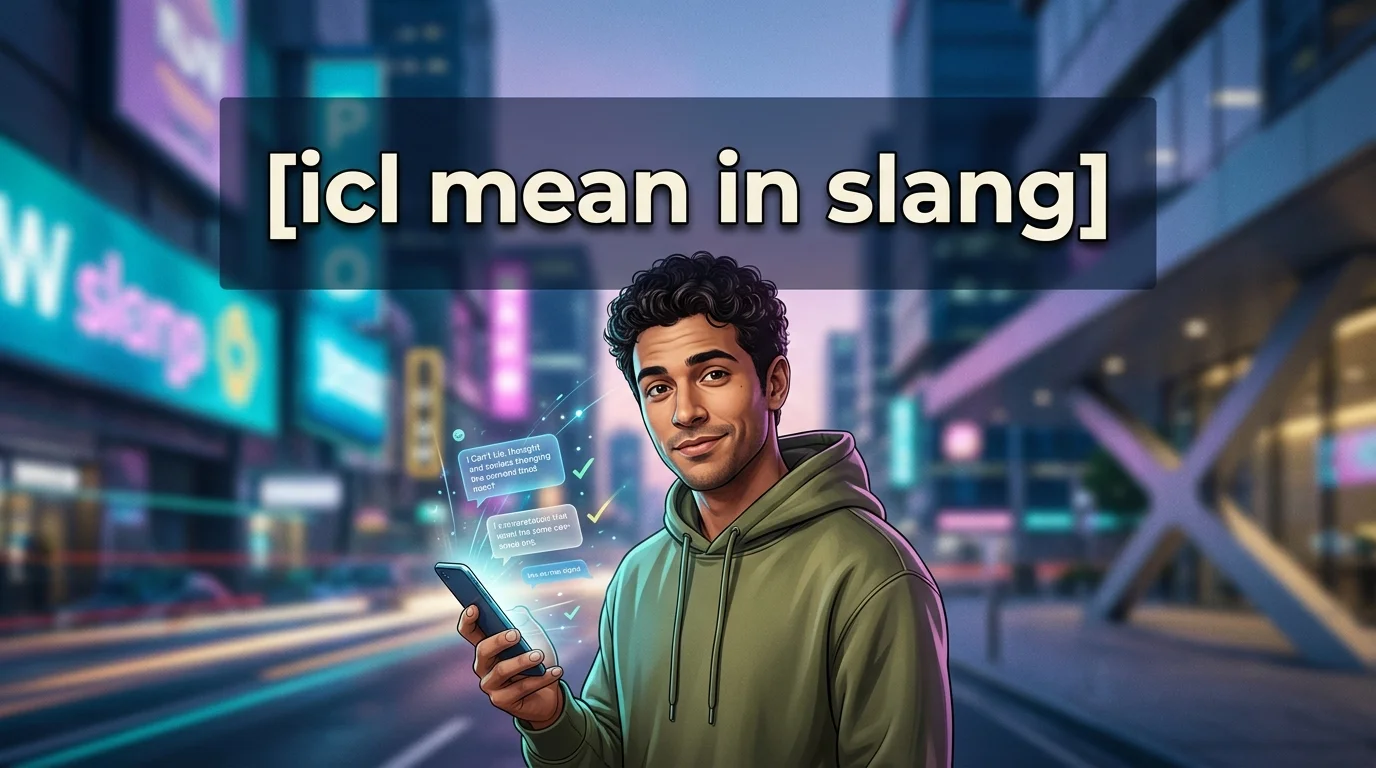
Searching for terms like “icl mean in slang” usually happens when a text message feels ambiguous. You want to make sure you interpret the tone correctly before typing back.
This guide breaks down everything you need to know about ICL. You will discover its origin, psychological impact, nuanced meanings across social platforms, and exact usage rules.
What Does ICL Mean in Slang?
The Core Definition
ICL stands for “I Can’t Lie.”
It functions as an informal conversational opener or transition. Speakers use it to emphasize honesty, vulnerability, or raw truth before sharing a thought.
Quick Breakdown
- Primary Meaning: “I Can’t Lie” or “I Cannot Lie.”
- Secondary Meaning: “To be honest” or “Frankly speaking.”
- Tone: Casual, candid, direct, and intimate.
- Grammatical Function: Conversational stance marker (used at the start or end of a sentence).
“ICL this new album is actually incredible.”
“That exam was insanely difficult, ICL.”
“ICL I didn’t think you were actually going to show up.”
Origin & Background of ICL
Where It Came From
The phrase “I can’t lie” has existed in spoken English for decades. It originated as standard casual English in urban communities across the United Kingdom and the United States.
British youth culture, particularly within London’s multicultural street dialect, heavily popularized the phrase during the 2010s. Text messaging transformed the full spoken phrase into the shorthand acronym “ICL.”
The Rise of Texting Culture
Text-based communication values speed and efficiency. Typing three letters takes less effort than typing ten.
As smartphone usage exploded, acronyms like TBH (To Be Honest), NGL (Not Gonna Lie), and ICL became standard shortcuts for keyboard communicators.
Social Media Amplification
Platforms like Twitter, Instagram, and TikTok turned ICL into a global internet staple.
Viral commentary videos and meme captions fueled its spread. When creators wanted to share hot takes or relatable confessions, starting a caption with “ICL” signaled immediate authenticity to viewers.
Real-Life Conversations
Example 1: TikTok Comment Section
Person A: Everyone is saying this outfit is ugly, but I kind of love it.
Person B: ICL it looks better on you than the model on the website!
Example 2: WhatsApp Chat Between Friends
Person A: Are you guys almost at the restaurant?
Person B: ICL we haven’t even left the house yet 💀 give us 15 minutes!
Example 3: Instagram DM
Person A: Did you actually finish that whole series in one sitting?
Person B: ICL I stayed up until 4 AM watching it. I could not turn it off.
Example 4: Everyday iMessage Texting
Person A: Be honest with me, do you like my new haircut?
Person B: ICL it looked a little short at first, but it actually suits you really well.
Emotional & Psychological Meaning Behind ICL
The Pursuit of Digital Authenticity
Modern digital communication lacks physical cues like facial expressions and voice inflection. People often worry that text messages will sound fake or passive-aggressive.
Using ICL creates an immediate bridge of trust. It reassures the listener that the statement following it comes from a place of genuine feeling.
Softening the Truth
ICL often serves as a psychological buffer. It softens blunt feedback or potentially controversial opinions.
When someone says “ICL your idea is risky,” the acronym reduces tension. It frames the critique as a personal perspective rather than a harsh attack.
Real-Life Reflection
During my early years coaching digital communication teams, I noticed young colleagues adding shorthand openers to their peer reviews. One remote writer kept starting feedback threads with “ICL.”
At first glance, it seemed overly informal for work. Observing the team dynamic revealed something deeper. That tiny acronym stripped away defensiveness, opening up a safe space for real, unfiltered feedback.
Usage in Different Contexts
Social Media Platforms
On TikTok and X, ICL acts as a hook for public posts. It signals to scrollers that a real, unvarnished opinion is coming.
- TikTok: “ICL this recipe actually saved my life.”
- X (Twitter): “ICL people are hype-checking this movie way too hard.”
Friends & Relationships
Among close peers, ICL fosters closeness. It lowers emotional walls between friends.
It allows people to admit vulnerabilities, acknowledge mistakes, or express fondness without sounding overly dramatic or cheesy.
Work & Professional Settings
Professional environments require caution. Texting “ICL” to your manager during a formal presentation review comes across as unprofessional.
Save the acronym for informal team chats on Slack or casual banter with trusted workplace peers.
Casual vs. Serious Tone
| Context | Example | Appropriate? |
| Casual Friend Chat | “ICL I slept through my alarm.” | Yes |
| Social Comment | “ICL this dance trend is hilarious.” | Yes |
| Formal Work Email | “ICL I didn’t read the quarterly report.” | No |
| Serious Apology | “ICL I am really sorry I hurt you.” | Avoid |
When NOT to Use ICL
High-Stakes Professional Situations
Avoid using slang during job interviews, business proposals, or formal client emails. It undermines authority and signals a lack of professional awareness.
Deeply Serious or Tragic Conversations
If a friend shares sad news, using digital slang cheapens your empathy.
- Incorrect: “ICL that sucks so bad, sorry for your loss.”
- Correct: “I am so truly sorry to hear that. I am here for you.”
Misleading or Manipulative Contexts
Overusing “I can’t lie” can backfire. If every second sentence begins with an assertion of honesty, listeners might start questioning your general sincerity.
Common Misunderstandings
Mistaking It for Other Acronyms
People occasionally confuse ICL with IIRC (If I Recall Correctly) or ICLY (I Could Love You). Pay close attention to context clues.
Misreading Tone
Some readers interpret ICL as aggressive or dismissive. In reality, the sender is usually trying to build rapport by sharing an honest view.
Literal Interpretation Issues
Non-native English speakers sometimes wonder why people say “I can’t lie” when no one accused them of lying in the first place.
In this context, the expression is an idiom, not an answer to an accusation.
Comparison Table: ICL vs. Similar Slang
| Slang Term | Full Meaning | Best Used For | Tone Difference |
| ICL | I Can’t Lie | Casual confessions, hot takes | Soft, conversational, open |
| NGL | Not Gonna Lie | Sharing surprising truths | Slightly more dramatic emphasis |
| TBH | To Be Honest | Direct opinions, feedback | Classic, standard, reflective |
| FR | For Real | Agreeing or confirming truth | Emphatic, supportive, simple |
| ISTG | I Swear To God | Intense promises or frustration | High emotional intensity |
Key Insight
While NGL, TBH, and ICL perform similar conversational duties, ICL carries a slightly more modern, casual vibe favored heavily by Gen Z digital creators.
Variations & Related Expressions
- ICL Summary: Shortened phrase used online to mean “Here is my honest take.”
- ICL SB: “I Can’t Lie Somebody” – used when referring to an unnamed person truthfully.
- ICL BRUVA: “I Can’t Lie Brother” – common British UK slang variation among friends.
- ICL FR: “I Can’t Lie, For Real” – used to double down on complete authenticity.
- ICL TBH: “I Can’t Lie, To Be Honest” – redundant slang used for dramatic comedic effect.
- ICLN: “I Can’t Lie Now” – slightly varied modern typing style.
- ICL LOWKEY: “I Can’t Lie, Lowkey” – expressing a subtle, secret feeling honestly.
- ICL HIGHKEY: “I Can’t Lie, Highkey” – admitting an intense, obvious fact openly.
How to Respond When Someone Uses ICL
Casual Replies
- “Right?! I was thinking the exact same thing.”
- “Fair enough, thanks for keeping it real.”
- “Haha I know, it is crazy!”
Funny Replies
- “Wait, so you were lying to me before this?!”
- “Big statement coming through!”
- “Don’t start lying now!”
Mature Replies
- “I appreciate your honesty.”
- “Thanks for sharing your perspective on that.”
- “I respect that viewpoint.”
Respectful Replies
- “That makes sense, I see where you’re coming from.”
- “Glad we can talk openly about it.”
Regional & Cultural Usage
Western Culture
In the US, UK, Canada, and Australia, ICL is widely used among teenagers and young adults. It functions seamlessly in text-speak and casual social media interactions.
Asian & Middle Eastern Cultures
Global internet adoption has brought ICL into bilingual online spaces across Asia and the Middle East. Young speakers often mix local dialects with English acronyms like ICL in gaming chats and Instagram posts.
Generational Divide: Gen Z vs. Millennials
- Gen Z: Uses ICL and NGL fluidly as default conversational starters.
- Millennials: Tend to stick with TBH or full written phrases like “To be honest.”
- Gen Alpha: Adopting ICL naturally as standard digital literacy from early social exposure.
Is It Safe for Kids?
Yes, ICL is completely safe. It carries no inherent profane, explicit, or inappropriate meanings.
It is simply an abbreviation for standard words. Parents do not need to worry if they see this acronym on their child’s phone screen.
FAQs
What does ICL mean in texting?
In texting, ICL stands for “I Can’t Lie.” It is used to signal that the speaker is giving an honest, unvarnished opinion.
Is ICL rude to use?
No, ICL is not inherently rude. However, using it in formal settings like business emails can appear unprofessional.
What is the difference between ICL and NGL?
ICL means “I Can’t Lie,” while NGL means “Not Gonna Lie.” Both share virtually the same meaning, though ICL is newer trend-wise.
How do you pronounce ICL aloud?
Most people spell out the letters individually (“I-C-L”) or simply say the full phrase “I can’t lie” out loud.
Can ICL be used in professional settings?
It is best to avoid acronyms like ICL in professional environments unless communicating casually with close co-workers on internal messaging channels.
Conclusion
Understanding modern internet slang helps bridge generational gaps and makes digital communication much smoother.
The acronym ICL (“I Can’t Lie”) offers a quick, relatable way to express raw honesty, build rapport, and share unfiltered takes online.
Next time you want to share a genuine thought in a text or social comment, drop an ICL at the beginning of your message with confidence!