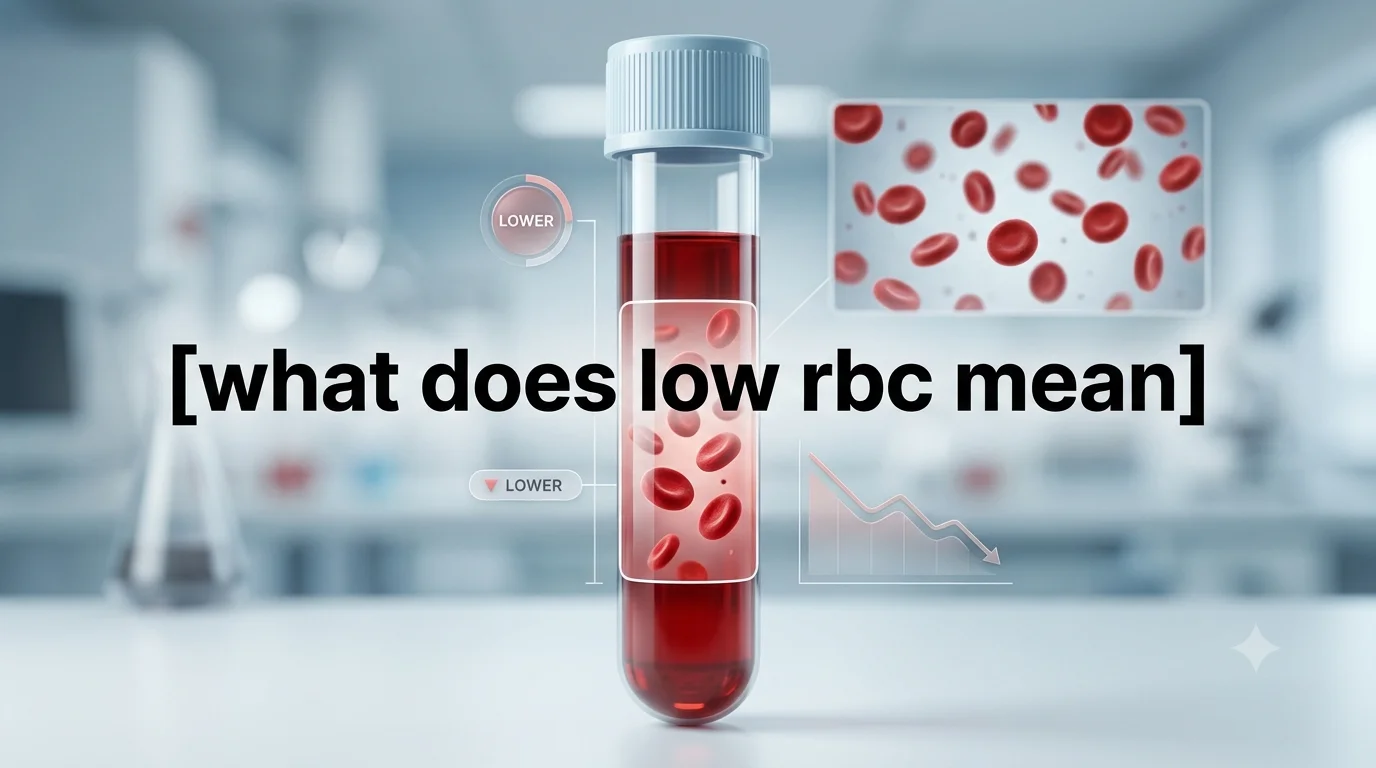
Understanding Your Lab Results Without the Panic
Finding out that your red blood cell count is below normal can send anyone into a spiral of worry. You open your patient portal, spot an underlined number in red, and immediately begin wondering what your body is trying to tell you.
Most people search for this term because medical reports are notoriously dry and confusing. They give you numbers, reference ranges, and medical jargon, but fail to explain how you should actually feel or what your next steps should be.
This guide bridges that gap between cold clinical data and real life. By understanding what low RBC actually signifies, you can replace anxiety with actionable health insights and have a much better conversation with your doctor.
What Does Low RBC Mean? A Quick Overview
The Clear Medical Definition
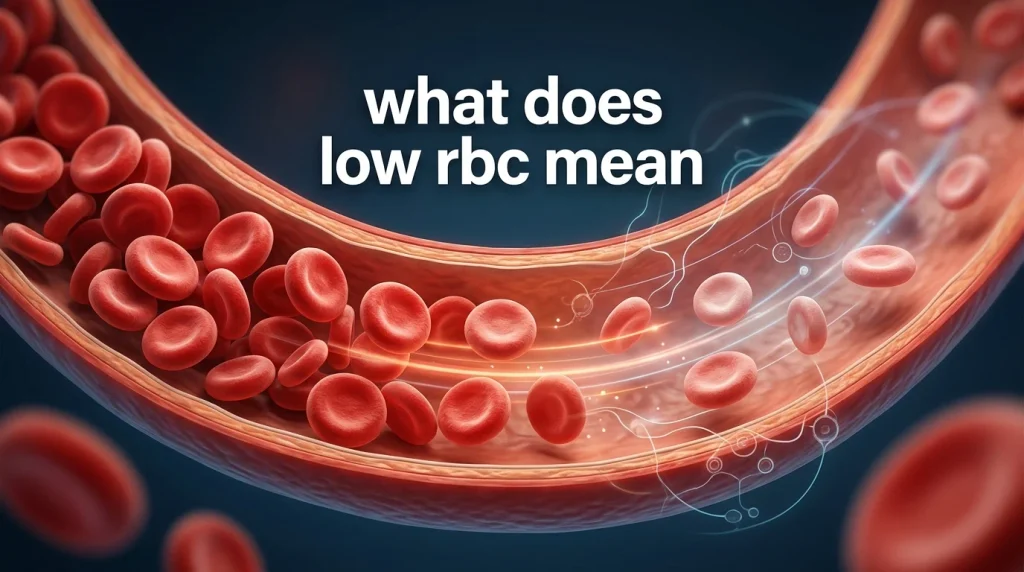
At its core, a low RBC count—medically known as erythropenia—means your blood has fewer red blood cells than normal for your age and sex. Red blood cells act as your body’s internal delivery drivers, carrying oxygen from your lungs to every organ and tissue.
When your count dips below standard levels, your tissue receives less oxygen, leading to systemic sluggishness.
- Normal Male Range: Typically between 4.7 to 6.1 million cells per microliter ($\mu\text{L}$).
- Normal Female Range: Typically between 4.2 to 5.4 million cells per microliter ($\mu\text{L}$).
- Primary Clinical Term: Often linked directly with anemia.
“Think of red blood cells as microscopic cargo trucks. When half the fleet goes offline, the entire city’s supply chain slows down.”
“Low RBC isn’t a disease itself; it’s a vital signal that an underlying process needs attention.”
“A mild drop might go completely unnoticed, while a sharp drop demands immediate medical evaluation.”
Origin & Background of Red Blood Cell Studies
How Medical Science Discovered Erythropenia
The study of blood cells dates back to the invention of the compound microscope in the 17th century. Antonie van Leeuwenhoek was among the first to observe red blood cells, describing them as tiny floating discs.
Over the centuries, hematology evolved from simple visual observation to automated flow cytometry. This modern technology allows labs to count millions of cells in seconds.
Evolution in Public Awareness
Historically, people only discussed low blood counts in hospital wards or specialized medical manuals.
Today, online patient portals and routine wellness panels have brought lab results straight to our smartphones, making blood health a frequent topic of conversation.
Real-Life Conversations About Low RBC
Scenario 1: A WhatsApp Text Between Friends
Sarah: Hey, I just got my blood panel back and my doctor left a note saying my RBC is low. Should I be panicking right now?
Maya: Not at all! Did she mention your iron levels? Mine dropped last year because I wasn’t eating enough greens, and some supplements fixed it right up. Just call her office to be sure!
Scenario 2: An Instagram DM Exchange
Alex: I’ve been so exhausted lately despite getting eight hours of sleep. Just found out my red blood cell count is low.
Jordan: That makes total sense! When mine was low, I felt like I was walking through wet cement every morning. Get your doctor to check your B12 too.
Scenario 3: TikTok Comment Section
User_FitLife: Why am I getting dizzy during my warmup sets all of a sudden?
User_HealthCoach: Check your latest CBC report! A low RBC count reduces oxygen delivery to your muscles, making intense workouts feel twice as hard.
Emotional & Psychological Impact of Low Blood Counts
The Hidden Toll of Chronic Fatigue
Having a low red blood cell count affects more than just physical metrics; it alters your psychological state. When your brain receives slightly less oxygen, focus drops, mood swings increase, and daily tasks feel overwhelming.
Many people mistake this physical fatigue for laziness or burnout, leading to unnecessary guilt and emotional strain.
Real-Life Scenario:
A busy graphic designer noticed she could no longer finish her daily projects without needing a long afternoon nap. She assumed she was burning out from work stress, only for a routine checkup to reveal a low RBC count caused by a severe vitamin B12 deficiency.
Causes of Low RBC in Different Contexts
Dietary and Lifestyle Factors
Poor nutritional intake is one of the most common reasons for a decline in red blood cells. Your bone marrow needs specific raw materials to manufacture healthy cells continuously.
Key nutritional gaps include:
- Iron Deficiency: The most common cause worldwide.
- Vitamin B12 Deficiency: Essential for cell maturation.
- Folate Deficiency: Crucial for cellular DNA synthesis.
Medical Conditions and Physiology
Certain health conditions can slow down red blood cell production or destroy cells faster than your body can replace them.
Common clinical factors:
- Chronic Kidney Disease: Reduces the hormone erythropoietin, which tells bone marrow to make RBCs.
- Internal Bleeding: Caused by ulcers, heavy menstrual cycles, or gastrointestinal issues.
- Autoimmune Disorders: Conditions where the immune system mistakenly attacks healthy red blood cells.
When Low RBC Requires Immediate Attention
Critical Warning Signs
While mild drops are manageable, significant drops can become dangerous quickly.
You should seek immediate emergency care if low RBC is accompanied by:
- Severe chest pain or pressure.
- Sudden, unexplainable shortness of breath while resting.
- Fainting, dizziness, or loss of consciousness.
- Noticeable pale or yellowish skin accompanied by cold sweats.
Common Misunderstandings About Low RBC
Low RBC Is Always Anemia
While low RBC is a hallmark of anemia, the terms are not completely identical. Anemia specifically refers to low hemoglobin or total red cell volume, meaning you can occasionally have a normal RBC count with abnormally low hemoglobin inside those cells.
Eating Meat Instantly Fixes the Issue
Dietary iron helps if the root cause is iron deficiency, but it won’t fix low RBC caused by kidney issues, bone marrow conditions, or chronic inflammation. Correcting the issue requires identifying the exact cause with a healthcare provider.
Comparison Table: RBC vs Related Markers
| Lab Marker | Primary Function | What a Low Value Indicates | Typical Recovery Strategy |
| RBC Count | Measures total number of red cells | Reduced oxygen capacity | Targeted supplements or treating root cause |
| Hemoglobin (Hb) | Protein holding oxygen in cells | Impaired oxygen transport | Iron-rich diet, vitamin support |
| Hematocrit (Hct) | Percentage of blood volume made of RBCs | Dehydration or cellular loss | Hydration balance, underlying treatment |
| WBC Count | Fights infections | Compromised immune system | Medical evaluation for infections/marrow |
Key Insight
Understanding how your RBC count interacts with hemoglobin and hematocrit gives a complete picture of your blood health, rather than relying on a single isolated metric.
8 Common Types and Related Conditions
1. Iron Deficiency Anemia
Low RBC caused by insufficient iron, preventing the body from producing adequate hemoglobin.
2. Vitamin Deficiency Anemia
Decreased RBC production caused by a lack of folate or vitamin B12 in your daily intake.
3. Hemolytic Anemia
A condition where red blood cells are destroyed faster than bone marrow can produce new ones.
4. Aplastic Anemia
A rare condition occurring when the body stops producing enough new blood cells altogether.
5. Anemia of Chronic Disease
Low cell counts resulting from long-term inflammatory conditions like arthritis or kidney dysfunction.
6. Blood Loss Anemia
Rapid or slow loss of red blood cells due to injury, surgery, or heavy menstrual bleeding.
7. Microcytic Anemia
A state where red blood cells are fewer in number and significantly smaller than normal size.
8. Macrocytic Anemia
A scenario where red blood cells are fewer, but individual cells are abnormally large and underdeveloped.
How to Talk to Your Doctor About Your Results
Direct and Effective Questions
When discussing your lab results with a medical professional, clear communication ensures you get actionable answers quickly.
Casual Questions:
- “My RBC is a bit low, could this explain why I’ve been feeling unusually tired lately?”
- “Should I make any quick changes to my daily diet based on these numbers?”
Detailed Clinical Questions:
- “Does my low RBC count appear to be microcytic, normocytic, or macrocytic?”
- “Should we order a ferritin test or check my B12 and folate levels to find the root cause?”
Global and Cultural Perspectives on Blood Health
Western Context
In Western medicine, low RBC is typically detected early through routine annual physicals and standard Complete Blood Counts (CBC).
Asian & Eastern Context
Traditional medicine approaches blood health holistically, often connecting low energy and pale complexion to dietary imbalances, emphasizing restorative foods alongside modern care.
Generational Differences
Gen Z and Millennials frequently spot blood imbalances through direct-to-consumer health tracking and digital portals, whereas older generations usually rely strictly on physician-driven testing.
Read More: What Does Roofied Mean in Slang? Meaning, Origin, and Real-Life Examples
Understanding Lab Results for Children and Teens
Children have different standard reference ranges for red blood cells compared to adults because their bodies grow rapidly.
If a child shows low RBC, it is often tied to rapid growth spurts, selective eating habits, or temporary post-viral recovery. Always consult a pediatrician rather than using adult charts to evaluate a child’s panel.
Frequently Asked Questions
What is considered a dangerously low RBC count?
An RBC count below $3.0\text{ million}/\mu\text{L}$ is generally considered significantly low for adults and typically requires immediate medical investigation to determine the underlying cause.
Can stress cause low red blood cells?
Severe, chronic stress can indirectly affect red blood cell production by triggering systemic inflammation and altering appetite, but stress alone is rarely the primary cause of severe erythropenia.
How quickly can you rebuild low RBC levels?
It usually takes several weeks to months. Dietary changes or supplements typically require 2 to 3 months to fully restore RBC levels because red blood cells have a natural 120-day lifecycle.
Does drinking water help raise RBC?
Drinking water does not directly increase red blood cell production, but proper hydration helps balance your plasma ratio, providing a clearer reading on future blood tests.
What foods help increase red blood cell production?
Foods rich in iron (spinach, red meat, lentils), vitamin B12 (eggs, fish, fortified cereals), and folate (leafy greens, beans) directly support your body’s RBC production.
Final Thoughts on Managing Low RBC
Discovering a low red blood cell count isn’t a cause for panic—it’s a helpful signal from your body asking for support. Whether the fix is as simple as tweaking your diet or working with your physician on an underlying issue, identifying low RBC gives you the power to restore your energy and long-term health. Stay proactive, listen to your physical symptoms, and partner with a trusted health professional to bring your levels back into balance.