Have you ever stumbled across the word tesoro while scrolling through Instagram captions, watching a captivating foreign film, or receiving a warm text message?
You might wonder if it carries a secret romantic meaning, or if it is just another casual piece of internet slang.
Understanding terms of endearment from other languages can feel tricky, especially when direct dictionary definitions miss the emotional heart of how real people speak.
Hearing a word spoken with genuine affection makes you want to get the context exactly right before you start using it yourself.
In this comprehensive guide, we will break down everything you need to know about this timeless term.
You will discover its literal meaning, its historical roots, its psychological depth, and how to use it naturally in modern digital conversations without making awkward cultural mistakes.
What Does Tesoro Mean? – Quick Meaning
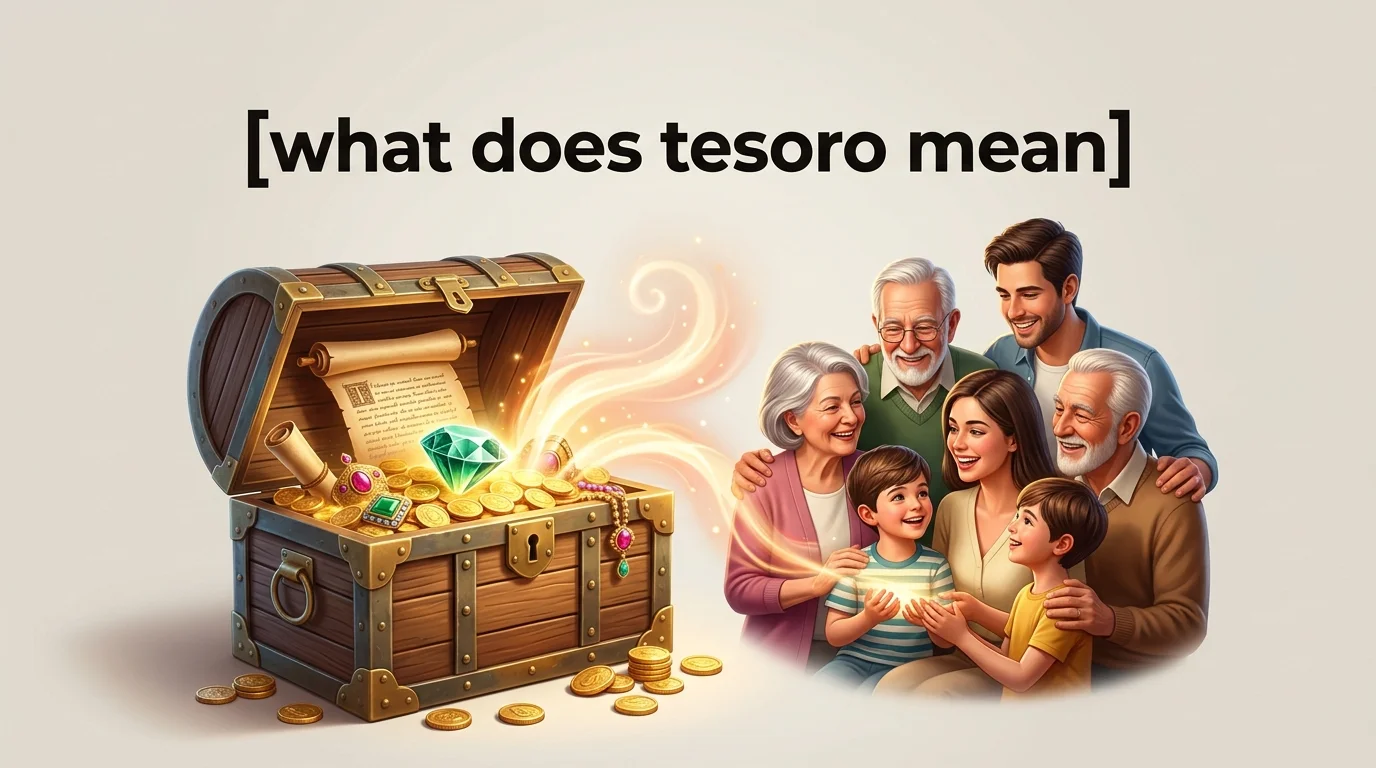
At its most fundamental level, tesoro is a noun in both Italian and Spanish that translates directly to “treasure” in English.
When people use it in everyday speech, it functions as a deeply affectionate term of endearment, similar to calling someone “honey,” “sweetheart,” “darling,” or “precious.”
Core Definitions
- Literal Noun: Valuable items, accumulated wealth, or precious gems.
- Term of Endearment: A loving label reserved for romantic partners, children, close family members, or beloved pets.
- Metaphorical Description: Something or someone of immense personal value and irreplaceable worth.
Quick Quoted Examples in Context
“Goodnight, my tesoro, I hope you have the sweetest dreams tonight.”
“Look at this stray kitten I rescued—he is an absolute tesoro!”
“Thank you for helping me through this difficult week, you are a total tesoro.”
Origin & Background
The word traces its linguistic lineage directly back to classical antiquity.
It stems from the Latin word thesaurus, which was borrowed from the ancient Greek thēsauros, meaning a storehouse, treasure chamber, or accumulated wealth.
How the Meaning Evolved
As Vulgar Latin evolved into modern Romance languages during the Middle Ages, the term maintained its foundational core of high monetary value.
Over centuries, southern European cultures began applying financial vocabulary to emotional bonds.
If gold was the most valuable physical possession a person could own, then a cherished child or spouse was the spiritual counterpart.
Cultural Influence Across the Globe
In Spanish-speaking countries across Latin America and Spain, alongside Italian communities throughout Europe and the Americas, the word became an essential cornerstone of family life.
Grandmothers used it to greet young grandchildren coming through the front door.
Poets and songwriters integrated it into romantic ballads to signify unconditional devotion.
Social Media Impact
Modern internet culture has given the word a fresh, global digital afterlife.
TikTok creators frequently use the word in aesthetic lifestyle videos, pet appreciation posts, and romantic travel vlogs filmed in Italy or Spain.
It has migrated beyond native speakers, entering the vocabulary of international English speakers who want to add warmth and flair to their online identity.
Real-Life Conversations
Seeing a term of endearment used in realistic context reveals how naturally it flows in contemporary communication.
Here are four realistic conversations across popular messaging platforms.
Scenario 1: WhatsApp (Romantic Couple)
Person A: Hey, I know you had a stressful day at the office. I made your favorite pasta for dinner.
Person B: You are genuinely the best, tesoro! I am heading home right now.
Person A: Drive safe! Can’t wait to see you.
Scenario 2: Instagram DMs (Close Friends)
Person A: I just dropped off the final draft for your portfolio project! Hope the design team loves it.
Person B: Oh my goodness, thank you so much! You are an absolute tesoro for doing that on short notice! 😭✨
Person A: Anytime! You would do the exact same for me.
Scenario 3: TikTok Comment Section (Pet Video)
Person A: Look at how he curls his paws when he falls asleep on the couch! 🐾
Person B: Stop, my heart cannot take it! What a sweet little tesoro! 🥹
Person A: He knows he owns the entire house!
Scenario 4: Text Messages (Parent to Child)
Person A: Mom, I just landed at the airport. Waiting for my luggage now.
Person B: So happy to hear that, tesoro. Text me as soon as you step into the taxi.
Person A: Will do, see you in thirty minutes!
Emotional & Psychological Meaning
Calling someone a treasure carries far more psychological weight than standard pet names like “bae” or “dude.”
It creates an immediate emotional shelter, signaling to the recipient that they are held in exceptionally high esteem.
What Emotion It Expresses
- Vulnerability: Revealing that someone holds high personal value in your life requires dropping emotional guards.
- Protection: The word naturally implies a desire to guard and cherish the relationship against outside harm.
- Deep Gratitude: It communicates that the speaker feels genuinely fortunate to have the person present in their world.
Why People Choose It Over Other Terms
Language shapes our psychological perception of intimacy.
Using a romantic Romance-language term introduces a sense of elegance and timelessness into daily conversations.
It elevates a mundane interaction into something soft, meaningful, and visually evocative.
A Personal Communication Perspective
During my years advising cross-cultural teams and bilingual couples on communication dynamics, I frequently noticed a fascinating pattern.
When native English speakers adopted Romance-language endearments like this one, their interpersonal tone softened almost instantly.
One client noted that calling her partner this term felt less transactional and far more grounded than modern English nicknames.
Usage in Different Contexts
Knowing where and when to deploy this word determines whether you sound natural or out of place.
Social Media & Digital Spaces
On platforms like Instagram, TikTok, and Pinterest, the term thrives in video captions, photo comments, and aesthetic bio lines.
It works wonderfully when captioning pictures of romantic getaways, cozy morning routines, or photos of close friends.
Romantic Relationships & Deep Friendships
In romance, it serves as a soft, intimate nickname for a boyfriend, girlfriend, spouse, or partner.
Among close friends, it acts as an expressive token of deep gratitude, especially after someone does you a major favor.
Professional & Work Settings
This is where you must exercise extreme caution.
Calling a client, manager, or coworker by this term in a professional email or corporate meeting is highly inappropriate.
It blurs professional boundaries and can easily create discomfort in workplace environments.
Casual vs. Serious Tone
| Context | Tone Quality | Expected Audience Reaction |
| Cozy Texting | Warm, gentle, affectionate | Receives a sweet, happy response |
| Wholesome Social Post | Playful, stylish, expressive | High engagement, supportive comments |
| Formal Business Email | Unprofessional, overly intimate | Causes confusion or HR concerns |
When NOT to Use It
While the word is naturally soft and affectionate, improper usage can cause awkward misunderstandings.
Inappropriate Professional Situations
Avoid using the word in job interviews, performance reviews, or client communications.
Professional communication requires respect, clarity, and clear personal boundaries that intimate nicknames violate.
Social Situations with Acquaintances
Using the term with someone you just met at a networking event or party can come across as overly forward, boundary-pushing, or patronizing.
Intimacy must be earned before using language that implies deep sentimental value.
Cultural Sensitivity & Overuse
Repeatedly dropping foreign terms into every sentence when you do not speak the language can feel performative or forced.
Allow the word to surface naturally in moments of true affection rather than forcing it into casual small talk.
Common Misunderstandings
Clear communication relies on dispelling popular myths surrounding foreign terminology.
Myth 1: It Belongs Exclusively to Spanish
Many people assume the term is purely Spanish due to the popularity of Latin pop music and media.
In reality, the word is equally prominent and widely used across all regions of Italy.
Myth 2: It Is Strictly Romantic
Another frequent misconception is that the term is reserved exclusively for lovers.
Millions of grandparents, parents, and friends use it daily without any romantic connotation whatsoever.
Myth 3: It Means the Same as “Amigo”
Some casual internet users confuse it with general friendship labels like “buddy” or “mate.”
The word carries far more sentimental weight than standard casual terms for acquaintances.
Comparison Table
To help you understand how this term stacks up against other popular Romance-language endearments, explore the comparison chart below.
| Term | Direct Meaning | Cultural Tone | Primary Context |
| Tesoro | Treasure | Deeply loving, cherished | Romantic partners, children, close friends |
| Cariño | Care / Affection | Warm, everyday casual | Partners, close friends, family |
| Mi Vida | My Life | Intense, deeply passionate | Romantic partners, close family |
| Corazón | Heart | Sweet, gentle, classic | Loved ones, family members |
| Amor | Love | Universally romantic | Spouses, partners, long-term lovers |
| Bebé | Baby | Modern, trendy, casual | Casual dating, romantic relationships |
Key Insight
While terms like amor or mi vida focus on passion and survival, calling someone your treasure explicitly emphasizes their immense personal worth and irreplaceable presence in your life.
Variations & Related Expressions
Understanding different variations allows you to tailor your tone to specific situations and emotional levels.
1. Mi Tesoro
- Meaning: My treasure.
- Explanation: Adding the possessive pronoun creates a direct, deeply personal statement of affection.
2. Tesorito
- Meaning: Little treasure.
- Explanation: A diminutive form used almost exclusively for small children, pets, or partners in a cute way.
3. Tesoro Mío
- Meaning: Treasure of mine.
- Explanation: A poetic, dramatic phrasing often found in romantic literature, music, and classic cinema.
4. Tesorino
- Meaning: Dear little treasure (Italian).
- Explanation: The preferred Italian endearing variation used frequently when speaking to toddlers or young kids.
5. Tesoro Hermoso
- Meaning: Beautiful treasure.
- Explanation: Combines aesthetic admiration with emotional warmth, ideal for romantic text messages.
6. Tesoro de Mi Vida
- Meaning: Treasure of my life.
- Explanation: An intense, deeply dramatic phrase reserved for milestone romantic moments or family vows.
7. Mi Tesoro Lindo
- Meaning: My pretty/cute treasure.
- Explanation: A sweet, casual variation popular in Latin American domestic settings among family members.
8. Tesoro Sagrado
- Meaning: Sacred treasure.
- Explanation: A formal or literary variation describing spiritual heritage, sacred objects, or deep historical bonds.
9. Tesoro Escondido
- Meaning: Hidden treasure.
- Explanation: Used metaphorically to describe a secret talent, an underrated location, or a quiet person with a golden heart.
10. Tesoro Nacional
- Meaning: National treasure.
- Explanation: A humorous or proud expression used to praise beloved public figures, icons, or extraordinary friends.
How to Respond When Someone Uses It
Receiving an affectionate term can leave you wondering how to reply naturally without breaking the emotional flow.
                    ┌─────────────────────────────────────────┐
                    │      SOMEONE CALLS YOU "TESORO"         │
                    └────────────────────┬────────────────────┘
                                         │
        ┌───────────────────┬────────────┴───────────┬───────────────────┐
        ▼                   ▼                        ▼                   ▼
┌──────────────┐    ┌──────────────┐        ┌────────────────┐   ┌──────────────┐
│ Casual Reply │    │ Flirty Reply │        │  Mature Reply  │   │ Funny Reply  │
└───────┬──────┘    └───────┬──────┘        └───────┬────────┘   └───────┬──────┘
        │                   │                        │                   │
        ▼                   ▼                        ▼                   ▼
  "Thanks, doc!"     "Only for you 😉"      "Appreciate you!"   "Better guard me!"
Casual Replies
- “Aww, thank you! You’re so sweet.”
- “Thanks, friend! Right back at you.”
- “You just made my entire day!”
Funny & Witty Replies
- “Does this mean you’re going to bury me on a tropical island with a map?”
- “Better keep me safe in a vault then!”
- “Finally, someone recognizes my high net worth!”
Mature & Thoughtful Replies
- “I really appreciate your kind words, that means a lot to me.”
- “Your thoughtfulness always shines through, thank you.”
- “I feel truly blessed to have you in my corner.”
Respectful Romantic Replies
- “I love you too, tesoro mío.”
- “You will always be my number one treasure.”
- “Hearing you say that never fails to put a smile on my face.”
Regional & Cultural Usage
Language morphs across political geographic borders and cultural landscapes, shifting tone depending on local social norms.
Western Culture Trends
In North America and Northern Europe, adopting non-English terms of endearment has become a major lifestyle trend.
English speakers frequently drop romance-language nicknames into social posts to add a touch of cosmopolitan flair.
Asian & Middle Eastern Contexts
In many Asian and Middle Eastern cultures, direct translations like “my treasure” (my jewel or my precious) carry tremendous respect.
Parents and elders frequently use these terms to address younger generations to signal protective familial duty.
Global Internet Culture
Online communities have flattened linguistic barriers entirely.
Gamers, aesthetic bloggers, and social media influencers use romance terms universally to build warm, welcoming digital communities regardless of nationality.
Generational Differences
- Gen Z Usage: Used ironicaly in memes, aesthetic photo dumps, or pet appreciation videos.
- Millennials: Used in romantic captions, wedding posts, and travel vlogs across Europe.
- Older Generations: Used strictly in traditional, earnest family settings to express deep love for children and grandchildren.
Is It Safe for Kids?
Yes, the word is completely safe, wholesome, and child-friendly across all languages.
It carries zero inappropriate or adult-oriented secondary meanings.
In fact, millions of parents and teachers across Spanish and Italian-speaking regions use it daily to encourage and comfort young children.
It creates a safe, nurturing atmosphere whenever it is spoken at home or in educational environments.
FAQs
What language is the word tesoro from?
The word originates from Latin and is natively used in both Spanish and Italian with identical meanings and spelling.
Can you call a guy tesoro?
Yes, you can call a man or boy by this term. It is a gender-neutral noun when used as an endearing nickname.
Is tesoro romantic or friendly?
It can be both. While frequently used between romantic partners, it is equally common among family members, close friends, and children.
What is the female equivalent of tesoro?
The word itself stays masculine in form regardless of who you speak to, though some Spanish speakers playfully use tesora in casual, informal settings.
How do you pronounce tesoro correctly?
In both Spanish and Italian, it is pronounced as teh-SOH-roh, with a soft rolling or tapped ‘r’ sound in the middle.
What does “tesoro mio” mean in English?
It translates directly to “my treasure,” serving as an elevated, deeply affectionate term of endearment for loved ones.
Conclusion
Understanding what tesoro means unlocks a rich layer of emotional and cultural connection that simple English translations cannot fully capture.
Whether you want to send a loving message to a romantic partner, caption a favorite travel photo, or express genuine gratitude to a close friend, this timeless term adds warmth and authenticity to your communication.
Language is meant to bring people closer together.
Now that you know its origins, variations, and cultural etiquette, feel confident using this beautiful word in your everyday conversations.