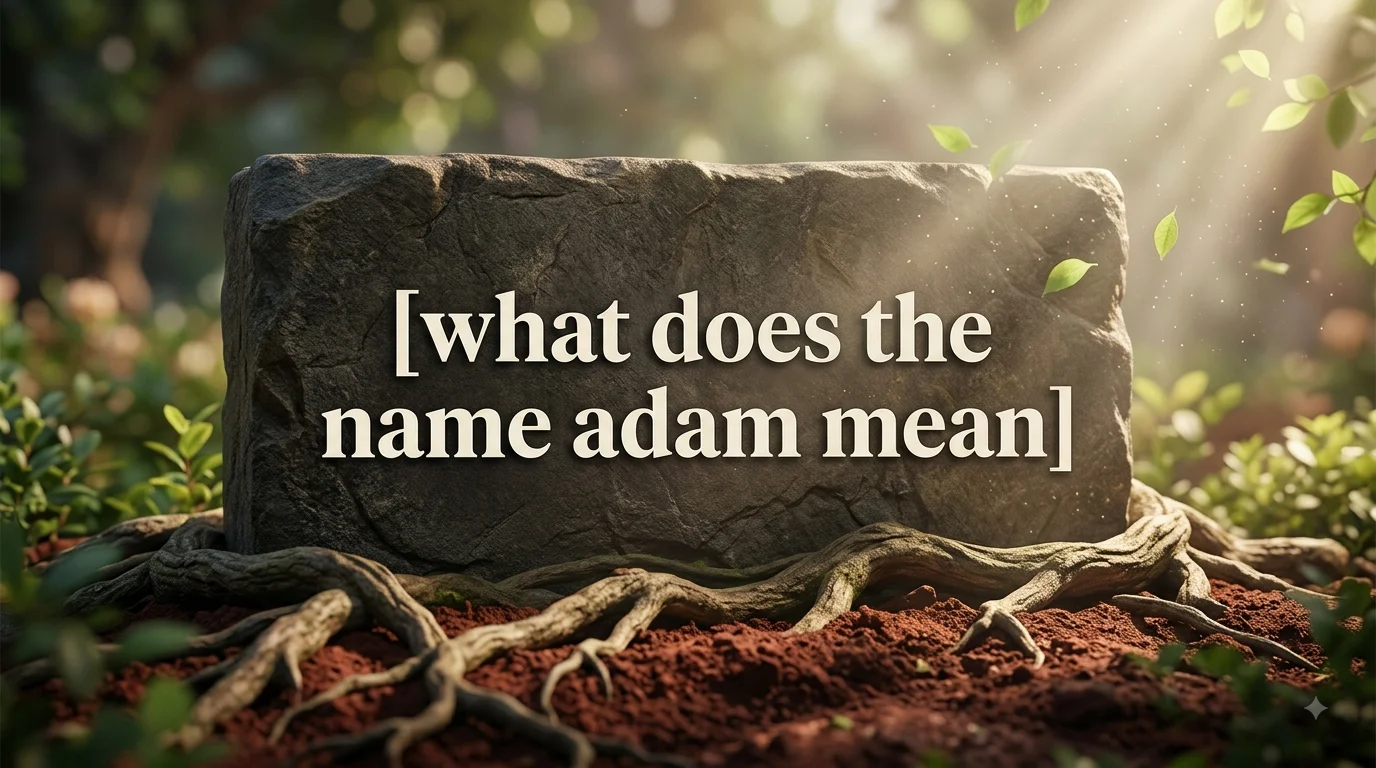
Whether you are expecting a new addition to your family or looking into the history of your own name, figuring out what does the name adam mean reveals a deep connection to human origin and nature. It carries timeless strength, history, and universal resonance across global cultures.
Names carry stories, identity, and personal history. Understanding the history behind this classic name helps parents pick a timeless option and gives bearers a stronger connection to their personal heritage.
Many people search for this term expecting a simple definition, yet they end up finding a rich tapestry of historical, biblical, and cultural significance. This guide covers its deep etymology, personality symbolism, and modern day relevance.
What Does the Name Adam Mean?
Primary Meaning and Core Definition
At its core, the name translates directly to “man,” “mankind,” or “earth.” It stems from ancient linguistic roots tied to the soil and creation itself.
When examining ancient texts, the term relates directly to the physical substance of the earth.
“The name signifies a foundational connection to nature, representing the very essence of human life.”
“In classical translation, it directly references red clay, pointing to life made from the earth.”
“As a universal label, it embodies the concept of humanity as a collective whole.”
Origin & Background
Etymological Beginnings
The name comes from the Hebrew root word adamah, which means “ground” or “earth.” It is closely linked to adam, the word for red or ruddy, referencing the reddish color of rich soil or human skin tone.
Religious and Cultural Influence
In Abrahamic religions—including Judaism, Christianity, and Islam—Adam is recognized as the very first human created by God. This placement gives the name an foundational status across world literature and theology.
Social Media and Pop Culture Impact
Despite its ancient roots, the name remains consistently popular in modern media, sports, and entertainment. Characters named Adam appear in contemporary films, gaming universes, and literature, maintaining its fresh image.
Evolution Over the Centuries
From ancient scriptures to medieval Europe, and into today’s modern world, the name has never gone out of style. It transitioned smoothly from a sacred title to a common, beloved everyday name.
Real-Life Conversations
Scenario 1: Texting About Baby Names
Person A: We are looking for something timeless that works everywhere. What do you think about Adam?
Person B: Honestly, it is solid, classic, and easy to pronounce in almost any language.
Scenario 2: Instagram DM Discussion
Person A: Did you know your name actually means ‘son of the red earth’?
Person B: Yeah! I looked it up recently. It feels super grounded and connected to nature.
Scenario 3: Casual WhatsApp Chat
Person A: Why do you think Adam stays so popular generation after generation?
Person B: Because it never feels trendy or outdated. It just works no matter what era you are in.
Scenario 4: TikTok Comment Section
Person A: Is Adam a modern name or an old-school one?
Person B: It is literally the ultimate classic—thousands of years old but still sounds fresh!
Emotional & Psychological Meaning
What Emotion the Name Conveys
The name exudes stability, dependability, and calm strength. People often associate it with an approachable, balanced individual who stays grounded under pressure.
Why Families Choose This Name
Parents frequently pick this name because it avoids flashiness while offering instant recognition. It carries a sense of reliability and warm familiarity.
Psychological Perception
Psychologically, short two-syllable names starting with a strong vowel tend to project confidence and warmth. It balances strength with humility.
During my years advising families on naming choices, I noticed parents choosing this name often felt an immediate sense of relief. It is a name that carries zero pretense, making it instantly feel like a reliable, lifelong fit.
Usage in Different Contexts
Social Media Presence
Online, the name is sleek, short, and memorable. It fits neatly into usernames, handles, and digital branding without needing overly complex spellings.
Friends and Relationships
Among peers, it feels friendly, warm, and easily accessible. It carries a welcoming vibe that helps people feel comfortable right away.
Professional and Workplace Settings
In business contexts, the name carries strong professional weight. It reads clean on resumes, sounds executive in boardrooms, and commands subtle respect.
Casual vs. Serious Tones
Whether spoken casually on a playground or printed formally on a diploma, the name adapts naturally to any level of formality without losing its charm.
When NOT to Use It
Misaligned Family Naming Themes
If your family naming strategy focuses on ultra-rare or highly unconventional names, this classic choice might feel too traditional for your goal.
Overlapping Family Names
When immediate family members already bear the name, using it again without a distinct middle name can cause confusion during family gatherings.
Potential Cultural Misunderstandings
While globally recognized, pairing it with certain unique regional surnames might occasionally sound visually or phonetically unbalanced.
Common Misunderstandings
Myth: It Only Has Religious Value
Many people assume the name is exclusively chosen for theological reasons. While its roots are sacred, millions of families select it purely for its sound and simplicity.
Myth: The Meaning Is Solely “First Man”
While associated with the first human, its direct linguistic definition points specifically to “earth,” “soil,” or “mankind” as a collective group.
Literal vs. Figurative Meaning
Literally, it means “red clay” or “earth.” Figuratively, it represents new beginnings, human connection, and foundational strength.
Comparison Table
| Name | Meaning / Origin | Vibe / Tone | Distinct Feature |
| Adam | Hebrew: Earth, Man, Red Clay | Grounded, Classic, Strong | The original classic name |
| Seth | Hebrew: Appointed, Placed | Gentle, Quiet, Thoughtful | Soft sound profile |
| Noah | Hebrew: Rest, Comfort | Calm, Peaceful, Popular | Modern top-tier choice |
| Ethan | Hebrew: Firm, Strong, Long-lived | Energetic, Solid, Friendly | Contemporary classic |
| Alexander | Greek: Defender of Men | Regal, Formal, Powerful | Multi-syllable classic |
Key Insight
While similar biblical and ancient names share strong historical roots, Adam stands out due to its unmatched brevity, international versatility, and timeless simplicity.
Variations and Related Forms
- Adamo: The traditional Italian variation, adding a rhythmic, lyrical flow to the classic name.
- Adán: The Spanish adaptation, featuring a soft accent and warm phonetic cadence.
- Adão: The Portuguese rendering, offering a distinct nasal vowel sound deeply rooted in Lusophone culture.
- Adamas: An ancient Greek form meaning “unbreakable” or “invincible,” sharing subtle phonetic similarities.
- Adamina: The feminine Latinate variation, offering a soft yet grounded option for girls.
- Adami: A common surname derivative used across Eastern Europe and the Mediterranean.
- Akamu: The melodic Hawaiian translation, bringing a unique tropical rhythm to the traditional name.
- Addie: A affectionate, vintage diminutive used historically across English-speaking regions.
- Adan: A popular modern spelling variant used frequently across multiple global cultures.
- Adamson: A patronymic surname form meaning “son of Adam,” widely used across Scandinavian and British heritage.
How to Respond When Someone Asks About the Name
Casual Responses
- “It is an absolute classic—simple, strong, and easy to remember!”
- “You can’t go wrong with it; it works in every country you visit.”
Funny Responses
- “It is literally the original name—you can’t get more classic than that!”
- “It has been trending for about six thousand years now!”
Mature Responses
- “It carries a wonderfully grounded meaning tied directly to the earth and humanity.”
- “It balances deep historical significance with a clean, modern aesthetic.”
Respectful Responses
- “It holds profound spiritual and historical value across many cultures worldwide.”
- “It is a honorable name that carries timeless dignity.”
Regional & Cultural Usage
Western Culture
Across North America and Western Europe, the name remains a steady favorite. It consistently ranks high on charts due to its clean spelling and easy pronunciation.
Asian Culture
In modern Asian societies, particularly in cosmopolitan regions, it is frequently chosen as an English or international name due to its global accessibility.
Middle Eastern Culture
Known as Aadam in Arabic contexts, the name holds high reverence as a respected prophet name, making it deeply cherished across the region.
Global Internet Usage
On international online platforms, the name serves as a universal, recognizable handle component that crosses language barriers effortlessly.
Generational Differences
Millennials often view it as a solid, dependable name from their school days, while Gen Z appreciates its minimal, two-syllable, aesthetic simplicity.
Is It Safe and Timeless for Children?
Choosing this name for a child carries practically zero risk of awkward trends, unusual spellings, or fleeting pop-culture associations. It offers a child a clear, easily pronounceable identity that transitions seamlessly from childhood to professional adult life.
Frequently Asked Questions
What is the exact biblical origin of the name?
It originates from the Hebrew Bible, where it refers to the first human created from the earth (adamah) by God.
Is the name Adam popular in 2026?
Yes, it remains consistently popular worldwide due to its classic nature, rarely suffering from dramatic drops in usage.
Does the name have different meanings in other languages?
While its main roots are Hebrew, similar phonetic versions exist globally, almost always connecting back to “earth,” “man,” or “red.”
What are common nicknames for Adam?
Because it is short and two syllables, nicknames are rare, though “Ads,” “Addy,” or “Ade” are sometimes used casually.
What personality traits are traditionally linked to the name?
People often associate the name with traits like dependability, practical intelligence, emotional stability, and a calm demeanor.
Is Adam used as a surname as well?
Yes, it functions frequently as both a given first name and a prominent family surname around the world.
Conclusion
Understanding what does the name adam mean reveals far more than just a simple definition. It connects directly to the ancient roots of human identity, nature, and community. Choosing or carrying this name means embracing a rich history that remains fresh, confident, and timeless across every era.