Have you ever come across the word liquidate in a news headline, a business document, or even during a casual conversation and wondered what it actually signifies? It sounds serious, almost clinical, yet it crops up everywhere from high-stakes corporate courtrooms to weekend retail sales.
Understanding what liquidate means helps demystify complex financial news and everyday conversations. People often search for this term because it carries multiple layers of meaning depending on where and how it is used. It can refer to shutting down a failing company, turning assets into cash, or even clearing out old inventory at a steep discount.
By unpacking its literal definition, financial context, and modern conversational usage, this guide eliminates the confusion around the term once and for all.
Unpacking What Liquidate Means in Daily Life
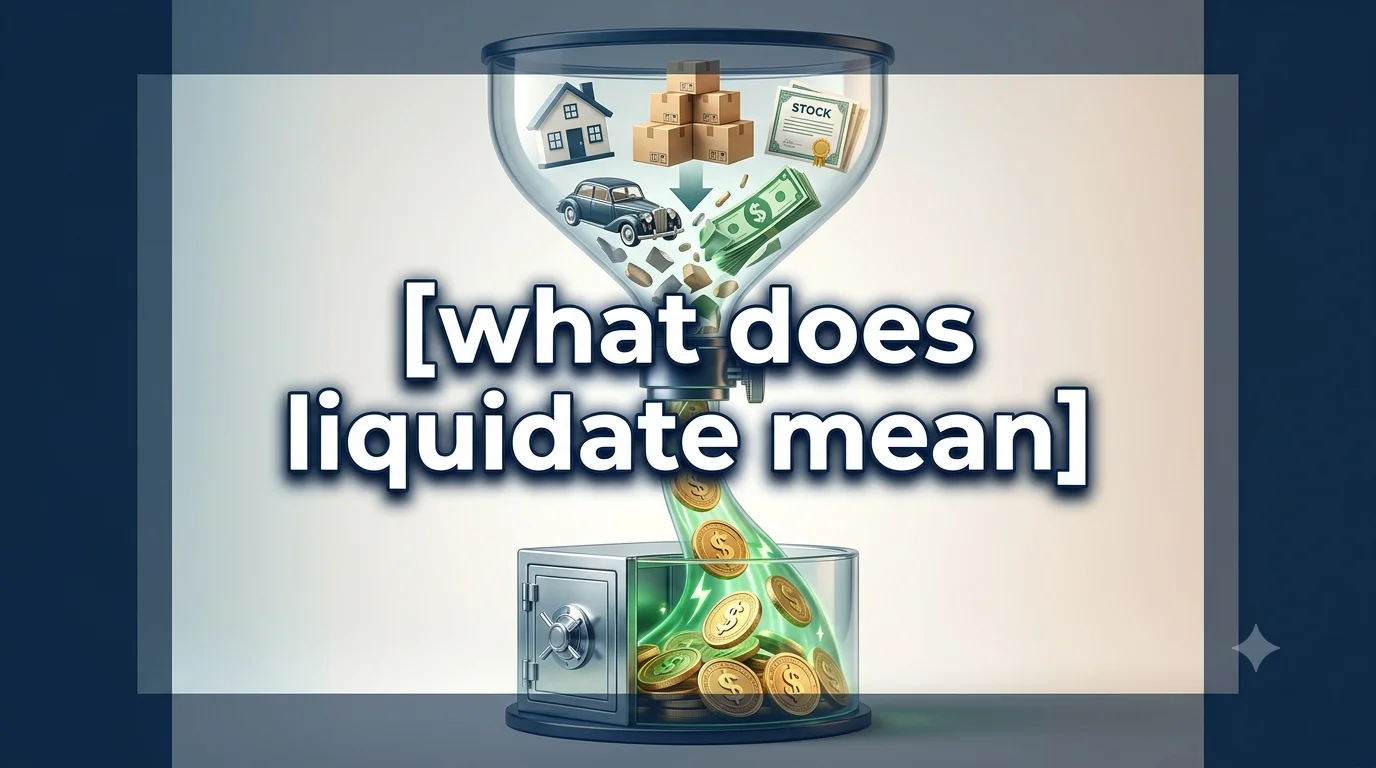
At its core, to liquidate something means to settle a debt or convert physical assets into liquid cash. In simple terms, if you own something valuable—like property, stocks, or inventory—and you sell it to get immediate spendable money, you are liquidating that asset.
However, the word carries a dual nature. In standard accounting and law, it represents a structured process of closing a business and paying off creditors. In retail and popular culture, it often refers to a “fire sale” where items are dumped rapidly at bottom-dollar prices.
Understanding these subtle shifts in meaning prevents awkward miscommunications, whether you are discussing company stock or browsing a local store closing sale.
What Does Liquidate Mean? – A Quick Meaning
To understand the core definition quickly, think of “liquid” cash. Money in a bank account flows easily and can be spent instantly, whereas a house or a fleet of delivery trucks takes time to sell.
Core Definitions
- Financial Definition: The legal and accounting process of bringing a business to an end, selling off its assets, and using the proceeds to pay off outstanding debts.
- Asset Management Definition: Converting non-liquid items (real estate, vehicles, jewelry, equipment) into actual cash.
- Retail Definition: Selling off remaining stock rapidly, often below market price, to clear space or raise quick capital.
- Informal / Slang Definition: Completely eliminating, wiping out, or getting rid of something troublesome.
“The retail giant decided to liquidate its remaining stores nationwide after filing for Chapter 7 bankruptcy.”
“We needed emergency capital for the house repair, so we had to liquidate a portion of our stock portfolio.”
“The clearance center is liquidating all summer apparel to make room for winter coats.”
Origin and Historical Background
The word traces its origins back to the Latin term liquidus, meaning fluid, clear, or liquid. During the Late Middle Ages, Italian merchants and bankers used the Italian derivative liquidare to mean “to make clear” or “to settle an account.”
How the Term Evolved
By the 16th and 17th centuries, the term entered the English language primarily through legal and commerce channels. Settling a balance meant clearing the books so that no debts remained murky or unpaid.
Cultural and Social Shift
Over the past century, the word moved out of strictly formal accounting ledgers and into public vocabulary. The rise of modern retail in the mid-20th century popularized “liquidation sales,” transforming a formal corporate process into a consumer shopping event.
In modern pop culture and action movies, the word took on a darker slang meaning, often used as a euphemism for eliminating an opponent or wiping out an obstacle completely.
Real-Life Conversations
Seeing the word inside realistic text exchanges reveals how tone changes based on the platform and relationship.
WhatsApp (Casual Business Discussion)
Person A: Did you hear about the store on 5th Avenue? They are going out of business.
Person B: Yeah, they started to liquidate everything today. Furniture is like 70% off.
Instagram DMs (Reseller / Thrifting Context)
Person A: Hey! Loving your online shop collection!
Person B: Thanks so much! I’m actually trying to liquidate my inventory this week to reset for autumn, so let me know if you want a bundle deal.
TikTok Comments (Reaction to Corporate News)
Person A: Wait, why is everyone saying this tech startup failed?
Person B: The founders had to liquidate all company assets yesterday just to cover payroll and investor debts 😳
Text Messages (Personal Finance Context)
Person A: Are you still coming on the group trip next month?
Person B: I really want to, but I might need to liquidate some crypto first to cover the flight ticket.
Emotional and Psychological Meaning
Words carry weight beyond their dictionary definitions. The word liquidate often evokes a strong psychological reaction because it signals finality, urgency, and drastic change.
The Feeling of Finality
When a company liquidates, it marks the end of an era. Employees lose jobs, founders abandon dreams, and long-standing institutions disappear. Emotionally, the word carries a sense of surrender—acknowledging that a venture or investment can no longer continue in its current form.
Relief and Reset
On the flip side, liquidating assets can feel like a massive psychological relief. Carrying heavy debt or holding onto stagnant investments creates mental stress. Selling everything off provides a clean slate, allowing individuals and business owners to clear the air and start fresh.
A Real-World Scenario
Imagine a local bakery owner who spent three years trying to keep her shop afloat during tough economic conditions. Month after month, debt accumulated, bringing constant sleepless nights. The day she decided to liquidate the machinery and furniture was painful, yet the moment the final auction hammer fell, a weight lifted. Converting those physical burdens into cash to settle debts finally allowed her to breathe again and move forward.
Usage in Different Contexts
Context changes everything when applying this term. Using it in the wrong environment can make you sound overly formal or unintentionally aggressive.
Social Media & Pop Culture
On platforms like X, TikTok, or YouTube, creators use the term dramatically. A gamer might claim they “liquidated the enemy team,” meaning they wiped them out effortlessly. Online traders often post about getting “liquidated,” referring to automatic sell-offs triggered by market drops.
Friends & Relationships
Among friends, the term is applied tongue-in-cheek. Someone might joke about “liquidating” their wardrobe before moving to a smaller apartment. It keeps the tone light while describing a major cleanout.
Work & Professional Settings
In boardroom meetings or financial reporting, the term is strictly technical. Here, it refers to legal corporate restructuring, Chapter 7 bankruptcy proceedings, or strategic asset allocation. Emotional weight is removed in favor of precise legal meaning.
Casual vs. Serious Tone
| Context | Tone | Intended Meaning |
| Corporate Courtroom | Highly Serious | Legal termination of a legal entity and distribution of assets |
| Retail Store Banner | Commercial / Urgent | Heavy discounts to clear out remaining inventory quickly |
| Gaming Chat | Playful / Hyperbolic | Complete defeat or elimination of opponents |
| Personal Budgeting | Practical / Focused | Selling personal items or investments to raise immediate cash |
When NOT to Use It
Because the word carries strong corporate and legal weight, using it carelessly can create misunderstandings or cause unnecessary panic.
Workplace Sensitivity
Never use the word lightly around colleagues regarding company health. Stating that a department is going to “liquidate” when you simply mean downsizing can spark widespread job panic across the team.
Cultural Sensitivity and Violence
In historical contexts, particularly political history, the term was used as a sinister euphemism for political purges or violence (e.g., “liquidating opposition”). Avoid using the term when discussing sensitive human situations, social groups, or conflicts.
Everyday Simple Transactions
If you are simply selling your old smartphone to a friend, calling it a “liquidation” sounds unnaturally stiff. Plain terms like “selling off” or “getting rid of” fit much better.
Common Misunderstandings
Misinterpreting this financial term is common, especially for non-native speakers or young adults navigating personal finance for the first time.
Liquidate vs. Solvency
Many people assume liquidating a business always implies complete failure or bankruptcy. While often linked, solvent companies sometimes liquidate specific divisions or assets strategically to reallocate funds into more profitable ventures.
Confusion with “Solidify” or “Melt”
Because of the physical science definition of “liquid,” beginners occasionally mix up the financial sense with literal phase changes. In finance, liquidating does not melt anything; it simply increases liquidity (cash availability).
Literal vs. Figurative Meaning
- Literal (Financial): “The court ordered the sheriff to liquidate the property to satisfy the judgment debt.”
- Figurative (Slang): “I need to liquidate all this junk in my garage before the moving truck arrives tomorrow.”
Comparing Related Financial and Slang Expressions
Understanding how this word compares to similar business terms sharpens your vocabulary and financial literacy.
| Term | Core Meaning | Key Difference from Liquidate | Tone |
| Liquidate | Convert assets to cash / end business | Permanent conversion or shut down | Formal / Direct |
| Dissolve | Officially terminate a legal entity | Focuses on legal closure, not selling assets | Legal / Official |
| Bankrupt | Inability to pay outstanding debts | Legal status of debt relief; may keep assets | Heavy / Financial |
| Sell-Off | Selling assets quickly at low prices | Market event, does not end the business entity | Commercial |
| Pawn | Collateralizing items for short loans | Temporary surrender of goods, not permanent | Casual / Urgent |
| Clearance | Discounting retail items to clear shelf space | Routine retail event; store stays open | Promotional |
Key Insight
While terms like dissolve focus on ending legal agreements and bankrupt describes financial distress, liquidate focuses specifically on the physical act of turning tangible assets into spendable cash to clear obligations.
Variations and Types of Liquidation
The term manifests across different operational and financial scenarios. Here is how it breaks down across various industries.
Voluntary Liquidation
A company’s shareholders choose to wind down operations independently while the business is still solvent.
Involuntary (Compulsory) Liquidation
Creditors file a court petition forcing a company to shut down and sell assets to pay off overdue debts.
Retail Liquidation
A store sells off all inventory at deep discounts due to closure, remodeling, or relocation.
Market Position Liquidation
An investor exits a financial position by selling off stocks, crypto, or options to lock in cash.
Forced Liquidation
A broker automatically sells a trader’s leveraged assets because margin requirements were breached.
Asset Liquidation
An individual sells personal property—like cars or electronics—to raise cash for an emergency.
Partial Liquidation
A corporation sells off one specific division or branch while keeping the main business running smoothly.
Liquidation Value
The total net cash an asset or business would yield if sold quickly under forced market conditions.
How to Respond When Someone Uses It
Knowing how to respond when this word pops up in conversation depends on the atmosphere of the discussion.
Casual & Friendly Replies
“Sounds like a great time to grab a bargain! When does the sale start?”
“Good idea—clearing out that clutter will give you so much extra space.”
Funny & Lighthearted Replies
“Liquidate? Sounds fancy! Can you liquidate my student loans while you’re at it?”
“My bank account is currently liquidating itself without my permission!”
Mature & Professional Replies
“That sounds like a tough decision. Let me know if you need any support transitioning those assets.”
“Taking a cash-neutral stance right now seems like a sensible risk-management strategy.”
Respectful Replies (When a Business Fails)
“I’m really sorry to hear that the business is going through this phase. You put so much heart into it.”
Regional and Cultural Usage Differences
Language shifts across geographic borders and age groups. The core definition remains, but subtle cultural attitudes vary.
Western Business Culture
In North America and Europe, liquidating a business is viewed as a standard, calculated risk of capitalism. Chapter 7 and Chapter 11 legal structures provide clear frameworks, allowing entrepreneurs to fail, liquidate, restart, and build again.
Asian Business Culture
In several Asian markets, business liquidation historically carried a heavier social stigma regarding personal failure. Corporate restructurings are often handled discreetly behind closed doors before reaching public liquidation stages.
Global Internet Culture
Online financial communities, crypto forums, and trading spaces use the term as daily slang. “Getting liquidated” is used universally across global message boards to describe sudden investment losses during high-market volatility.
Generational Differences: Gen Z vs. Millennials
- Millennials: Primarily associate the word with corporate bankruptcies from the 2008 financial era or major store closures like Toys “R” Us.
- Gen Z: Connects the word heavily to crypto trading, fast-fashion inventory clearances, resale platforms like Depop, and gaming terms.
Is It Safe for Kids?
The word is completely safe and appropriate for young audiences. It frequently appears in educational contexts, basic history lessons, and high school economics classes.
When explaining the word to children, frame it simply around everyday trade. You can explain it as trading physical toys or items for coins so that you can buy something else. The only caution is helping younger listeners distinguish between financial liquidation and science terms related to liquids and melting.
Frequently Asked Questions
What does it mean when a store liquidates?
It means the store is selling all remaining inventory—often at heavily discounted prices—to convert goods into cash before closing permanently, moving, or changing management.
Is liquidating the same thing as going bankrupt?
Not entirely. Bankruptcy is a legal status stating a person or business cannot pay debts. Liquidation is the actual process of selling off assets to pay those debts, which can happen inside or outside of bankruptcy.
What happens when an investor gets liquidated in trading?
In trading, getting liquidated means a broker automatically closes your position because your account balance fell below the required margin threshold during market drops.
Does liquidation mean everything is sold cheap?
Usually, yes. Because liquidation events operate under tight time constraints, items are priced significantly below market value to ensure rapid sales.
Can a solvent company liquidate its assets?
Yes. A healthy company can choose to liquidate an underperforming division or surplus inventory to reinvest the cash into faster-growing areas of the business.
What is the difference between liquid assets and non-liquid assets?
Liquid assets consist of cash or items easily converted to cash instantly (like stocks). Non-liquid assets require significant time and effort to sell, such as real estate, machinery, or art.
Wrapping It Up
The word liquidate might sound intimidating at first glance, but its core concept is straightforward: turning physical value into spendable cash. Whether describing a corporate restructuring, an online clearance event, or a personal budget adjustment, the word centers on movement, resolution, and financial clarity.
Understanding these nuances helps you navigate news reports effortlessly, make smart shopping choices during store closures, and talk about personal finance with absolute confidence.