Have you ever stumbled across the phrase “Landon mean name” in a comment section, a group chat, or during a late-night online scroll and wondered what on earth it actually implies?
Modern slang, internet trends, and digital communication evolve at lightning speed. A single name or phrase can quickly take on layers of emotional, psychological, and social nuance that dictionary definitions simply fail to capture.
If you are trying to figure out whether someone is calling Landon a rude name, referring to a specific online meme, or exploring the deeper personality traits tied to the name, you are in the right place. Let’s break down the true meaning, cultural background, and modern context behind this trend so you can navigate your chats with complete confidence.
What Does Landon Mean Name Mean?
At its core, understanding the phrase requires looking at two distinct angles: the traditional etymology of the name Landon and its modern, informal usage in social dynamics.
When people search for this specific phrase today, they are usually trying to decode whether the name carries a negative stereotype, describes a specific attitude, or simply refers to an old English geographical marker.
Decoding the Core Definition
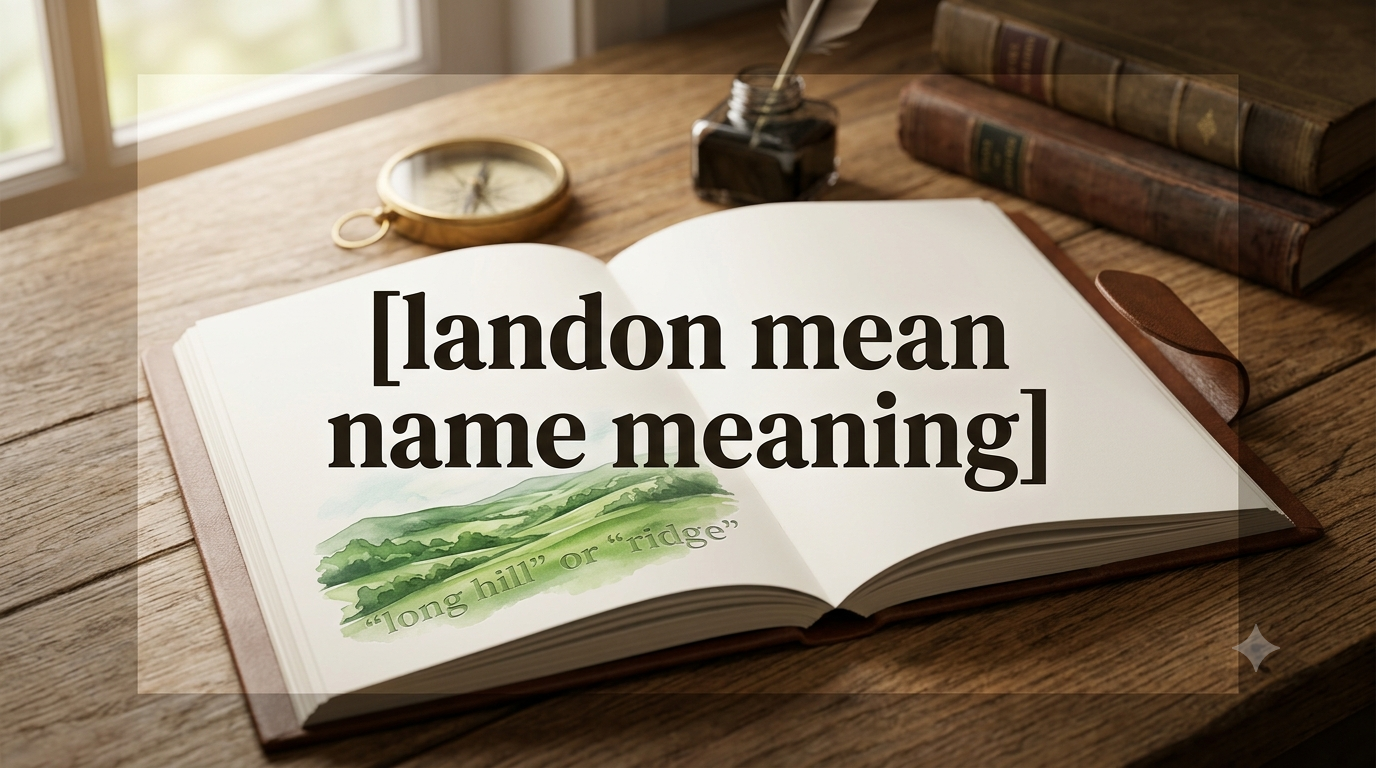
The traditional name Landon originates from Old English, meaning “long hill” or “ridge.” Historically, it was a geographical surname given to people who lived near high terrain.
In modern conversational contexts, however, asking about a “Landon mean name” often touches on behavioral traits, modern pop-culture tropes, or playful social media call-outs where someone named Landon is depicted as blunt, direct, or overly sarcastic.
“I thought he was being sarcastic, but turns out that’s just a classic Landon response.”
“Don’t take it personally; he has that low-key Landon tone, but he means well.”
“Is Landon actually a mean name, or are people just misinterpreting his directness?”
Origin, Background, and Evolution
To fully appreciate how this phrase gained traction, it helps to look at how traditional names transition into modern cultural identifiers.
Names frequently drift from simple personal identifiers to cultural archetypes. Just as certain names have become associated with specific behavioral patterns online, Landon has carved out its own unique niche in digital discourse.
From Old English Roots to Modern Classrooms
Originally derived from the Old English words lang (long) and dūn (hill), Landon transitioned from a humble place-name to a popular surname, and eventually into a favored first name across North America, the UK, and Australia throughout the late 20th and early 21st centuries.
As the name grew in popularity, it naturally entered media, young adult literature, and reality television, laying the groundwork for how the public perceives people bearing the name today.
Social Media Impact and Digital Tropes
On platforms like TikTok, Instagram, and X (formerly Twitter), users frequently post videos stereotyping names based on personal dating experiences, school memories, or trending POV (Point of View) clips.
In these viral trends, a “Landon” is often portrayed as the confident, highly sarcastic, and sometimes aloof character. This online banter led thousands to search whether “Landon” carries an inherently negative or “mean” connotation in modern communication.
Real-Life Conversations
Seeing how a phrase plays out in real texting scenarios makes its subtle tones immediately clear. Here are a few authentic ways this topic surfaces across modern messaging apps.
Example 1: WhatsApp Group Chat
Alex: Why did Landon leave the group call so abruptly?
Jordan: Honestly, he felt like everyone was taking his joke the wrong way.
Alex: I mean, his delivery was pretty sharp. Is it just me or does he have a bit of a mean edge today?
Jordan: Nah, that’s just his typical dry humor. He doesn’t actually mean any harm by it.
Example 2: Instagram DMs
Maya: Did you see his reply on my post? It felt super blunt.
Sam: Classic Landon move! He always types like he’s typing an executive summary.
Maya: Right? I was wondering if it was meant to be mean or if he’s just naturally that direct.
Sam: Definitely just direct. Don’t read too much into the lack of emojis.
Example 3: TikTok Comment Section
User_1: Why does every Landon in TV shows have a low-key villain or bad-boy arc? 😂
User_2: Fr! The name gives off confident but slightly intimidating vibes.
User_1: Exact outcome! Beautiful name, but the characters always play so cold.
Example 4: Text Message Exchange
Taylor: Hey, sorry if my comment earlier sounded harsh!
Chris: All good! You gave off total “Landon energy” for a second, but I know your vibe.
Taylor: Haha, fair enough. I’ll tone down the sarcasm next time!
Emotional and Psychological Meaning
Language is never just about words; it is deeply tied to emotional perception and social cues. When someone questions if a name or tone is “mean,” they are reacting to subtle psychological signals.
Understanding these psychological underpinnings helps reduce friction in everyday interactions and builds stronger empathy across friend groups.
What the Connotation Expresses
The perception of a “mean” demeanor often stems from a mismatch between intent and delivery. In modern psychology, individuals who are exceptionally candid or emotionally reserved are frequently mischaracterized as hostile or uncaring.
When people associate a name like Landon with a sharp or distant personality, they are usually picking up on:
- High candor: Prioritizing truth over emotional cushioning.
- Dry wit: Using deadpan humor without explicit vocal modulation.
- Reserved demeanor: Keeping personal feelings private until trust is firmly established.
Real-Life Reflection: A Teacher’s Perspective
During my years working in educational environments, I vividly remember a student named Landon who constantly sat in the back row. He rarely raised his hand and gave one-word answers when called upon.
Initial feedback from his peers suggested they thought he was arrogant or cold. However, during a group project, he worked tirelessly behind the scenes to help a struggling teammate master a difficult writing prompt.
He wasn’t mean at all; he simply possessed a quiet, no-nonsense focus that took time for others to understand. This gap between superficial perception and actual character is precisely why online labels can be so misleading.
Usage in Different Contexts
The appropriateness and tone of direct communication vary dramatically depending on where you are and who you are talking to.
Navigating these subtle boundaries prevents accidental offense and keeps your professional and personal relationships intact.
Social Media Platforms
On social media, bluntness is often amplified for engagement. MEMEs highlighting “Landon energy” usually exaggerate sarcasm, dramatic eye rolls, or unapologetic honesty to generate relatable laughs.
Friendships and Relationships
Among close friends, a direct or slightly sarcastic tone can be a sign of deep comfort and camaraderie. However, in new relationships, that same directness might feel dismissive or overly harsh if emotional warmth isn’t established first.
Work and Professional Settings
In a workplace context, directness is generally prized for efficiency, but it requires careful phrasing. A short, unadorned email might be intended to save time, yet the recipient could easily interpret it as cold or demanding.
| Context | Tone Level | Risk of Misinterpretation | Recommended Approach |
|---|---|---|---|
| TikTok / Instagram | Playful / Exaggerated | High (if taken literally) | Enjoy as lighthearted banter |
| Close Friends | Sarcastic / Casual | Low | Use shared context and humor |
| New Dating | Direct / Guarded | Medium | Balance honesty with warmth |
| Workplace | Concise / Professional | High | Add polite greetings to soften tone |
When NOT to Use It
While poking fun at name stereotypes or adopting a sharp, direct communication style can be fun, there are moments where it is entirely inappropriate.
Knowing when to pull back ensures you remain respectful and sensitive to those around you.
High-Stress or Sensitive Moments
If a friend or colleague is going through a personal crisis, grief, or severe anxiety, sharp humor or extreme bluntness can feel deeply hurtful. Always match the emotional gravity of the situation.
Cross-Cultural Communications
Name meanings, slang, and sarcasm translate poorly across different linguistic and cultural backgrounds. What sounds like witty banter in one culture might come across as outright disrespect in another.
Formal Appraisals or Conflict Resolution
During performance reviews, serious mediation, or sensitive family discussions, leave sarcastic tropes and quick assumptions behind. Clear, empathetic, and gentle language is essential.
Common Misunderstandings
Miscommunication thrives when people jump to quick conclusions based on viral trends or surface-level impressions.
Clearing up these common errors fosters smoother conversations and prevents unnecessary drama.
Literal vs. Figurative Interpretation
The biggest mistake people make when researching this topic is assuming that “Landon” is an actual vocabulary word defined as “mean.”
Landon is a proper name. The association with “meanness” is purely a social perception driven by pop-culture tropes, character arcs in fiction, and internet humor—not a dictionary definition.
Confusing Directness with Malice
There is a vast psychological difference between being malicious (intending to harm) and being direct (communicating concisely).
Most people labeled with a “mean” communication style are simply skipping decorative language, not trying to hurt anyone’s feelings.
Comparison with Similar Names and Slang Archetypes
To better understand where this concept sits in modern pop culture, let’s compare it with other well-known digital naming tropes and personality labels.
| Name / Term | Primary Cultural Stereotype | Typical Communication Style | Opposite Concept |
|---|---|---|---|
| Landon | Confident, sharp, blunt, reserved | Concise, sarcastic, deadpan | Sweet, overly soft, hyper-enthusiastic |
| Karen | Entitled, demanding, aggressive | Argumentative, escalating | Patient, understanding, accommodating |
| Chad | Hyper-confident, athletic, smooth | Casual, carefree, direct | Anxious, soft-spoken, hesitant |
| Golden Retriever Guy | Loyal, cheerful, openly affectionate | Enthusiastic, warm, expressive | Aloof, guarded, mysterious |
Key Insight
While terms like “Karen” carry universally negative social critiques, the “Landon” archetype is far more balanced, leaning into a mixture of strength, sharp wit, and guarded confidence rather than outright hostility.
10 Variations and Related Expressions
When discussing name meanings, tones, and behavioral expressions online, you will likely encounter several related phrases. Here is a handy breakdown of the top variations.
1. Landon Energy
A phrase describing someone who carries themselves with quiet confidence, deadpan humor, and an unbothered attitude.
2. Low-Key Mean
Used when someone expresses criticism so subtly or smoothly that you aren’t sure if you were complimented or insulted.
3. Dry Wit
A delivery style characterized by a neutral, unemotional facial expression and voice, making sarcasm feel entirely serious.
4. Resting Blunt Face
A facial expression that appears serious, stern, or unimpressed even when the person is completely content.
5. Tough Love Tone
Communication that delivers necessary, unvarnished truth without emotional sugarcoating, aimed at helping the listener grow.
6. Aloof Charm
A personality trait where someone’s slight emotional distance makes them appear intriguing or mysterious to others.
7. Unintentional Edge
When a comment sounds harsh purely due to text-based delivery rather than any genuine bad intent.
8. Playful Banter
Back-and-forth teasing between friends that borders on sharp humor but is rooted in mutual affection.
9. Sharp Delivery
Speaking with crisp precision and zero hesitation, often giving off a powerful, authoritative impression.
10. Modern Archetype
A recurring personality blueprint created and popularized through social media storytelling and digital trends.
How to Respond When Someone Uses It
If someone calls you blunt, tells you that you have “Landon energy,” or accuses your text of sounding mean, here are practical ways to reply smoothly.
Casual Replies
- “Haha, fair point! I’ll throw in a few smiley faces next time so you know I’m friendly.”
- “No harm intended at all! Just keeping my messages short while I’m on the go.”
- “You know me—short, sweet, and straight to the point!”
Funny Replies
- “My bad, my keyboard ran out of happy emojis for the day!”
- “Hey, don’t blame me, blame my dry humor genetics!”
- “I promise I’m a softie on the inside, I just type like a corporate lawyer.”
Mature Replies
- “Thanks for pointing that out. I definitely didn’t mean for my tone to sound sharp.”
- “I appreciate you sharing that with me. I’ll make sure to clarify my intent next time.”
- “My focus was on solving the issue quickly, but I see how my message felt cold. Let’s reset.”
Respectful Replies
- “I value our conversation and never want to come across as dismissive. Let’s discuss this in person.”
- “I apologize if my delivery hurt your feelings; that was never my intention.”
Regional and Cultural Usage
How people interpret tone and name tropes varies widely across different parts of the world and across generational lines.
[Global Digital Trends]
        │
        ├──► Western Culture: Values high directness, banter, and individual style
        ├──► Asian Culture: Prioritizes harmony, indirectness, and contextual politeness
        └──► Generational Shift: Gen Z leans into irony; Millennials favor explicit clarity
Western Culture
In Western societies (particularly North America and the UK), directness and dry humor are frequently celebrated in media. Sharp banter is often viewed as a sign of close personal connection.
Asian Culture
In many Asian cultures, indirect communication and preserving relational harmony are paramount. A blunt, unfiltered tone is far more likely to be viewed as genuinely rude or disrespectful.
Middle Eastern Culture
Warmth, hospitality, and elaborate politeness dominate standard communication. Skipping warm greetings in text conversations can make a message sound unnecessarily harsh.
Generational Differences: Gen Z vs. Millennials
- Gen Z: Deeply uses irony, deadpan humor, and casual name tropes. They often appreciate short, blunt responses as real and authentic.
- Millennials: Tend to use more exclamation points, emojis, and verbal cushions to ensure their messages do not sound aggressive or mean.
Is It Safe for Kids?
From a safety, developmental, and online browsing standpoint, exploring the phrase “Landon mean name meaning” is completely safe for kids and teenagers.
The trend involves no inappropriate language, adult themes, or harmful content. It is simply a blend of classical name history, digital linguistics, and social media personality trends.
For parents, it provides a fantastic opportunity to talk with kids about digital literacy, how text messages can easily alter tone, and why we shouldn’t stereotype people based purely on their names.
FAQs
What does the name Landon mean traditionally?
Traditionally, Landon is an Old English name that means “long hill” or “ridge.” It was originally used as a geographical surname before becoming a popular first name worldwide.
Is Landon considered a mean name?
No, Landon is not inherently a mean name. The idea comes from viral social media trends, character tropes in fiction, and dynamic jokes about people who have dry or sarcastic personalities.
Why do people search “Landon mean name meaning”?
People search this phrase when they encounter the name in online banter, MEMEs, or text conversations and want to know if it carries a specific slang definition or cultural stereotype.
How can I make my text messages sound warmer?
To soften your tone, use light punctuation, add relevant emojis, include a brief friendly greeting, and use complete sentences rather than one-word replies.
What personality traits are usually associated with the name Landon?
In modern pop culture, the name is often associated with confidence, quiet strength, direct communication, independence, and a dry sense of humor.
Can a name really influence someone’s personality?
While a name itself doesn’t change human psychology, social expectations and how people respond to a name can subtly influence a person’s self-perception and confidence over time.
Conclusion
At the end of the day, language is a living, breathing tool that constantly adapts to our digital lives. While the name Landon historically refers to a peaceful “long hill,” the internet has given it a modern, energetic spin tied to confidence, sharp honesty, and dry wit.
Searching for the meaning behind phrases like this shows a healthy curiosity about how we interact today. By looking past surface-level internet stereotypes and understanding the balance between delivery and intent, you can read every message with greater clarity, empathy, and social grace.
So the next time you encounter a sharp text or a playful online meme, remember that true communication isn’t about labels—it’s about understanding the heart behind the words.