Unpacking Modern Internet Culture and Slang
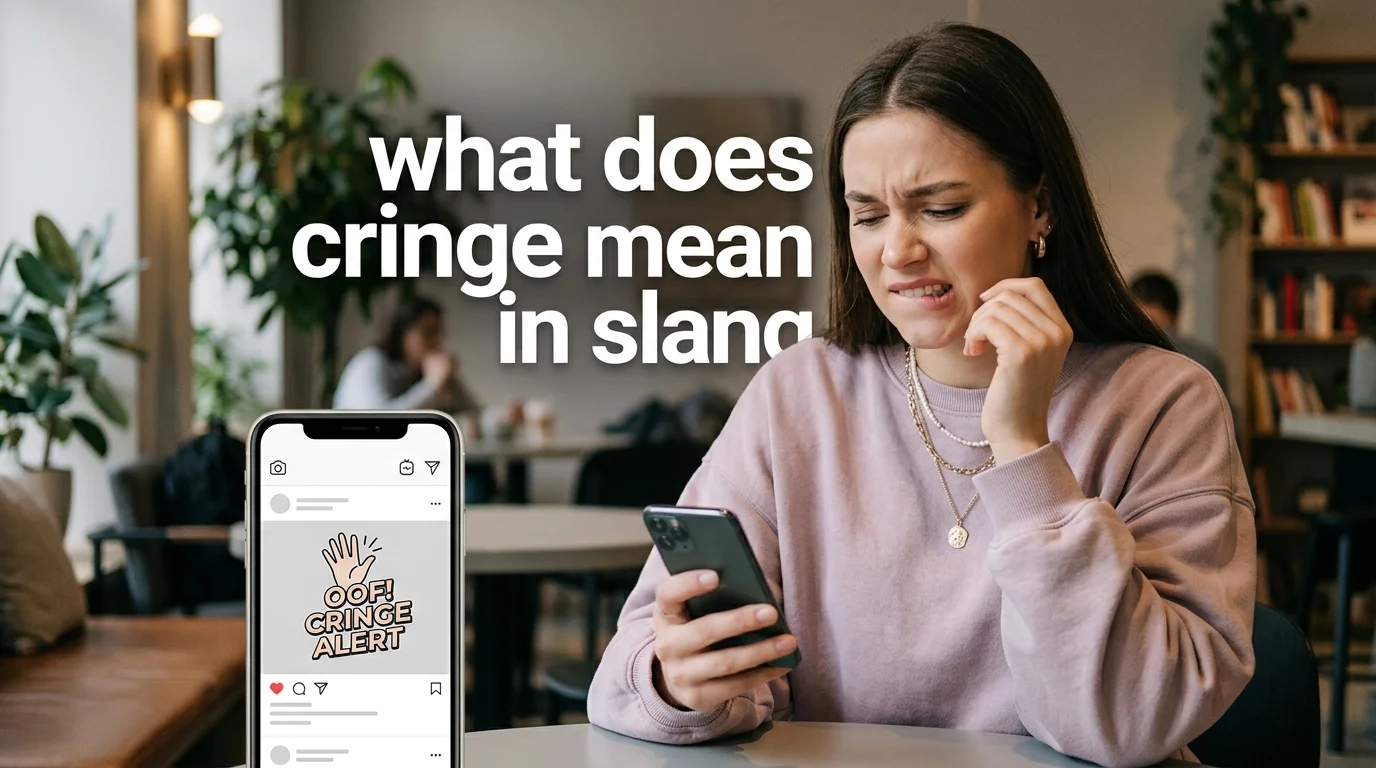
You have likely felt it before—that sudden, sharp impulse to look away when someone does something painfully embarrassing. Your shoulders tense, your face warms up, and you wince on behalf of someone else. In modern digital culture, that physical recoil has a name: cringe.
While the term used to describe a physical reaction, it has transformed into one of the most powerful slang words across modern social media. Understanding what does cringe mean in slang helps you decode everything from TikTok trends to group chat commentary.
Navigating internet culture requires catching these subtle shifts in language. Slang evolves rapidly, leaving many people wondering whether a term is a genuine insult, a lighthearted joke, or a reflection of social anxiety.
This guide breaks down every angle of the word. You will learn its psychological roots, cultural evolution, real-life conversation patterns, and how to use it confidently without misreading the room.
What Does Cringe Mean in Slang? – Quick Meaning
In internet slang, cringe describes anything that makes you feel intense secondhand embarrassment, social discomfort, or awkwardness. It refers to behavior that feels forced, overly dramatic, inauthentic, or painfully out of touch with cultural norms.
Core Definitions
- Secondhand Embarrassment: Feeling ashamed or uncomfortable on behalf of someone who seems completely unaware of their own awkwardness.
- Inauthenticity: Performing an action, speech, or video that feels fake, rehearsed, or desperately seeking attention.
- Out of Touch: Doing or saying something that violates current social expectations, modern trends, or basic awareness.
“Watching him try to perform a viral dance routine in front of the board members was absolute cringe.”
“I stumbled across my old middle school status updates, and the drama was pure cringe.”
“She kept using outdated slang during the live broadcast, which felt super cringe to the entire chat.”
Origin & Background
Where It Came From
The word originally entered the English language as a verb meaning to bend, flinch, or shrink back in fear or pain. Its roots trace back to Old English terms related to turning or yielding under pressure.
For centuries, it strictly described a physical reaction. You would cringe away from a sudden loud noise, a physical threat, or a sharp pain.
Cultural Influence and Evolution
During the mid-2000s, forum culture on platforms like Reddit and 4chan began repurposing the term. Users started posting images and videos that triggered physical discomfort just by watching them, labeling them as cringe-inducing content.
By the 2010s, YouTube channels dedicated entirely to cringe compilations gained millions of views. The word transitioned smoothly from a verb describing a physical movement into an adjective describing embarrassing behavior itself.
Social Media Impact
TikTok, Instagram, and X (formerly Twitter) accelerated this evolution. Short-form video platforms exposed millions of users to raw, unedited moments of people oversharing or trying too hard to go viral.
Today, the term has split into an entire subculture. It serves as both a tool for social commentary and a metric for measuring authenticity online.
Real-Life Conversations
Example 1: WhatsApp Group Chat
Person A: Did you see Mark’s five-minute birthday speech to himself in the group chat?
Person B: Yes! I could barely finish watching it. The energy was so cringe.
Person A: I had to mute the chat for an hour just to recover.
Example 2: Instagram DMs
Person A: Why did she post that dramatic lip-sync video with those lyrics after the breakup?
Person B: Honestly, it gave me so much cringe. She tagged his best friend too.
Person A: No way… that makes it ten times worse!
Example 3: TikTok Comment Section
Person A: Why is he trying to pretend this prank was totally unscripted?
Person B: The acting is full cringe, but the top comments are making me laugh so hard.
Person A: Exactly, everyone sees right through it.
Example 4: Text Message Exchange
Person A: My dad just tried to use Gen Z slang during my dinner party to sound cool.
Person B: Oh no! Was it bad?
Person A: He said “that meal was lowkey bussin” to the waiter. Total cringe, but I love him.
Emotional & Psychological Meaning
What Emotion It Expresses
At its core, calling something cringe expresses empathy mixed with social discomfort. You are experiencing vicarious anxiety because you recognize that a social boundary has been crossed, even if the perpetrator does not realize it.
It acts as a emotional safety valve. Verbalizing the discomfort allows you to distance yourself from the awkward behavior and reassure your peers that you recognize social norms.
Why People Use It
Humans are wired for social belonging. Recognizing embarrassing behavior helps communities establish what is acceptable and what causes social friction.
Using the term allows individuals to shield themselves from similar embarrassment. It operates as a subtle social check that encourages authenticity over forced performance.
Modern Communication Insights
The popularity of the term reflects a shift toward prioritizing authenticity online. Modern audiences possess high detectors for scripted, manufactured, or attention-seeking behavior.
When content feels overly produced or insincere, audiences label it immediately. It proves that online communities value genuine human expression over polished perfection.
Experiencing Secondhand Awkwardness
A few years ago, I attended a professional networking conference where a keynote speaker attempted to open his presentation with a ten-minute stand-up comedy routine. The room remained entirely silent while he waited for laughs that never came.
Watching him sweat through those jokes created a physical tightness in my chest. That visceral, helpless feeling of wanting to melt into your seat is precisely what this slang captures.
Usage in Different Contexts
Social Media Dynamics
On social media platforms, the term is frequently used as a label for over-the-top trends, bad acting, or desperate attempts at viral fame. It appears in comment sections, video reaction formats, and meme posts.
It helps users curate their feeds. Content that relies on cheap gimmicks gets called out, shaping what kind of media succeeds.
Friends & Relationships
Among friends, the word is often used affectionately or teasingly. You might call your best friend cringe for sending a cheesy text to a crush, or laugh together over old high school photos.
In close relationships, it loses its harsh edge. It becomes an inside joke that highlights shared history and mutual comfort.
Work & Professional Settings
Using the term directly in professional environments is generally discouraged. However, the concept occurs frequently when companies attempt to appear youthful or trendy in marketing campaigns.
Corporate posts that misuse internet slang or push forced viral challenges often backfire. Employees and customers alike notice the lack of genuine connection.
Casual vs. Serious Tone
The tone varies wildly based on delivery. Saying “that was cringe” with a chuckle keeps the mood light and humorous.
Delivering the line with a serious tone or directed at someone’s personal identity can feel mean-spirited. Context and body language dictate whether it builds camaraderie or hurts feelings.
When NOT to Use It
Inappropriate Contexts
- Professional Evaluations: Avoid using slang in performance reviews, formal emails, or client meetings. Opt for terms like “unprofessional,” “out of place,” or “ineffective.”
- Serious Personal Moments: Never use the word when someone is expressing genuine grief, vulnerability, or deep personal trauma.
- Educational Settings: Teachers and instructors should avoid labeling student mistakes as cringe, as it can severely damage confidence.
Cultural Sensitivity
Behavior that appears unusual in one culture might hold deep significance, respect, or tradition in another. Labeling unfamiliar cultural practices or rituals as cringe reflects a lack of global awareness.
Always evaluate whether the behavior is actually embarrassing or simply unfamiliar to your personal background.
Preventing Misunderstandings
Calling someone’s genuine passion or niche hobby cringe can come across as bullying. There is a huge difference between calling out Cringe Mean forced behavior and mocking someone’s honest enjoyment.
Reserve the term for moments of clear social awkwardness rather than using it to dismiss things you personally do not enjoy.
what does kettle cooked mean
Common Misunderstandings
What People Get Wrong
A common mistake is assuming the word always implies deep hatred or malice. Most of the time, it simply highlights an awkward moment rather than condemning a person’s character.
Older generations sometimes confuse it with feeling threatened or offended. The term Cringe Mean rarely implies offense; it focuses almost entirely on social embarrassment.
Tone Confusion
Because text communication lacks vocal tone, writing “that is cringe” can read much harsher than intended. Without a smiley face or context, the reader might assume you are rejecting them personally.
Pairing the term with humorous emojis or self-deprecating humor prevents accidental hurt feelings.
Literal vs. Figurative Usage
Literally, cringing is an involuntary bodily reaction like flinching. Figuratively, calling a movie or video cringe means it caused mild psychological discomfort.
Understanding this distinction keeps you from taking every use of the slang as a severe Cringe Mean critique.
Comparison Table
| Slang / Expression | Core Meaning | Tone | Best Context |
|---|---|---|---|
| Cringe | Intense secondhand embarrassment or forced behavior | Casual, observant | Social media, informal chats |
| Cheesy | Overly emotional, predictable, or cliché | Lighthearted, affectionate | Movies, romance, jokes |
| Corny | Lacking originality, old-fashioned, or silly | Playful, mild | Puns, dad jokes, old trends |
| Ick | Sudden loss of attraction due to a specific behavior | Personal, casual | Dating, romance commentary |
| Cool | Admirable, fashionable, or effortlessly confident | Positive, relaxed | Everyday conversation |
| Based | Unapologetically authentic, holding firm beliefs | Supportive, modern | Opinions, internet culture |
Key Insight
While terms like cheesy and corny focus on unoriginal humor or sentimental tropes, cringe uniquely centers on the Cringe Mean discomfort of witnessing someone lose self-awareness in a public space.
Variations and Types
1. Cringe Comedy
A genre of entertainment that builds humor entirely around painfully awkward social situations and public embarrassment.
2. Mega Cringe
An extreme level of secondhand embarrassment that feels nearly Cringe Mean intolerable to watch or listen to.
3. Cringe Culture
An online ecosystem that dedicated itself to Cringe Mean finding, sharing, and mocking awkward human behavior across the internet.
4. Self-Cringe
The deep, uncomfortable embarrassment you experience when looking back at your own past actions, old photos, or forgotten posts.
5. Cringe-Worthy
An adjective describing a specific event, statement, or video that possesses all the qualities needed to make someone wince.
6. Wholesome Cringe
Behavior that is undeniably awkward or tacky, yet so pure and earnest that you cannot help but love the person for it.
7. Corporate Cringe
When a major company tries to use youth culture, memes, or slang in advertising, resulting in a forced mess.
8. Secondhand Cringe
The exact emotional sensation of feeling embarrassed for another individual who does not realize they are being awkward.
9. Cringe-Proof
A person who possesses so much genuine confidence that their unusual behavior comes across Cringe Mean as cool rather than awkward.
How to Respond When Someone Uses It
Casual Replies
- “Fair enough, it definitely Cringe Mean wasn’t my best moment!”
- “Haha, yeah, looking back on it, that was super awkward.”
- “I know, but I couldn’t help myself!”
Funny Replies
- “Hey, I embrace the weirdness fully!”
- “If being myself is cringe, then I don’t want to be right.”
- “Please don’t remind me, I’m still recovering from the memory!”
Mature Replies
- “It might look odd from the outside, but it meant a lot to everyone Cringe Mean involved.”
- “I can see why it looks that way, though it made sense at the time.”
- “We were just having fun, so no harm done.”
Respectful Replies
- “I appreciate the feedback, I’ll keep that in mind for next time.”
- “Thanks for pointing that out; I didn’t realize how it came across.”
- “Good point, let’s pivot to something else.”
Regional & Cultural Usage
Western Culture
In North America, Western Europe, and Australia, the word is deeply entrenched in daily speech. Gen Z and younger Millennials use it fluidly across both verbal conversations and digital messaging.
It heavily influences internet humor, video creation, and meme formats across the English-speaking web.
Asian Culture
In many Asian cultures where social harmony and saving face are traditional values, the concept Cringe Mean of secondhand embarrassment has always been deeply understood.
English-speaking youth in regions like Singapore, the Philippines, and urban India frequently integrate the slang term into localized code-switching during everyday conversations.
Middle Eastern Culture
Throughout the Middle East, young, bilingual internet users adopt the term Cringe Mean regularly within English and Arabic mixed online discourse.
It gets applied heavily toward exaggerated influencer content, forced publicity stunts, and outdated television tropes.
Global Internet Usage
Because digital media transcends geographic borders, the word acts as a universal Cringe Mean descriptor across international online communities. A viral video tagged with the term needs little translation.
Generational Differences
- Gen Z: Uses the word as a primary descriptor for anything inauthentic, try-hard, or socially awkward.
- Millennials: Adopted the term during the early blog and YouTube era; they use it frequently to describe their own teenage years.
- Gen X & Boomers: May understand the term in its traditional physical Cringe Mean sense, sometimes finding its modern slang usage confusing or overly critical.
Is It Safe for Kids?
Yes, the term itself is entirely safe for children to use and hear. It contains no vulgarity, offensive language, or explicit meaning.
Parents should simply monitor the context surrounding its usage. Sometimes kids use the label to tease peers for Cringe Mean having unique interests or passions.
Encouraging children to distinguish between funny, harmless awkwardness and actual bullying helps Cringe Mean maintain healthy social habits online and offline.
Frequently Asked Questions
What does cringe mean in simple terms?
In simple terms, it means feeling intensely embarrassed or uncomfortable because of something Cringe Mean awkward, fake, or silly that someone else did.
Is cringe an insult?
It can be a mild insult if directed at a person’s identity, but it is usually Cringe Mean just a descriptive slang term for an awkward situation or video.
What is the opposite of cringe?
The opposite is often described as “cool,” “based,” or “authentic,” referring to actions performed with effortless confidence and genuine self-awareness.
Can you cringe at yourself?
Yes, feeling self-cringe is very common when you remember embarrassing Cringe Mean things you said or did in the past.
Why do people say “cringe” so much on TikTok?
TikTok relies heavily on raw video content, making it easy to spot moments where people act unnaturally or try too hard to get views.
Is the word outdated now?
No, while some internet trends fade quickly, this term has firmly established itself as a foundational part of modern English slang.
Embracing the Awkwardness
Slang reflects how we connect, set boundaries, and process the wild world of Cringe Mean modern communication. Understanding terms like this gives you a front-row seat to how internet culture shapes our day-to-day interactions.
Everyone experiences embarrassing moments, and everyone creates content Cringe Mean or says things that do not land quite right. Social awkwardness is simply a universal part of the human experience.
The next time you spot something deeply awkward online or in person, you will know exactly how to categorize it. Use your new slang knowledge confidently, stay authentic, and never be afraid to laugh Cringe Mean at life’s little awkward moments.