Have you ever stumbled across a text message or a social media caption that whispered a secret without saying much at all? You see two simple letters: “DL”.
Suddenly, you find yourself pausing. You know it isn’t a typo, but in the fast-moving landscape of digital chatter, context is everything. Does it mean driver’s license? Download? Or is there something far more subtle going on under the surface?
The desire to keep things private isn’t new, but the way we talk about privacy has completely changed. Decoding internet slang isn’t just about learning vocabulary; it is about understanding human connection, social boundaries, and modern privacy culture.
In this comprehensive guide, we will unpack what “DL” truly means in modern slang, where it originated, how to use it safely, and what it reveals about how we communicate today.
Understanding What DL Means in Slang
What Does DL Mean in Slang? A Quick Overview
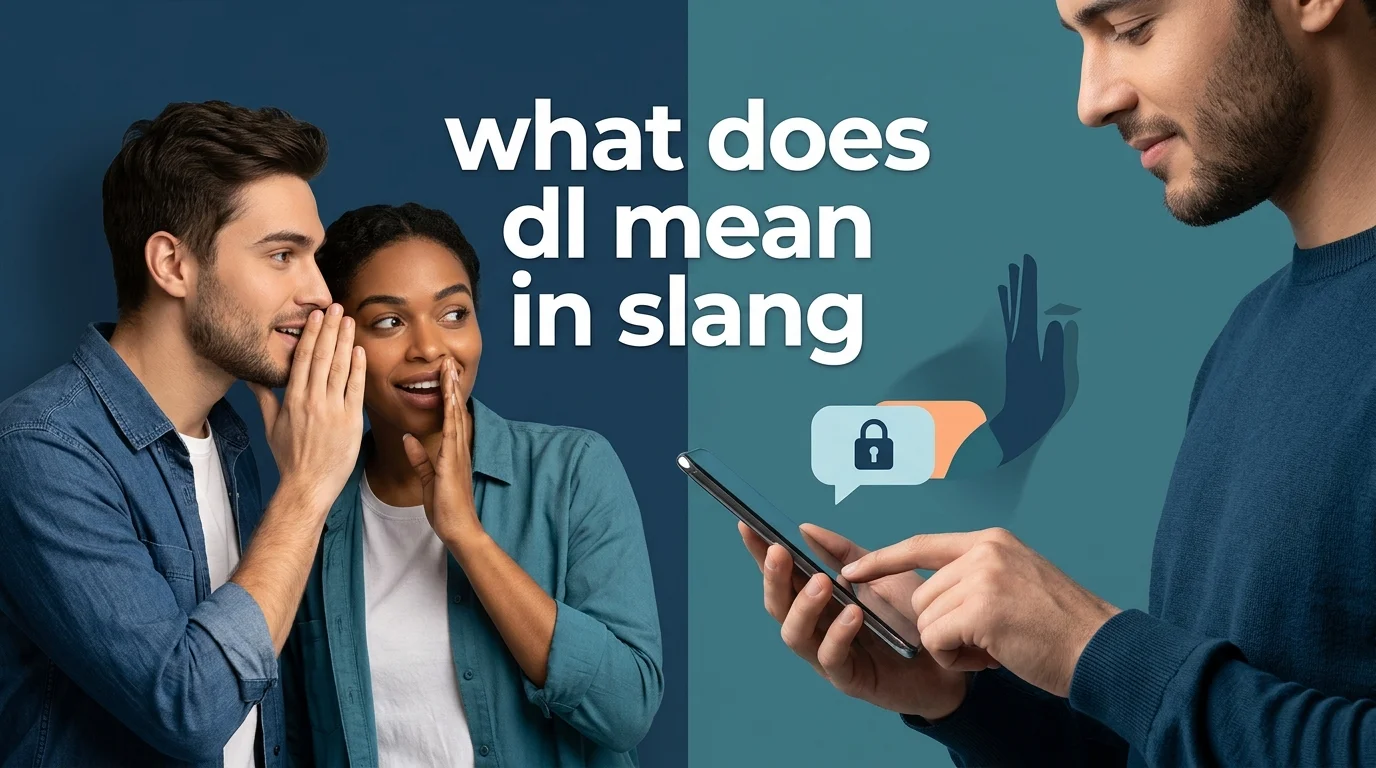
At its core, DL stands for “Down Low” (often written as on the down low or on the DL).
When someone asks you to keep something “on the DL,” they are explicitly asking for discretion, secrecy, or confidentiality. It is the modern digital equivalent of leaning in and whispering, “Keep this between us.”
Key Definitions of DL
Secrecy and Discretion
Keeping a piece of news, a relationship, or a plan quiet from the general public or specific individuals.
Low Profile
Operating without drawing attention to yourself or taking a break from public social media exposure.
Unannounced Projects
Working on something meaningful behind the scenes before making an official announcement.
Here are a few quick examples of how it sounds in everyday conversations:
“Keep this on the DL, but I just got selected for the promotion!”
“We are dating, but we’re keeping it on the DL until we figure things out.”
“I’m working on a new design project on the DL this weekend.”
Origin and Cultural Background of DL
Understanding slang requires looking back at its historical roots. The term “down low” did not originate on TikTok or Instagram; its history is much richer and deeply rooted in community culture.
African American Vernacular English (AAVE) Roots
The phrase “down low” emerged within African American Vernacular English (AAVE) during the late 20th century. Originally, it described doing something discreetly or keeping private matters away from neighborhood gossip. It carried a strong sense of trust and mutual protection among close friends.
Evolution Through 1990s Hip-Hop
Throughout the 1990s, hip-hop artists, R&B singers, and urban cinema brought the phrase into mainstream pop culture. Songs featuring the term popularized the concept of secret romances and low-key lifestyles. As the phrase spread, its application broadened beyond romantic secrets to encompass any situation requiring privacy.
The Social Media Era
With the explosion of SMS texting, AOL Instant Messenger, and eventually platforms like Twitter and Instagram, “down low” naturally shortened to DL. Texting required brevity, and two letters were all it took to convey a request for absolute privacy. Today, Gen Z and Millennials use “DL” seamlessly across global digital networks.
Real-Life Conversations Using DL
To truly grasp how “DL” functions in daily life, let’s look at how real people use it across different digital platforms.
Scenario 1: WhatsApp Chat Between Best Friends
Person A: Hey, are you free tonight? I need to tell you something crazy.
Person B: Always! What happened? Is everything okay?
Person A: Yeah, all good! But keep it on the DL… I finally booked those flight tickets to Japan! ✈️
Person B: Oh my gosh!! I won’t say a word to anyone!
Scenario 2: Instagram DM About Workplace News
Person A: Did you see the manager’s calendar for next Friday?
Person B: No, why? Did I miss an important meeting request?
Person A: Looks like we might get an extra paid day off. Keep it DL though, it’s not official yet!
Person B: Say less. Lips are sealed 🤐
Scenario 3: TikTok Comment Section
Person A: Your skin is literally glowing in this video! What product are you using?? ✨
Person B: Thank you so much! Honestly, it’s just a $5 pharmacy cream, keeping it DL before it sells out everywhere lol!
Scenario 4: Text Message Regarding Relationships
Person A: I saw you having coffee with Alex yesterday! Are you guys back together?
Person B: We are hanging out again, but we’re keeping things super DL for now. No pressure, just seeing how it goes.
Emotional and Psychological Meaning Behind DL
Language reflects human emotion, and using “DL” is rarely just about shortening words. It touches on fundamental psychological needs regarding privacy, vulnerability, and trust.
The Craving for Genuine Privacy in a Hyper-Public World
We live in an era where people broadcast their breakfasts, workouts, and personal thoughts to thousands of strangers online. In this environment, choosing to keep something “on the DL” becomes an act of intentional preservation. It creates a sacred boundary around personal experiences before the internet gets a chance to judge them.
Building Intimacy Through Shared Secrets
When you tell someone to keep information “on the DL,” you are extending an invitation into your inner circle. Psychologically, shared secrets create immediate rapport and strengthen interpersonal bonds. You are signaling: “I trust your integrity over my desire to broadcast this.”
A Personal Observation on Digital Privacy
During a recent dinner with close colleagues, a friend shared that he was planning to quit his corporate job to start a bakery. When asked why he hadn’t announced it online yet, he simply said, “I’m keeping it DL until the ovens are installed. Early noise creates unnecessary pressure.” That moment highlighted how “DL” serves as an emotional shield, protecting nascent dreams from premature external opinions.
Usage of DL in Different Contexts
Context determines how slang is received. Using “DL” in the wrong setting can lead to confusion or awkwardness.
Social Media Platforms
On platforms like TikTok, Instagram, and X (Twitter), “DL” often refers to low-key trends, hidden shopping gems, or private lifestyle choices. It carries a casual, trendy tone that signals insider knowledge.
Personal Friendships and Relationships
Among friends and romantic partners, “DL” represents an emotional pact. It signifies that a relationship is in its early, fragile stages or that a personal situation requires gentle handling without outside interference.
Workplace and Professional Settings
While you shouldn’t use “DL” in a formal corporate presentation or an official email to a client, it frequently appears in casual Slack channels or workplace texts between trusted coworkers. It implies an off-the-record conversation.
Tone Breakdown: Casual vs. Serious
| Context | Example Usage | Tone / Impression |
|---|---|---|
| Casual | “This new cafe is super DL, no crowds at all.” | Relaxed, informative, trendy |
| Protective | “Keep my job search on the DL for now.” | Cautious, practical, sensitive |
| Romantic | “We’re keeping our dating life on the DL.” | Private, intentional, guarded |
| Informal Work | “DL, I think the project deadline is moving.” | Insider, off-the-record, friendly |
When NOT to Use DL
While “DL” is versatile, there are distinct boundaries where using it can backfire or appear inappropriate.
Formal Professional Environments
Avoid using “DL” in performance reviews, legal documentation, or official company correspondence. Requesting someone to keep something “on the DL” in a formal corporate email can sound unprofessional or secretive in a problematic way.
Serious Legal or Medical Matters
If you are dealing with sensitive safety, legal, or health issues, using slang like “DL” minimizes the severity of the situation. Clear, precise language is always required when safety or accountability is at stake.
Situations Where Secrecy Creates Anxiety
Asking someone to keep a secret on the “DL” when it involves mutual responsibilities can create unnecessary stress. Be mindful not to use privacy as a tool to manipulate or exclude others unfairly.
Common Misunderstandings About DL
Even seasoned internet users occasionally mistake the intent behind “DL.”
Tone Confusion: Suspicious vs. Protective
Some people assume that keeping something “on the DL” automatically implies shady or dishonest behavior. While it can be used that way, the vast majority of modern usages simply reflect a desire for healthy personal boundaries and peace of mind.
Literal vs. Figurative Meaning
In technical spaces, “DL” literally stands for Download or Driver’s License. Context usually makes the distinction obvious, but mistaking a request for a driver’s license for a request for secrecy can lead to funny misunderstandings!
Confusion With Other Acronyms
“DL” is sometimes confused with DM (Direct Message) or DND (Do Not Disturb). While they all touch on digital communication, “DL” specifically refers to the status of information, not the channel used to send it.
Comparison Table: DL vs. Related Expressions
Understanding how “DL” stacks up against similar slang helps you choose the exact right phrase for your conversation.
| Term / Expression | Meaning | Key Difference From “DL” | Tone |
|---|---|---|---|
| DL (Down Low) | Kept quiet, private, or discreet | General term for privacy and low profile | Casual & Confidential |
| Low-Key | Subtle, quiet, or restrained | Refers to intensity or mood, not necessarily a secret | Relaxed & Moderate |
| Off the Record | Unofficial information not to be quoted | Used primarily in professional or journalistic contexts | Semi-Formal & Cautionary |
| In the Dark | Kept uninformed or ignorant | Focuses on the person being excluded, not the secret itself | Passive & Negative |
| Loud & Proud | Publicly declared with high visibility | The exact opposite of keeping things on the DL | Bold & Expressive |
Key Insight
Privacy as a Spectrum
Slang gives us nuanced ways to express different levels of privacy. While “low-key” describes a subtle mood or preference, “DL” explicitly asks for confidentiality, making it a stronger commitment to secrecy between speaker and listener.
Variations and Types of DL Usages
Depending on how it is framed, “DL” can take on subtle variations in modern slang. Here are 8 distinct variations you will encounter online:
1. On the DL
The classic formulation meaning “keep this secret.”
“Let’s meet up tonight, but keep it on the DL.”
2. Super DL
An intensified version indicating that extra discretion is required.
“She is working on a super DL launch with a luxury brand.”
3. DL Gamer / Enthusiast
Someone who enjoys a hobby quietly without participating in the broader community online.
“He’s a DL fashion collector; his closet is insane but he posts nothing.”
4. DL Dating
Relationships that are intentionally kept off social media and away from public scrutiny.
“DL dating saves you from so much unnecessary outside drama.”
5. DL Flex
Achieving a major personal goal without bragging publicly about it.
“Buying that property without posting a single story was a major DL flex.”
6. Keeping it DL
The active process of maintaining privacy around an ongoing event or project.
“We are keeping it DL until the contract is signed next week.”
7. Low-Key DL
A relaxed, non-urgent request for subtle privacy.
“I’m low-key DL studying for the LSAT this summer.”
8. Strict DL
Used when exposure could cause real complications or awkwardness.
“This evaluation info is strict DL until the board reviews it.”
How to Respond When Someone Uses DL
When someone asks you to keep something “on the DL,” how you respond sets the tone for trust. Here are a few ways to reply depending on your relationship.
Casual Replies
- “Got it, my lips are sealed!”
- “Say less, won’t mention a word.”
- “Your secret is safe with me.”
Funny & Lighthearted Replies
- “What conversation? I already forgot we talked.”
- “I am a vault. A locked vault.”
- “FBI couldn’t get this out of me!”
Mature & Reassuring Replies
- “I completely respect your privacy. Take all the time you need.”
- “Thanks for trusting me with this, I’ll keep it between us.”
- “Understood. Let me know when you’re ready to share it broader.”
Regional, Generational, and Cultural Usage
Slang travels across borders rapidly, but its interpretation can shift depending on geography and demographic groups.
Western Culture
In North America, the UK, and Australia, “DL” is universally understood across internet-literate demographics. It is deeply embedded in everyday texting, pop culture, and media.
Asian & Middle Eastern Digital Spheres
In global English-speaking communities across Asia and the Middle East, young adults use “DL” primarily on Instagram and TikTok. However, localized terms for privacy often take precedence in daily spoken language.
Generational Divide: Gen Z vs. Millennials
Millennials
tends to use “on the down low” or “DL” to describe professional moves, discreet dating, or life changes they aren’t ready to broadcast on Facebook or LinkedIn.
Gen Z
uses “DL” almost exclusively as an abbreviation in text messaging, comments, and short-form video captions, integrating it into broader aesthetic and privacy trends like “gatekeeping” or “quiet luxury.”
Is DL Safe for Kids and Teenagers to Use?
Parents often worry when they see cryptic abbreviations in their children’s text messages.
When it comes to internet safety, “DL” itself is neutral slang. In almost all cases, teenagers use it harmlessly—whether they are hiding a surprise party, keeping a crush private, or discussing a hobby they feel shy about.
However, context always matters. Because “DL” centers on secrecy, open communication between parents and teens is essential. Teaching young people the difference between healthy personal privacy (keeping a personal goal quiet) and unsafe secrecy (hiding dangerous online behavior) builds long-term digital literacy.
Frequently Asked Questions
What does DL mean in texting?
In text messages, DL almost always stands for “Down Low,” meaning to keep information private, confidential, or quiet.
Is DL an acronym or an abbreviation?
DL is an abbreviation for the phrase “down low.” It serves as shorthand in digital communication to speed up typing.
Does DL mean download or driver’s license?
Yes, in technical or official contexts, DL can stand for Download or Driver’s License. Context will clarify if it means privacy or technology.
What is the opposite of keeping something on the DL?
The opposite would be making something public, broadcasting it online, or being “loud and proud” about news.
Is DL considered rude or inappropriate slang?
No, DL is not inherently rude or vulgar. It is a casual, widely accepted term used to request discretion among friends and acquaintances.
Conclusion
Understanding what “DL” means in slang is a simple entry point into the evolving mechanics of modern human connection. At its heart, “DL” is more than just two letters in a text box; it is a request for trust, an embrace of personal privacy, and a quiet boundary set against an increasingly noisy digital world.
Whether you are protecting a personal goal, navigating a new relationship, or simply sharing a quiet moment with a friend, knowing how to use terms like “DL” allows you to communicate with confidence and nuance.
Language will continue to change, but the human desire for trust and genuine privacy remains timeless.