Demystifying ONB: Why Everyone Is Searching for This Term
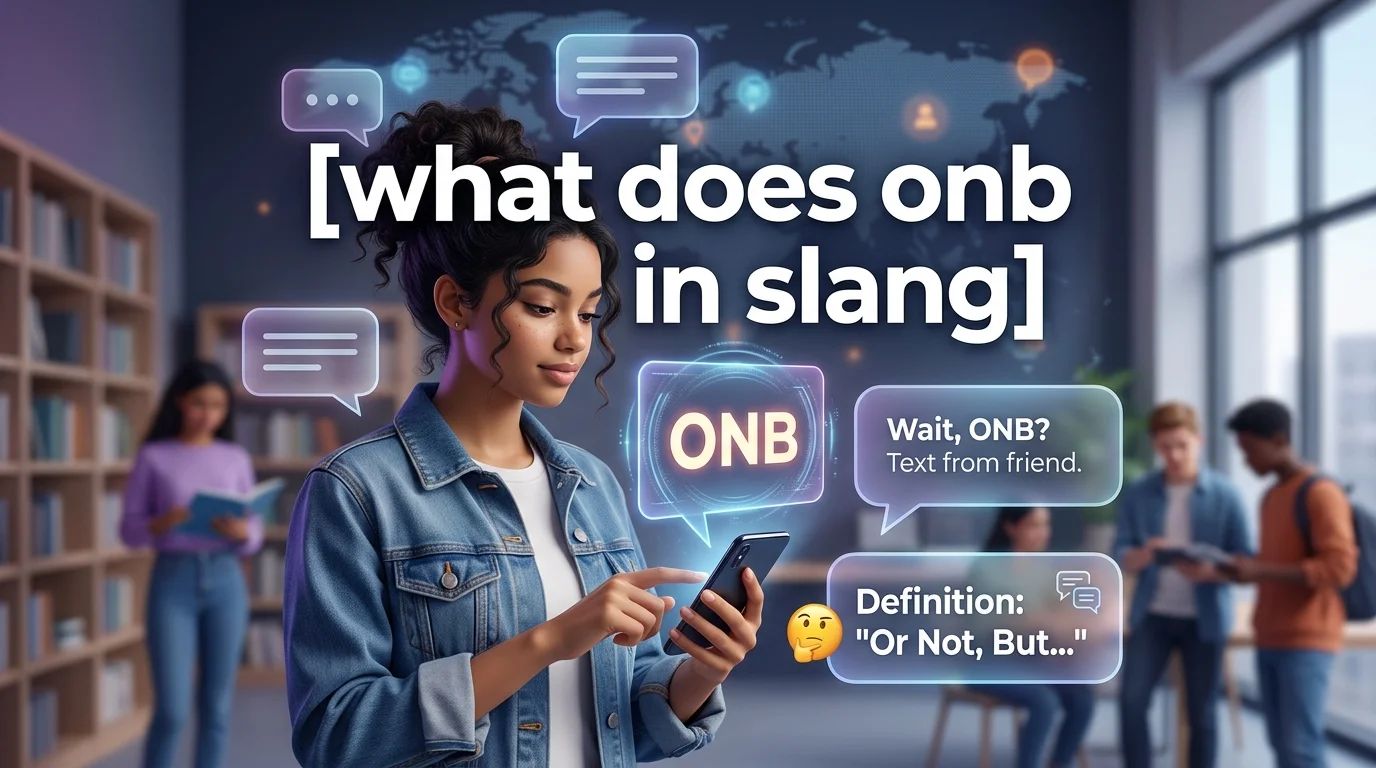
Have you ever scrolled through your TikTok feed or checked a group chat only to drop mid-sentence because someone typed “ONB”? You are not alone. Internet slang evolves at a breakneck speed, leaving even the most digitally savvy individuals feeling out of the loop.
People search for this term because acronyms change meaning depending on the context. One minute it represents a serious oath, and the next it pops up in a casual meme about late-night snacks.
Understanding this term clears up immediate confusion in your daily digital conversations. It prevents awkward misinterpretations and helps you connect naturally with younger speakers, friends, and online communities.
ONB – Quick Meaning
In modern internet slang and digital text culture, ONB most commonly stands for “On My Bro” or “On Bro.” It serves as an oath or a solemn pledge, similar to saying “I swear on my brother’s life” or “I am telling the absolute truth.”
In secondary contexts, particularly across sports communities and business text, ONB can also mean “On Neighborhood Watch” or “On Board,” though these are far less common in casual texting.
Core Definitions
- Primary Slang Meaning: “On My Bro” / “On Bro” (An oath of truthfulness or absolute serious intent)
- Secondary Casual Meaning: “On God’s Name / On Bro’s Memory” (Used as high-stakes validation)
- Contextual Meaning: “On Board” (Used in quick operational planning or team messaging)
Quick Examples in Conversation
“I didn’t take your car keys, ONB! Check under the couch again.”
“That exam was top three hardest tests of the semester, ONB.”
“ONB we are pulling up to the party in ten minutes, get ready.”
Origin & Background
Where It Came From
The phrase “On my bro” originated in urban slang communities and regional street dialects in the United States before spreading online. Pledging truth on a family member or close friend’s name has deep roots in spoken vernacular, functioning as a bond of trust when verbal assurances were not enough.
Cultural Influence and Evolution
Hip-hop culture and urban youth language brought the phrase into mainstream awareness. As musical artists and online creators began using the spoken phrase in interviews, tracks, and livestreams, the phrase condensed into the three-letter acronym ONB to save typing time on mobile devices.
Social Media Impact
Platforms like Twitter (X), Snapchat, and TikTok accelerated its spread globally. Once short-form video captions required quick, punchy text overlays, ONB became a staple visual shortcut for creators expressing genuine shock, absolute sincerity, or unyielding loyalty.
Real-Life Conversations
WhatsApp Chat: Settling a Rumor
Person A: Yo, did you actually drop out of the gym challenge already?
Person B: Who told you that? ONB I was there at 6 AM today pushing weight!
Person A: Haha my bad, Sarah said she didn’t see you.
Person B: She missed me because I was in the back room, ONB I don’t quit that easy.
Instagram DMs: Sharing Breaking News
Person A: Did you see the festival lineup just got leaked?
Person B: Stop lying, they said announcement was next week!
Person A: ONB go check the fan page story right now before it gets taken down!
Person B: Bro no way… buying tickets immediately.
TikTok Comments: Defending a Hot Take
Person A: Pineapple on pizza is actually top tier and people just hate because it’s a trend.
Person B: ONB best take on this app today!
Person A: Finally someone with taste who gets it.
Text Messages: Making Late-Night Plans
Person A: Are we still running the game tournament tonight or is everyone flaking?
Person B: We are active. ONB I’m turning on the console in 5 minutes.
Person A: Bet, don’t keep us waiting.
Emotional & Psychological Meaning
What Emotion It Expresses
Using ONB conveys directness, vulnerability, and conviction. It signals that the speaker is dropping all sarcasm, playful exaggeration, or deception to deliver a pure truth.
Why People Use It
Modern digital messaging lacks vocal tone, facial expressions, and body language. Acronyms like ONB fill that emotional gap by injecting high-energy intensity and sincerity into flat, written characters on a screen.
Psychological Connection
Using shared slang fosters a sense of belonging within a social group. When you use ONB, you subtly align yourself with modern digital culture, establishing peer trust and emotional authenticity in rapid text exchanges.
A Real-World Scenario
Imagine texting a close friend after a long, miscommunication-filled week. They ask if you are genuinely okay with a tough decision they made. Typing “I’m fine” feels cold and distant. Typing “I’m totally fine with it, ONB” immediately assures them that your support is real, warm, and free of hidden resentment.
Usage in Different Contexts
Social Media Platforms
On TikTok, X, and Instagram, ONB often appears in capital letters within video captions or comment sections to reinforce high-drama posts, impressive physical feats, or hilarious personal stories.
Among Friends and Personal Relationships
In personal relationships, it acts as an emotional guarantee. Use it when reassuring a partner, confirming plans with a friend, or emphasizing a personal promise.
Work and Professional Settings
Do not use ONB in formal work environments, corporate emails, or client communications. It is far too casual and can appear unprofessional or confusing to colleagues unfamiliar with street slang.
Casual vs. Serious Tone
- Casual Tone: Emphasizing how good a meal was or confirming arrival times.
- Serious Tone: Defending your character, verifying crucial information, or making a heartfelt pledge of loyalty.
When NOT to Use It
Inappropriate Contexts
Avoid using ONB in academic papers, professional interviews, court proceedings, or customer service interactions. The informal nature of the acronym undermines authority and seriousness in professional settings.
Cultural Sensitivity
Since ONB carries street vernacular origins, using it excessively or unnaturally can sound performative if it does not match your natural conversational style. Authenticity is key in modern communication.
Situations Causing Misunderstanding
If you are speaking with older generations or international contacts who do not use English youth slang, ONB can cause complete confusion, often being misread as a typo for “ON” or an acronym for an unknown business entity.
Common Misunderstandings
What People Get Wrong
Many people mistake ONB for “Oh No Bro” or “On Board.” While “On Board” makes sense in specific logistics settings, reading “On No Bro” into a serious sentence completely alters the intended message.
Tone Confusion
Because acronyms look abrupt, some readers might interpret ONB as aggressive or overly defensive. Recognizing context helps you distinguish between aggressive confrontation and passionate truth-telling.
Literal vs. Figurative Meaning
While the literal phrase invokes one’s actual brother, users frequently apply it figuratively toward best friends, trusted team members, or simply as an emphatic exclamation where no literal brother exists.
Comparison Table
| Slang Term | Primary Meaning | Tone / Intensity | Best Context |
|---|---|---|---|
| ONB | On My Bro | High Conviction / Oath | Personal truths, pledges, friend groups |
| NGL | Not Gonna Lie | Mild Sincerity | Sharing low-stakes opinions or admissions |
| FR | For Real | General Agreement | Validating facts or agreeing with statements |
| ONG | On God | Maximum Conviction | Serious swearing, emotional promises |
| IYKYK | If You Know You Know | Exclusive / Playful | Inside jokes, shared niche experiences |
Key Insight
While terms like NGL and FR express mild honesty, ONB ramps up the stakes by tying truthfulness to a personal bond, making it far more emotionally charged.
Variations & Types
1. ONB (Standard Caps)
The most common form, used widely across text messages to highlight absolute truth and urgency.
2. onb (Lowercase)
A relaxed, subtle version used in informal typing styles, popular among Gen Z texters on messaging apps.
3. ONB FR
A double-emphasis combination meaning “On my bro, for real,” leaving zero room for doubt.
4. ONB NO CAP
Combines the oath with “no cap” (no lie), creating a ultimate statement of pure honesty.
5. ON GOD / ONG
A closely related spiritual variation used when a speaker wants to swear on a higher power rather than a personal friend.
6. ON MY MAMMA
A parallel slang phrase that swaps the brother reference for a mother, carrying equal or greater emotional weight.
7. ON FOES
A regional variant originating from specific street dialects, functioning similarly as an intense oath of truth.
8. ON GANG
A collective variation swearing on an entire group of friends or community rather than a single individual.
9. ON B
A spaced version often generated by predictive text or voice-to-text tools while messaging quickly on mobile.
How to Respond When Someone Uses It
Casual Replies
- “I hear you, man.”
- “Say less, I believe you.”
- “Bet, let’s do it.”
Funny Replies
- “Don’t bring your bro into this!”
- “Your bro called, he said leave him out of your stories.”
- “Alright, alright, no need to make a court oath over a slice of pizza!”
Mature Replies
- “I appreciate you being straightforward with me.”
- “Thanks for clarifying, I trust your word.”
- “Got it, I know where you stand now.”
Respectful Replies
- “Understood, thanks for keeping it real.”
- “Respect, I’m glad we cleared that up.”
Regional & Cultural Usage
Western Culture
In North America, particularly urban centers across the United States, ONB is deeply integrated into daily youth vernacular, gaming streams, and social content.
Asian & Middle Eastern Digital Culture
Global gaming servers and English-speaking social channels in Asia and the Middle East have adopted ONB as a universal marker of hype, truth, and gamer camaraderie.
Generational Differences
- Gen Z & Gen Alpha: Use ONB fluidly in everyday text streams, memes, and comments without hesitation.
- Millennials: Generally understand the meaning from social platforms but use it far less frequently in personal text communication.
- Gen X & Boomers: Rarely encounter the term outside of seeing it on younger family members’ phone screens or social media feeds.
Is It Safe for Kids?
Yes, ONB is safe for kids to use and read. It contains no vulgarity, inappropriate sexual themes, or violent language. It simply functions as an emphatic promise or oath among friends.
Parents should only keep in mind that like many street-derived slang terms, usage simply reflects youth internet culture rather than bad behavior or risky messaging habits.
FAQs
What does ONB mean in texting?
In text messages, ONB almost always stands for “On My Bro,” meaning the sender is swearing that what they are saying is completely true.
Is ONB a bad word?
No, ONB is not a profanity or offensive term. It is a clean piece of modern internet slang used to emphasize honesty and loyalty.
Does ONB mean “On Board”?
While ONB can mean “On Board” in corporate or logistics contexts, young people almost exclusively use it to mean “On My Bro” when chatting online.
How do you pronounce ONB out loud?
People usually spell out the letters “O-N-B” individually when speaking online, though many choose to say the full phrase “On my bro” in physical conversations.
What is the difference between ONB and ONG?
ONB stands for “On My Bro” (swearing on a close friend/brother), while ONG stands for “On God” (swearing on a higher power). Both express deep truthfulness.
When did ONB become popular?
The phrase gained massive popularity across social media platforms like TikTok, Snapchat, and Twitter between 2020 and 2023, expanding globally in recent years.
Conclusion
Understanding modern slang like ONB is about more than just decoding letters—it is about staying connected to how human communication continuously adapts. Language moves fast, but the underlying need to express truth, loyalty, and deep conviction never changes.
Next time you see “ONB” pop up in your group chat or social media feed, you can read it with total confidence. Whether you decide to type it yourself or simply smile knowing you are in the loop, you now hold the clear key to this popular piece of digital language.