Demystifying ICL: Why Everyone Is Typing It
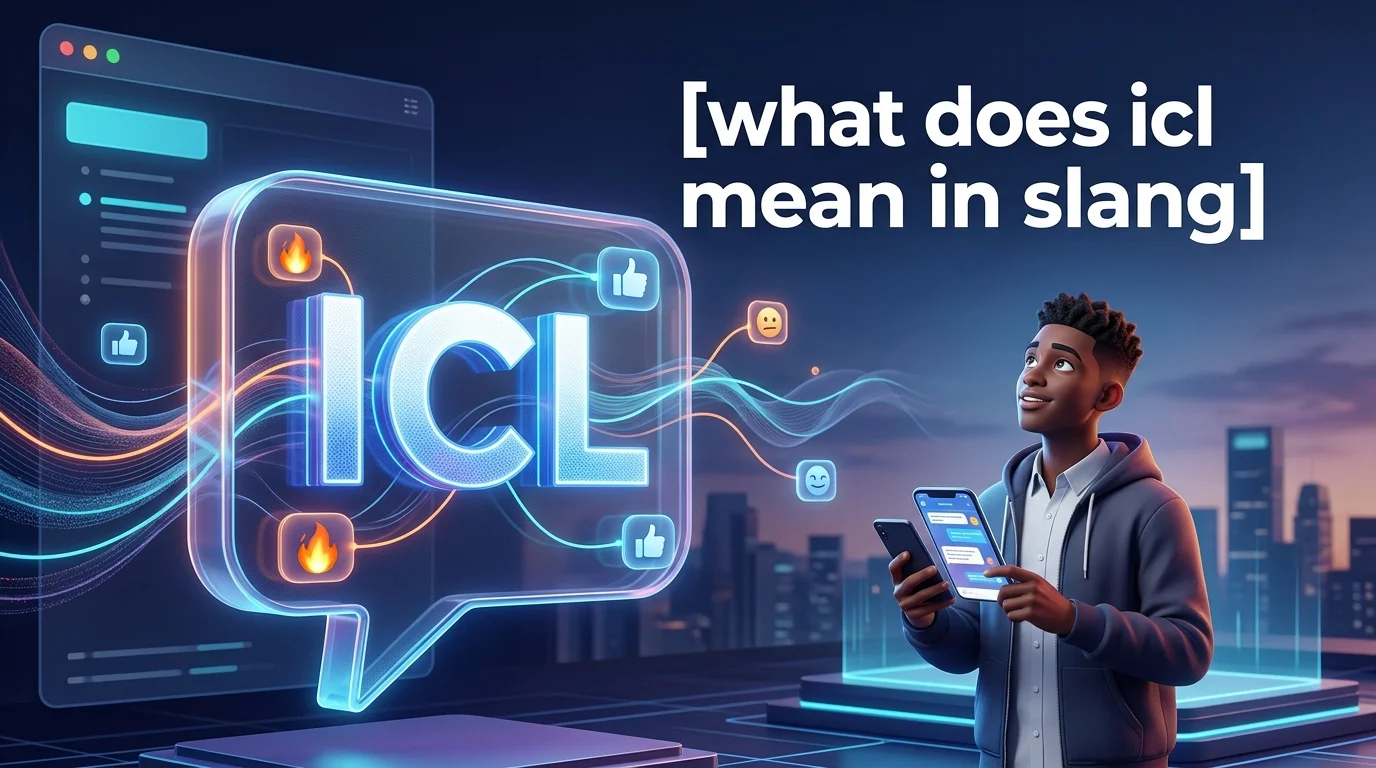
If you have scrolled through TikTok comments, checked an Instagram DM, or opened a group chat recently, you have likely run into the three-letter acronym ICL.
Internet acronyms pop up overnight, leaving many people feeling out of the loop. You see someone drop “ICL” before dropping a truth bomb, and suddenly you are left wondering if it is a new medical term, a typo, or something far more relatable.
The sudden rise of shorthand terms creates a subtle barrier in daily digital communication. Understanding what these acronyms mean helps you decode the emotional tone behind a text, keeping you connected across different online spaces.
What Does ICL Mean in Slang? Quick Meaning
ICL stands for “I Can’t Lie.”
It is a conversational filler and qualifier used to signal honesty, vulnerability, or casual upfrontness before sharing a statement. Think of it as the digital generation’s version of saying “To be honest” or “Frankly speaking.”
- “ICL, that movie was way better than I expected.”
- “ICL, I am way too tired to go out tonight.”
- “That outfit looks amazing on you, ICL.”
Origin & Background
Where It Came From
The acronym originated within British youth culture, specifically growing out of UK drill and grime music communities before spreading across the wider English-speaking internet. The spoken phrase “I can’t lie” has been a staple of conversational English for decades, but dropping it into three letters became standard practice as smartphone texting took over.
Cultural Influence and Social Media Impact
Platform dynamics on X (formerly Twitter) and Snapchat accelerated the adoption of ICL. Text-based platforms reward brevity, so shorthand versions of common spoken phrases gain rapid traction.
When UK creators and influencers gained global reach on TikTok, local slang terms traveled alongside them. Soon, users in North America, Australia, and beyond integrated ICL into their daily text vocabularies.
How the Meaning Evolved
Initially, “I can’t lie” was used to precede a harsh truth or a confession. Over time, the digital abbreviation evolved into a general emphasis tool. Today, people use ICL not just for dramatic admissions, but also to express mild agreement, give casual compliments, or soften potentially awkward statements.
Real-Life Conversations
Example 1: WhatsApp Group Chat
Person A: Are we still meeting at the gym in 15 minutes?
Person B: ICL I haven’t even gotten out of bed yet 😭
Person A: LOL fair enough, let’s push to 4 PM.
Example 2: Instagram DMs
Person A: Did you listen to that new album yet?
Person B: Yeah! ICL track 4 has been on repeat all morning.
Person A: Right?! The production on that one is insane.
Example 3: TikTok Comment Section
Person A: Posted a 3-minute video testing a viral cooking recipe.
Person B: ICL I thought this was gonna fail, but it looks delicious!
Example 4: Direct Text Message
Person A: Thanks for helping me move yesterday, really appreciate you!
Person B: Anytime! ICL my back is killing me today though haha.
Emotional & Psychological Meaning
What Emotion It Expresses
At its core, ICL expresses authentic intent. It signals to the recipient that the speaker is dropping pretense, polite filters, or standard social posturing to share a genuine thought.
Why People Use It
Digital text lacks vocal inflection, facial expressions, and body language. Acronyms like ICL act as emotional modifiers. By prefixing a sentence with ICL, you lower the listener’s defenses and create an atmosphere of informal intimacy.
Modern Digital Psychology
Using casual slang reinforces a sense of shared identity within online communities. It makes conversations feel more like natural, real-time speech rather than formal correspondence.
Personal Observation: Working with young communicators, I often notice them using ICL to cushion potential rejection or negative feedback. Saying “ICL I don’t really like that restaurant” feels significantly less aggressive than simply stating “I don’t like that restaurant.”
Usage in Different Contexts
Social Media
On platforms like TikTok, X, and Instagram, ICL appears in captions, overlay text, and comment sections. It functions as a hook to draw readers into a personal opinion or controversial take.
Friends & Relationships
Among friends, ICL establishes low-stakes honesty. It allows you to admit small flaws, express unpopular opinions, or share genuine compliments without sounding overly formal or dramatic.
Work & Professional Settings
It is best to avoid using ICL in formal workplace communications, client emails, or presentations. However, in modern, laid-back workplace chat channels (like Slack), it occasionally pops up among close colleagues during informal banter.
Casual vs. Serious Tone
| Context | Appropriateness | Example |
|---|---|---|
| Casual Texting | Highly Appropriate | “ICL I’m running 5 mins late.” |
| Social Media Comment | Highly Appropriate | “ICL this edit is incredible!” |
| Workplace Email | Inappropriate | “ICL I missed the deadline.” |
| Serious Apology | Inappropriate | “ICL I forgot your birthday.” |
When NOT to Use It
High-Stakes and Professional Environments
Using ICL in formal settings can make you appear dismissive or overly casual. Avoid it in academic papers, formal emails, job interviews, or client-facing updates.
Serious Emotional Situations
During serious discussions, grief support, or intense relationship conflicts, using internet shorthand can come across as cold or insincere. Expressing empathy requires complete, thoughtful language rather than three-letter abbreviations.
Cultural and Generational Misunderstandings
When messaging people who are unfamiliar with internet culture—such as older relatives or non-native English speakers—acronyms can lead to confusion or misinterpretation.
Common Misunderstandings
Confusing ICL with Medical or Technical Terms
In medical contexts, ICL stands for Implantable Collamer Lens (a type of eye surgery). In business, it can mean Inter-Company Loan. Context is essential to avoid embarrassing mix-ups.
Tone Misinterpretation
Some readers might assume “I can’t lie” precedes a harsh critique. If followed by a positive statement, it can create a momentary clash in tone if the reader expects bad news.
Literal vs. Figurative Meaning
The phrase rarely implies that the speaker was previously lying. It is an emphatic starter, not an admission of prior dishonesty.
Comparison Table
| Slang Term | Full Meaning | Tone / Nuance | Best Used For |
|---|---|---|---|
| ICL | I Can’t Lie | Casual, direct, authentic | Prefacing an honest opinion or admission |
| TBH | To Be Honest | Neutral, reflective | Expressing a straightforward thought |
| NGL | Not Gonna Lie | Slightly dramatic, vulnerable | Admitting something unexpected |
| FR | For Real | Emphatic, supportive | Agreeing strongly with a statement |
| IYKYK | If You Know You Know | Exclusive, playful | Inside jokes or niche references |
Key Insight
While TBH, NGL, and ICL share overlapping meanings, ICL carries a distinctly modern, conversational weight favored by younger audiences online, whereas TBH feels more traditional and universal.
Variations & Related Expressions
- ICL Breakdown: Short for “I can’t lie,” used across fast-paced chat apps to save typing time.
- NGL (Not Gonna Lie): A near-identical alternative used when admitting something surprising or slightly embarrassing.
- TBH (To Be Honest): The classic predecessor to ICL, used widely across all age groups online.
- ISTG (I Swear To God): Used to add intensity or serious conviction to a claim.
- FR (For Real): A brief confirmation used to emphasize that you are telling the truth.
- On God: A slang phrase used to swear that a statement is completely genuine.
- No Cap: Internet slang meaning “no lie” or “for real,” highlighting absolute truth.
- Real Talk: Used before shifting a conversation from lighthearted banter to serious honesty.
- To Be Fair (TBF): Used to introduce a point that balances or softens a previous argument.
How to Respond When Someone Uses It
Casual Replies
- “Fair enough, I get that!”
- “Honestly, same here.”
- “Right? I was thinking the exact same thing.”
Funny Replies
- “Glad you decided to tell the truth for once! 😂”
- “Whoa, don’t hold back now!”
- “Appreciate the honesty, detective!”
Mature Replies
- “Thanks for being upfront with me.”
- “I appreciate your honesty about that.”
- “I hear you, let’s figure out a solution then.”
Respectful Replies
- “That makes total sense, thanks for letting me know.”
- “I respect your opinion on this.”
Regional & Cultural Usage
Western Culture
In North America, the UK, and Europe, ICL is deeply embedded in youth language, particularly among Gen Z and Gen Alpha digital communities.
Asian & Middle Eastern Culture
Global English speakers in regions like Southeast Asia and the Middle East pick up ICL through international media, TikTok trends, and gaming servers. It is often used mixed alongside local phrases.
Generational Differences
Gen Alpha & Gen Z: Use ICL fluently in daily texting and video captions.
Millennials: Recognize and use ICL, though often default to TBH or NGL.
Gen X & Boomers: Rarely use ICL, often mistaking it for a typo or business acronym.
Is It Safe for Kids?
Yes, ICL is entirely safe.
It contains no profanity, explicit meaning, or harmful connotations. It is purely a functional piece of text communication shorthand.
Parents monitoring their children’s texts can view ICL as a benign conversational tool. It simply reflects how modern teenagers talk online.
FAQs
What does ICL mean in texting?
It stands for “I Can’t Lie,” used to signal honesty before sharing a personal thought or opinion.
Is ICL the same as NGL?
Yes, both phrases mean virtually the same thing and are used interchangeably to preface honest statements.
What does ICL mean on TikTok?
On TikTok, ICL means “I Can’t Lie.” Creators use it in video text overlays and comments to highlight a genuine reaction.
Is ICL a bad word?
No, ICL contains no vulgar language or inappropriate meanings.
Can I use ICL at work?
It is best to avoid ICL in professional settings like formal emails, though it may be fine in casual team chat channels.
Conclusion
Mastering internet shorthand like ICL keeps your digital communication effortless and up-to-date. By signaling quick, casual honesty, this simple three-letter acronym helps build authentic connections in fast-paced text environments.
Knowing when and where to drop an ICL ensures your message lands naturally every time you hit send.