Understanding the Shift in Online Speech
Language evolves faster today than ever before, leaving many people feeling left out of modern conversations. Scroll through social media for a few minutes, and you will encounter words that seem completely alien.
You might see someone describe a catchy song as a total track that makes them want to dance. A few minutes later, you might notice a harsh comment using the exact same term to insult someone’s character.
This sudden shift creates confusion for parents, educators, and casual internet users alike. Understanding modern slang is not just about keeping up with trends; it is about building meaningful bridges across generations.
By decoding these shifting definitions, you can navigate online spaces confidently and avoid awkward social missteps in everyday communication.
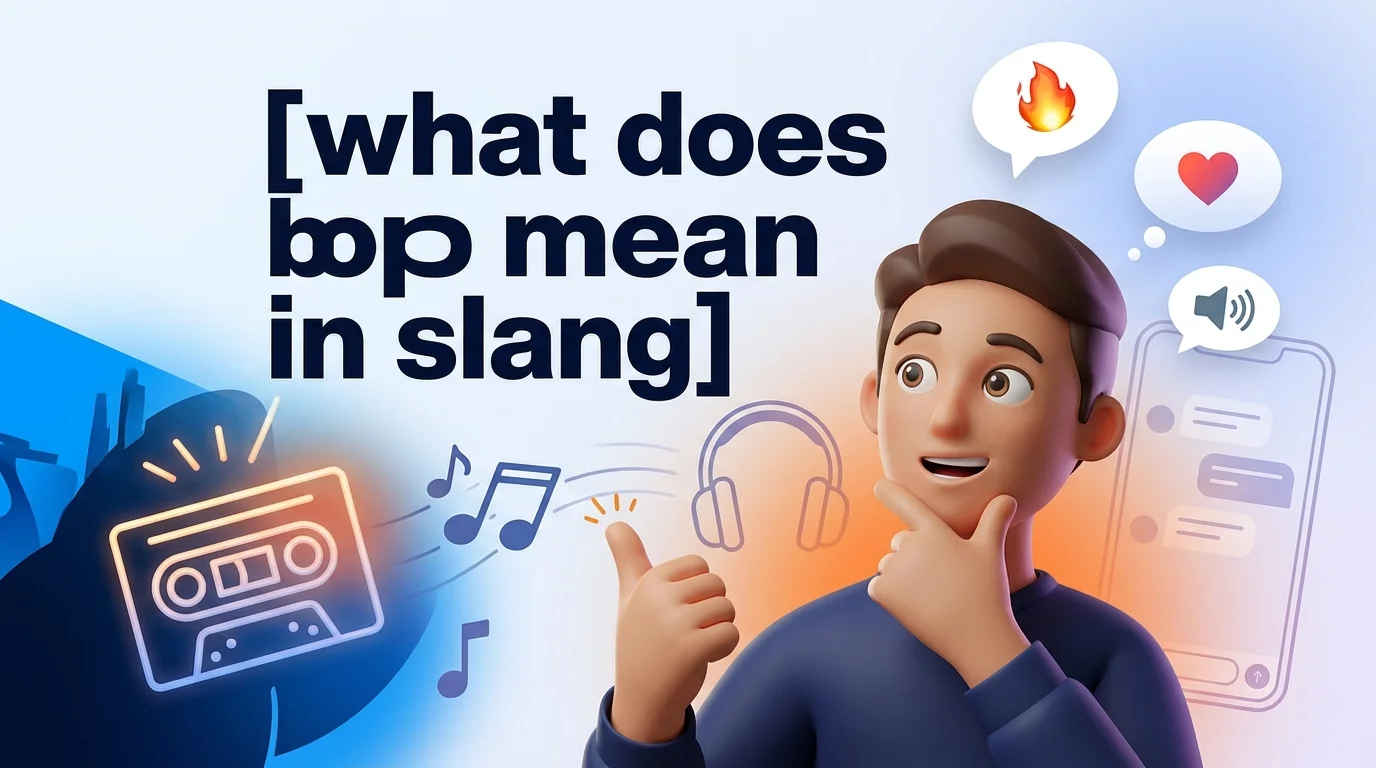
What Does Bop Mean in Slang?
The Core Definitions
The word carries two distinct, primary meanings depending entirely on how and where it is used.
- A Catchy Song: An upbeat, highly enjoyable musical track that instantly gets stuck in your head.
- A Derogatory Term: A modern insult used primarily online to label someone as promiscuous or overly flirtatious.
“Turn that up right now, this new track is an absolute bop!”
“I cannot stop playing this album on repeat because every single song is a bop.”
“Why are people calling her that in the comment section just for posting a dance video?”
Origin & Background
Where the Word Came From
The term originally rooted itself in 1940s jazz culture, short for “bebop,” which represented energetic, fast-paced musical rhythms. Musicians used it to describe songs that made people want to move.
Over decades, hip-hop culture adopted the term to describe tracks with heavy bass lines and undeniable bounce.
Social Media Impact & Evolution
With the rise of platforms like TikTok and Instagram, the term experienced a dramatic evolution. Short video clips required catchy background audio, turning great songs into viral sensations overnight.
Unfortunately, digital spaces also repurposed the term into slang with negative connotations, blending old urban vernacular with modern internet shade.
Real-Life Conversations
TikTok Comment Section
User1: Who is the artist behind this background audio?
User2: It is the new release from last Friday!
User1: Wow, adding this to my playlist immediately, absolute bop.
WhatsApp Group Chat
Sarah: Are we still driving together to the beach tomorrow?
Maya: Yes! I just finished making the road trip playlist.
Sarah: Perfect, just make sure every song is a bop so nobody falls asleep.
Instagram DMs
Jake: Did you see the comments on her latest post?
Liam: Yeah, people are being extremely toxic in the replies for no reason.
Jake: Calling someone a bop just because they went on two dates is ridiculous.
Emotional & Psychological Meaning
What the Word Expresses
When referring to music, the term expresses spontaneous joy, high energy, and shared enthusiasm. It signals an instant emotional lift that connects people through shared rhythm.
When used as an insult, it projects judgment, digital hostility, and internet toxicity designed to lower someone’s social standing.
Psychological Insights
People use slang to feel a sense of belonging within specific online tribes and peer groups.
A friend was once terrified to play her favorite playlist during a party, worried about judgment. When someone yelled, “This is a bop!”, her entire energy changed from anxiety to pure delight.
Usage in Different Contexts
Social Media & Digital Spaces
Online, the context determines everything. Music reviews and video edits use the term positively, while dramatic threads might feature the negative variant.
Friends & Casual Relationships
Among close friends, calling a song a bop creates an instant bond over shared taste.
Professional Settings
Avoid using this term in corporate emails, job interviews, or formal presentations, as it lacks professional decorum.
When NOT to Use It
Formal and Professional Environments
Never use slang during workplace reviews, academic essays, or serious business negotiations where clarity matters most.
Complex Cultural Situations
Using the negative form of the word can cause genuine harm, hurt feelings, or lead to online harassment.
Common Misunderstandings
Tone Confusion
People frequently misinterpret the sentiment behind the word due to missing vocal cues in text messages.
Literal vs. Figurative Meaning
The word does not refer to physically hitting someone on the head in modern internet conversations.
Comparison Table
| Term | Context | Tone | Main Purpose |
| Bop | Music / Casual | Enthusiastic / Critical | Describes a great song or acts as slang |
| Banger | Music | Intense / Hype | Highlights a high-energy track |
| Jam | Music | Relaxed / Friendly | Refers to a favorite comfortable song |
| Flop | General Slang | Disappointed | Describes a failure or boring track |
Key Insight
Context, tone of voice, and platform usually reveal whether someone is praising a song or throwing digital shade.
Variations & Types
Music-Related Variations
- Certified Bop: A song universally acknowledged by everyone as fantastic.
- Summer Bop: An upbeat, tropical song perfect for warm weather drives.
- Low-key Bop: A quiet or underrated track that is surprisingly enjoyable.
- Retro Bop: An older track from previous decades that still holds up today.
Slang Variations
- Bop-along: A person who passively agrees with whatever others say.
- Bopping: The physical act of dancing gently or nodding along to rhythm.
- Bop City: A phrase describing a location filled with high-energy music.
- Main Stage Bop: A song crafted specifically to succeed at massive festivals.
How to Respond When Someone Uses It
Casual Replies
“Right? I have had this track stuck on loop all morning!”
“Adding this directly to my summer playlist.”
Funny Replies
“My brain cell count doubles every time this chorus drops.”
“My neighbors are about to learn all the words to this track too.”
Mature Replies
“Let us keep the conversation focused on the music rather than personal attacks.”
“I prefer evaluating people by their character rather than internet labels.”
Regional & Cultural Usage
Western Culture
In North America and Europe, the term seamlessly shifts between musical praise and internet slang across youth platforms.
Global Usage & Generational Gaps
Gen Z primarily uses the term for music and digital commentary, while Millennials often associate it strictly with catchy songs.
Is It Safe for Kids?
Parents should know the musical usage is totally harmless, but the personal slang variant borders on cyberbullying.
Open conversations about online kindness help young users navigate these terms responsibly without causing accidental harm.
FAQs
Is a bop the same thing as a banger?
While both describe great songs, a banger usually implies heavy energy, loud bass, and party atmospheres, whereas a bop is lighter and catchy.
Can a person be called a bop positively?
Rarely. Calling a song a bop is positive, but applying the term directly to a person usually carries negative judgment online.
Why do people use slang words with two completely different meanings?
Internet speech evolves rapidly through memetic culture, often hijacking existing lightweight words and applying entirely new meanings to them over time.
How can I tell which meaning someone intends in text?
Look closely at the surrounding words; if mentions of music, artists, or audio are absent, proceed with caution regarding the tone.
Is the word considered profanity?
No, the word itself is not a traditional curse word, though its derogatory variation can still be deeply hurtful.
Conclusion
Understanding modern slang allows you to navigate the digital world with empathy, confidence, and clarity. Whether you are discovering a fantastic new song or steering clear of online toxicity, context remains your ultimate guide. Embrace the evolving nature of communication, listen with curiosity, and never hesitate to ask when a new term pops up on your feed.