Decoding the Craze: What Does Mewing Mean in Slang Today?
You’ve probably seen it on your TikTok feed, Instagram Reels, or even during a casual conversation in a school hallway. Someone points an index finger to their jawline, slides it up toward their ear, and places a single finger over their closed lips to silence you.
It feels bizarre, slightly sarcastic, and utterly confusing if you aren’t plugged into current internet trends. So, what does mewing mean in slang, and why has a simple oral posture technique turned into one of the biggest viral non-verbal flexes on the web?
People search for this phrase because online culture moves at breakneck speed. What started as an obscure jawline alignment exercise has mutated into a dominant social media meme, a slang term, and an expressive gesture meant to assert dominance or signal self-improvement.
This guide breaks down every angle of the trend so you can navigate digital conversations with total confidence.
Mewing Mean in Slang – A Quick Breakdown
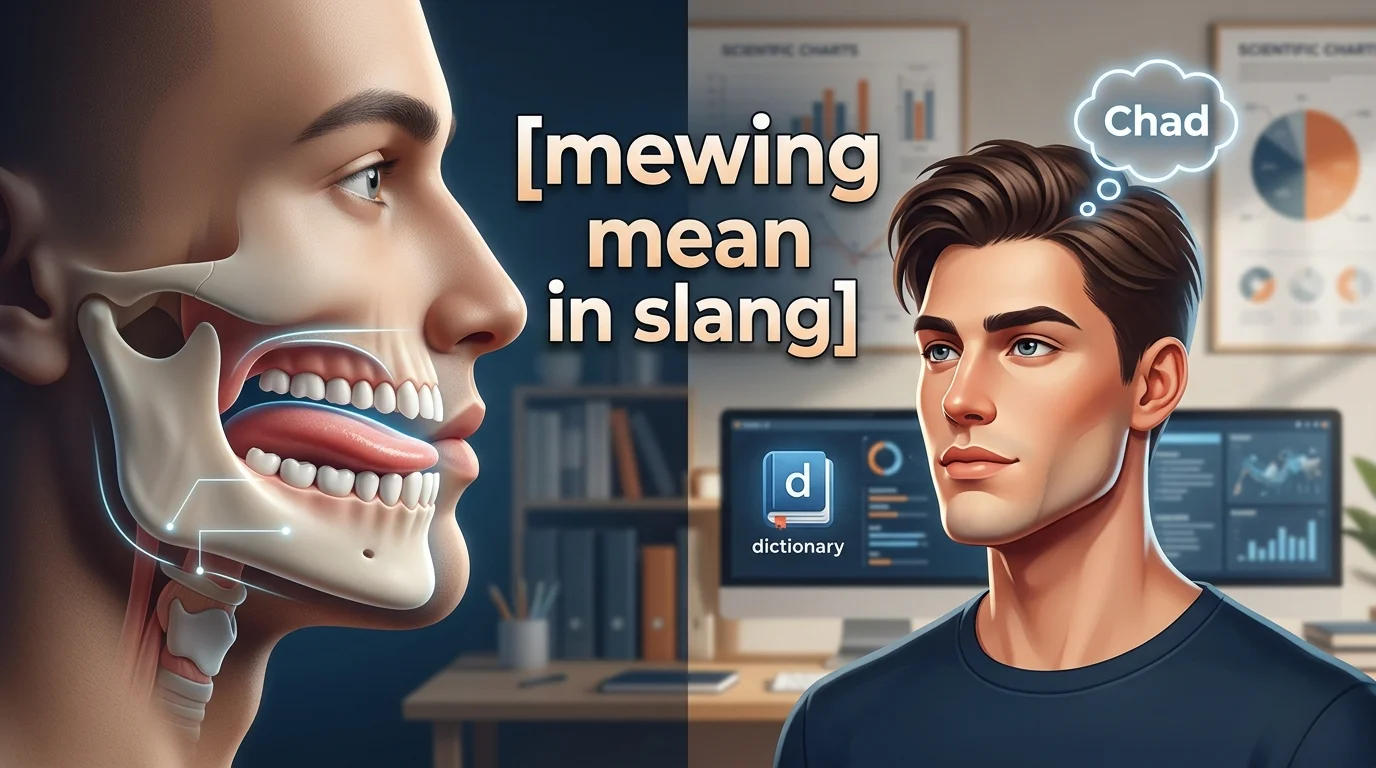
In modern internet culture, mewing as a slang concept refers to the act of shushing someone while highlighting your defined jawline, signaling that you are too busy working on your personal appearance or self-improvement (“looksmaxxing”) to engage in mindless banter.
Core Definition & Vibe
- Literal Origin: Pressing the tongue against the roof of the mouth to alter jaw structure.
- Slang Definition: A playful gesture to dismiss interruptions, showcase confidence, or flex an attractive aesthetic.
- Action: Shushing someone with a finger over the lips after stroking the jawline.
Examples in Daily Speech
“Sorry, I can’t answer your question right now, I’m literally mewing.”
“Did you see Jake silence the room by just running his finger along his jaw? Total mewing move.”
“Don’t bother interrupting her flow state; she’s locked in and mewing.”
From Orthodontics to Memes: Origin and Evolution
The Orthodontic Roots
The term originates from Dr. Mike Mew and Dr. John Mew, British orthodontists who pioneered an alternative practice called “orthotropics.” The core exercise involves resting your entire tongue flat against the palate, sealing your lips, and keeping your teeth lightly together. They claimed this posture could restructure facial bones over time.
The Looksmaxxing Boom
Around 2018, online communities focused on self-improvement and aesthetic refinement—often referred to as “looksmaxxing”—adopted the technique. Forums buzzed with before-and-after photos, turning an obscure dental habit into an online obsession among young men seeking sharper jawlines without surgery.
The Viral TikTok Takeover
By late 2023 and early 2024, the physical exercise transformed into a viral meme. Teens brought the practice into classrooms and social gatherings. It evolved into a non-verbal response: when a teacher or friend asks a question, the person simply strokes their jawline and presses a finger to their lips, communicating, “I can’t talk, I’m busy working on my jawline.”
Real-Life Conversations
TikTok Comment Section
Person A: Why are you ignoring everyone’s advice in the live stream?
Person B: 🤫🧏♂️ Can’t hear the haters, too busy mewing.
Instagram DMs
Person A: Are you coming out with us tonight or staying home again?
Person B: Staying home. Gym, sleep, and mewing. The streak doesn’t stop.
Text Message
Person A: Bro, you’ve been quiet in the group chat all day. You good?
Person B: Locked in. Mewing season is in full effect.
WhatsApp Group Chat
Person A: Who gave Sam permission to be this confident on his story?
Person B: He hit the jawline pose once and now he thinks he’s an international model!
The Emotional & Psychological Meaning Behind the Gesture
Slang rarely exists in a vacuum. The rise of this gesture reveals a deep psychological shift in how younger generations handle social pressure, aesthetics, and self-expression.
What the Gesture Expresses
At its core, the gesture combines playful arrogance with humorous self-awareness. It projects high confidence while gently mocking the very obsession with physical perfection that generated it.
Modern Digital Identity
Generation Z and Gen Alpha use non-verbal signals like this to establish inside-group identity. By making the gesture, you immediately signal that you understand digital lore. It converts potential awkwardness into a moment of shared humor.
A Real-World Observation
A middle school teacher recently shared an experience where half her class stopped talking simultaneously during a pop quiz, all making the jawline gesture in unison. It wasn’t intended as malice; rather, it functioned as an absurd, shared joke that relieved academic stress through humor.
Usage in Different Contexts
Social Media Feeds
On TikTok and Instagram, the gesture serves as a reaction format. Users post short clips showing dramatic jawline angles paired with viral audio tracks to collect likes and drive engagement.
Friends & Casual Outings
Among friends, using the term or gesture is almost entirely humorous. It acts as a friendly way to say “shut up” or “let me focus” without causing offense.
Professional Settings
This slang has zero place in a corporate or professional environment. Using it during a business meeting or job interview will likely be misconstrued as disrespect or extreme unprofessionalism.
When NOT to Use It
High-Stakes Environment
Avoid using the gesture or term around superiors, teachers, or employers who aren’t familiar with internet culture. The shushing motion easily comes across as impolite.
Serious Conversations
If someone is opening up to you emotionally or discussing a serious matter, responding with slang invalidates their feelings completely.
Cultural Sensitivity Concerns
Older adults or individuals outside the digital ecosystem may interpret the finger-to-lips gesture as hostile, aggressive, or dismissive rather than funny.
Common Misunderstandings
Myth vs. Reality
- Myth: Mewing is just a verbal slang word used in everyday sentences.
- Reality: It is primarily a non-verbal gesture accompanied by the word.
- Myth: Doing the slang gesture means you are genuinely performing orthotropic therapy.
- Reality: Most people using the slang are simply participating in a viral joke.
- Myth: It is an insult meant to bully others.
- Reality: It is almost always a self-referential flex or a harmless humor trend.
Slang Comparison Table
| Term / Gesture | Context / Vibe | Primary Intent | Target Audience |
| Mewing | Sarcastic flex / Beauty culture | Non-verbal shush + jawline showcase | Gen Z & Gen Alpha |
| Rizz | Charisma / Attraction | Flirting or charming someone | General Internet Users |
| Mogging | Competition / Aesthetics | Outshining someone visually | Gym & Looksmaxxing Circles |
| Gigachad | Ultra-masculine meme | Representing an idealized persona | Meme Communities |
| Sigma | Independent / Lone wolf | Signaling focus on self-improvement | Social Media Creators |
Key Insight
While terms like “Rizz” focus on charm and social connection, “Mewing” centers entirely on individual aesthetic focus and humorous non-verbal boundary setting.
Variations and Related Terms
- Bye Bye Meme: The viral sound effect usually paired with the jawline stroke video clips.
- Looksmaxxing: The broader subculture dedicated to maximizing physical attractiveness through grooming, diet, and exercises.
- Jawline Flex: Tracing the mandible to draw attention to facial bone structure.
- Mewing Streak: Playfully claiming you haven’t broken tongue posture for days or weeks.
- The Shush Pose: Combining the index finger against the lips with a side-profile tilt.
- Mogged: Realizing someone next to you has a sharper, more defined jawline.
- Can’t Talk Era: A period spent focusing entirely on self-improvement instead of dating or social drama.
- Sigma Grindle: The disciplined mindset often associated with silent self-improvement.
- Bone Smashing: A dangerous, extreme subculture offshoot that health professionals strongly advise against.
How to Respond When Someone Uses It
Casual & Friendly Responses
- “Alright, keep your jawline, I’ll keep talking!”
- “Fair enough, back to the grind.”
Funny & Witty Comebacks
- “Be careful, your tongue might get tired before your jaw does.”
- “Is that a jawline or are you just biting the inside of your cheek?”
Mature & Direct Replies
- “Joke aside, I actually need a real answer to this question.”
- “Let me know when you’re done flexing so we can finish this project.”
Respectful Responses
- “I hear you, take your time.”
- “Got it, back to business.”
Regional and Cultural Usage
Western Internet Culture
In North America, Western Europe, and Australia, the term functions as a mainstream meme across middle schools, high schools, and social platforms.
Asian Digital Spaces
Across platforms like Xiaohongshu or South Korean forums, jawline aesthetics have long been prized, but the trend manifests more as facial sculpting routines rather than the Americanized “shush” meme.
Middle Eastern Social Media
Popularity has grown steadily among fitness enthusiasts in urban centers, blending local gym humor with broader global meme formats.
Generational Divide
Gen Alpha (born 2010 onwards) and younger Gen Z embrace the gesture naturally. Millennials often view it with confusion, while Gen X generally finds the non-verbal shushing behavior puzzling or rude.
Is It Safe for Kids?
Yes, the concept itself is generally harmless. The slang and viral gesture revolve around facial posture, humor, and self-care memes.
However, parents should be aware that the broader “looksmaxxing” subculture behind it can occasionally push young teens toward unrealistic body standards or unhealthy obsessions with physical appearance.
Frequently Asked Questions
Does mewing actually work medically?
Medical consensus remains cautious. While proper tongue posture supports airway health and swallowing, structural bone changes in adults lack rigorous scientific backing without orthodontic intervention.
Why do kids shush people while pointing at their jaw?
They are performing the viral internet meme. It translates to: “I can’t talk right now because I’m practicing my jawline exercise.”
Is mewing an insult?
No, it is not inherently an insult. It is a lighthearted gesture used to mock excessive focus on physical vanity or to playfully decline answering a question.
Where did the jawline gesture sound originate?
The viral trend on TikTok popularized using the song “Give It To Me” by Timbaland, specifically pitched-down audio clips that match the dramatic side-profile reveal.
Is mewing popular outside of social media?
Yes, it has crossed over into real-world environments like schools, sports teams, and social gatherings as a physical running joke.
Final Thoughts on Modern Slang
Slang evolves faster than ever, turning obscure dental terms into global social signals overnight. Understanding concepts like this isn’t just about keeping up with teens; it’s about appreciating how digital communication continuously blends physical humor, audio trends, and visual language.
Next time someone gives you the silent treatment while pointing at their jawline, you won’t need to double-check your phone—you’ll know exactly what’s happening. Embrace the humor, keep the conversation moving, and stay confident in your modern vocabulary.