Understanding the Search Behind CNC in Modern Sexuality
If you stumbled upon the acronym CNC while scrolling through social media, browsing adult forums, or reading relationship discussions, you likely wondered what it actually stands for.
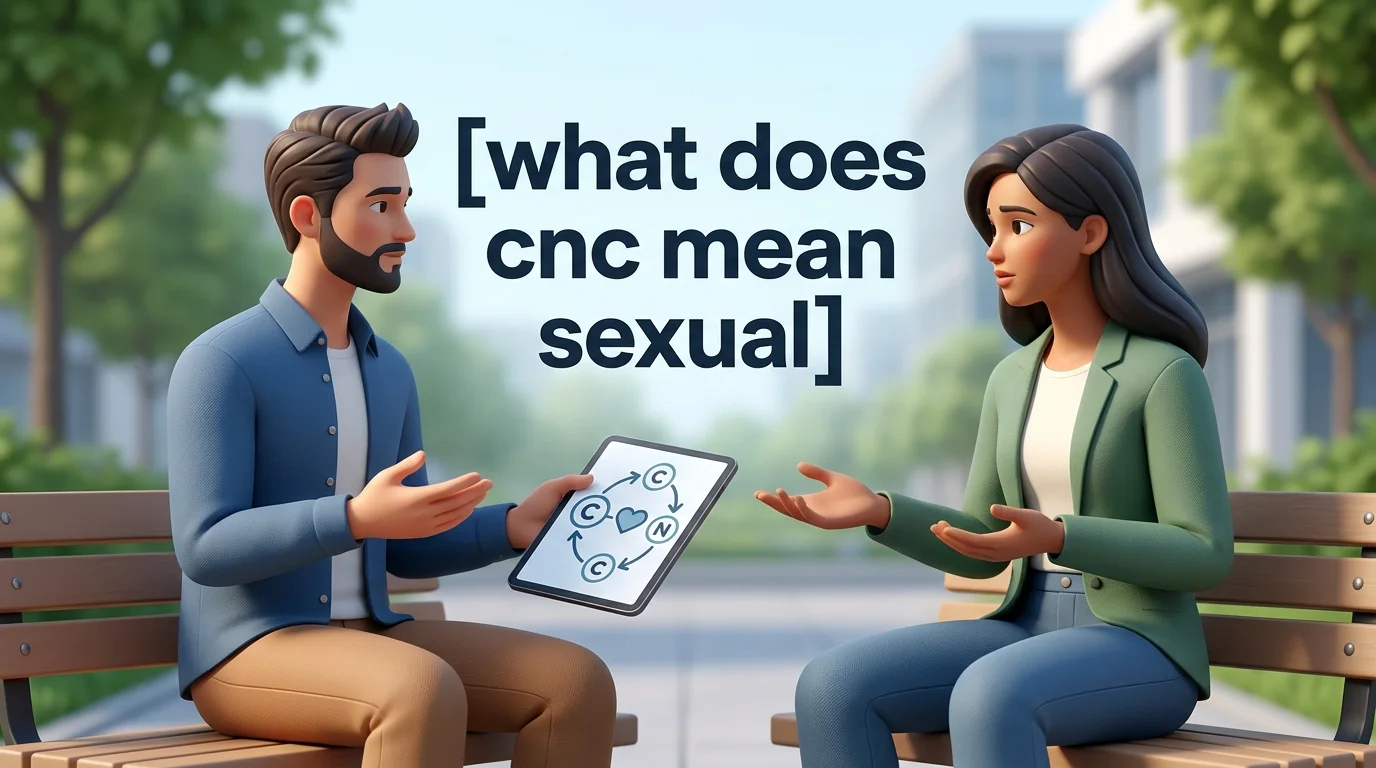
In the realm of modern relationships and kink culture, CNC stands for Consensual Non-Consent.
People search for this term because it appears with increasing frequency across digital spaces, yet its precise definition remains widely misunderstood outside specialized communities.
Navigating intimacy terminology can feel overwhelming. Understanding this specific concept helps clear up confusion around sexual safety, communication, and BDSM dynamics.
What Does CNC Mean Sexually? A Quick Breakdown
At its core, Consensual Non-Consent (CNC) refers to a practice where partners negotiate consent prior to engaging in a roleplay scenario that simulates non-consensual sexual acts.
Despite the paradoxical name, explicit and informed agreement forms the foundational requirement of the practice.
+-----------------------------------------------------------------------+
|                        THE DYNAMICS OF CNC                            |
+-----------------------------------------------------------------------+
|  [ Advance Negotiation ]  -->  [ Pre-Agreed Boundaries & Safewords ]  |
|                                                  |                    |
|                                                  v                    |
|  [ Real-Time Consent ]    <--  [ Acted Scenario (Simulated Force) ]  |
+-----------------------------------------------------------------------+
Essential Elements of CNC
- Prior Consent: Detailed discussions occur well before any physical interaction begins.
- Safewords: Clear verbal or physical signals are established to instantly pause or terminate the activity regardless of the scenario’s script.
- Strict Boundaries: Both partners outline precise hard limits (what is completely off-limits) and soft limits (what requires caution).
- Trust & Communication: The dynamic relies on an exceptionally high level of interpersonal trust and active communication.
Real-World Scenarios
“We spent two hours discussing our boundaries and setting up two distinct safewords before even considering a fantasy roleplay scenario.”
“During the scene, it might look like one person is resisting, but it’s an act governed entirely by the rules we established over dinner three days ago.”
“If my partner uses our safeword—say, ‘Red’—everything stops instantly. No questions asked, no debate.”
Origin, Background, and Cultural Evolution
The concept of simulating power dynamics within intimate contexts is not new, but the formal acronym gained prominence alongside the broader adoption of BDSM terminology in the late 20th and early 21st centuries.
Historical Context and Kink Culture
Historically, power-exchange dynamics existed informally within private relationships. As kink communities organized online during the late 1990s and early 2000s, standardized terminology emerged to prioritize participant safety and clear boundary setting.
The Impact of Modern Media
Popular media and literature brought fringe sexual dynamics into mainstream awareness. Books and film adaptations featuring explicit power exchanges normalized discussions around kink, leading curious readers to research specific practices online.
Social Media and Digital Evolution
Platforms like TikTok, Reddit, and Twitter (X) accelerated the spread of sexual health terminology. Gen Z and Millennial users frequently discuss relationship dynamics, boundary negotiation, and sexual psychology publicly, bringing once-niche acronyms like CNC into standard online conversations.
Real-Life Conversations Around CNC
Understanding how this terminology surfaces in daily communication helps contextualize its usage among partners and online communities.
WhatsApp Conversation: Boundary Discussion Between Partners
Partner A: Hey, loved our talk last night. Are you still open to exploring that roleplay scenario we mentioned?
Partner B: I am, but only if we strictly use a CNC framework. We need to set up clear safewords first.
Partner A: Absolutely. Let’s write down our hard limits tonight so we are 100% on the same page.
Instagram DM: Asking for Clarification
User A: I saw that post about kink education. What does CNC actually mean in practice?
User B: It means Consensual Non-Consent! It’s a BDSM practice where partners pre-agree to a scenario involving simulated force, but with absolute safety protocols like safewords.
TikTok Comment Section: Clearing Misconceptions
Commenter A: Wait, isn’t non-consent literally the opposite of consent? How does that work?
Commenter B: The key word is Consensual at the start. Consent is given beforehand for a specific scene. If someone says the safeword, it stops immediately!
Text Message: Checking In After Aftercare
Partner A: Hey, how are you feeling after our scene earlier?
Partner B: Doing great! The aftercare really helped me ground myself. Thanks for respecting all my boundaries.
Emotional and Psychological Foundations
Why do individuals choose to engage in roleplay that simulates a loss of control? Psychological research into human sexuality reveals several compelling motivations.
       ┌────────────────────────────────────────────────────────┐
       │                PSYCHOLOGICAL DRIVERS                   │
       └────────────────────────────────────────────────────────┘
                                    │
         ┌──────────────────────────┼──────────────────────────┐
         ▼                          ▼                          ▼
┌──────────────────┐       ┌──────────────────┐       ┌──────────────────┐
│ Stress Release & │       │ Trauma Processing│       │ High Trust &     │
│ Catharsis        │       │ & Control        │       │ Intimacy         │
└──────────────────┘       └──────────────────┘       └──────────────────┘
Psychological Drivers behind CNC
- Stress Release and Catharsis: Relinquishing control in a safe, controlled environment allows individuals who carry heavy everyday responsibilities to experience total mental relief.
- Trauma Processing and Mastery: Some individuals use structured roleplay under strict safety protocols to re-experience and gain psychological control over past uncomfortable experiences on their own terms.
- Intense Intimacy and Trust: Executing a scenario requiring extreme vulnerability deepens emotional connection between long-term partners.
A Practical Scenario
Consider an executive who manages hundreds of employees daily, making high-stakes decisions under continuous stress. In their private life, they may seek scenes where they surrender control entirely to a trusted partner.
Because safety parameters are absolute, their brain can disengage from responsibility, achieving deep relaxation through psychological surrender.
Usage Contexts: Where Is It Appropriate?
Given the sensitivity of the term, context determines when and where discussing it remains appropriate.
+---------------------------------------------------------------------+
|                         CONTEXT MATRIX                              |
+---------------------------------------------------------------------+
|  Context                   |  Appropriateness Level                 |
+----------------------------+----------------------------------------+
|  Sexual Health / Therapy   |  [ High ] Appropriate & Educational    |
|  Private Romantic Partner  |  [ High ] Requires Trust & Communication|
|  Kink / BDSM Forums        |  [ High ] Standard Terminology          |
|  Casual Social Media       |  [ Medium ] Needs Clear Context        |
|  Workplace / Professional  |  [ Low ] Inappropriate                 |
+----------------------------+----------------------------------------+
Social Media & Public Forums
On educational platforms, the term is used strictly in informative contexts regarding consent, relationship design, and kink safety.
Private Relationships
Among romantic partners, the term serves as an analytical anchor for negotiating complex roleplay scenarios safely and maturely.
Workplace & Professional Settings
The term is strictly unsuitable for casual workplace conversation due to its explicit adult nature. It should only appear in professional settings related to sex therapy, clinical psychology, or legal/ethical safety seminars.
When NOT to Use the Term
Misusing sexual health terminology can create severe misunderstandings or emotional discomfort.
Critical Exclusions
- Without Prior Relationship Context: Never bring up advanced sexual terminology with someone you do not know well or haven’t established mutual trust with.
- In Casual or Flirtatious Banter: CNC represents a structured safety framework, not a casual pickup line or light flirtation.
- When True Consent Is Lacking: If explicit, informed agreement and active safewords are absent, the scenario is not CNC—it is non-consensual activity.
Common Misunderstandings and Myths
Several misconceptions surround this advanced dynamic due to poor media representation and lack of formal sex education.
+-----------------------------------------------------------------------+
|                       MYTH VS. REALITY MATRIX                         |
+-----------------------------------------------------------------------+
|  Myth                                |  Reality                       |
+--------------------------------------+--------------------------------+
|  CNC implies actual lack of consent. |  Consent is granted beforehand |
|                                      |  and can be revoked instantly. |
|                                      |                                |
|  Safewords are optional.             |  Safewords are absolute and    |
|                                      |  mandatory for safety.         |
|                                      |                                |
|  It reflects real-world violence.    |  It is a controlled, consensual|
|                                      |  psychological exercise.       |
+--------------------------------------+--------------------------------+
Clarifying the Nuances
- Literal vs. Figurative: The “non-consent” element exists purely as an acted performance within a pre-agreed boundary frame.
- The Absolute Authority of the Safeword: In standard interactions, “no” might be part of the script. Therefore, a designated safeword (e.g., “Red”) overrides all act parameters instantly.
Terminology Comparison Table
Understanding how CNC relates to other sexual health and kink terms clarifies its exact position in relationship dynamics.
| Term | Category | Primary Definition | Key Difference from CNC |
|---|---|---|---|
| CNC | Kink / BDSM | Consensual Non-Consent; simulated resistance with advance agreement. | Core focus on pre-negotiated power exchange and safewords. |
| BDSM | Broad Category | Bondage, Discipline, Dominance, Submission, Sadism, Masochism. | CNC is a sub-category within the larger BDSM umbrella. |
| SSC | Ethical Guideline | Safe, Sane, and Consensual; standard code of conduct for kink. | SSC is a safety philosophy applied to practices like CNC. |
| RACK | Ethical Guideline | Risk-Aware Consensual Kink; acknowledges inherent risks in play. | Framework emphasizing informed risk management over absolute safety. |
| Vanilla | General Sexuality | Conventional sexual preferences or practices without kink elements. | Opposite of kink-based or power-exchange dynamics. |
| Primal Play | Kink Sub-Type | Instinct-driven play focusing on raw physical power or instincts. | Focuses on basic animalistic urges rather than specific scripts. |
| Somnophilia | Specific Fantasy | Roleplay or dynamic involving sleep scenarios. | Focuses specifically on unconscious or sleeping dynamics. |
Key Insight
While mainstream media often conflates all non-traditional relationship dynamics, CNC represents a specific, highly regulated subset of BDSM built entirely around pre-planned boundaries and strict safety mechanics.
Variations and Related Terminology
To fully grasp conversations around advanced consent dynamics, familiarize yourself with these related variations and acronyms:
1. Hard Limits
- Meaning: Non-negotiable boundaries.
- Explanation: Activities that partners agree never to perform under any circumstances during a scene.
2. Soft Limits
- Meaning: Flexible boundaries requiring caution.
- Explanation: Activities partners might explore under specific conditions or with extra communication.
3. Safeword
- Meaning: A pre-determined code word.
- Explanation: A distinct word or phrase used to instantly halt all activity during a scenario.
4. Traffic Light System
- Meaning: A simple safety coding protocol.
- Explanation: Using “Green” (keep going), “Yellow” (slow down/check in), and “Red” (stop immediately) to communicate during play.
5. Aftercare
- Meaning: Post-scene emotional and physical recovery.
- Explanation: Dedicated time spent cuddling, talking, hydrating, and re-grounding after intense emotional or physical scenes.
6. Scene
- Meaning: A discrete period of kink activity.
- Explanation: The bounded timeframe during which pre-negotiated roleplay occurs.
7. Negotiation
- Meaning: Pre-play boundary mapping.
- Explanation: Detailed discussions held prior to scenes to outline exact rules, limits, and desires.
8. Submissive (Sub)
- Meaning: The partner surrendering control.
- Explanation: The participant who voluntarily gives decision-making power to the other within pre-agreed limits.
9. Dominant (Dom)
- Meaning: The partner directing the scene.
- Explanation: The participant who takes charge of guiding the scenario while upholding all established safety rules.
How to Respond When Someone Mentions CNC
Responding appropriately depends on the context and your personal comfort level with the topic.
       ┌────────────────────────────────────────────────────────┐
       │                 RESPONSE FRAMEWORK                     │
       └────────────────────────────────────────────────────────┘
                                    │
         ┌──────────────────────────┼──────────────────────────┐
         ▼                          ▼                          ▼
┌──────────────────┐       ┌──────────────────┐       ┌──────────────────┐
│  Casual / Direct │       │  Educational     │       │ Boundary-Setting │
│  "Thanks for clarifying" │ "Consent is key" │ "Not my preference" │
└──────────────────┘       └──────────────────┘       └──────────────────┘
Casual Responses
“Ah, thanks for explaining that—I’ve seen that acronym popping up everywhere lately.”
“Got it! Good to know it’s all about advance communication and safewords.”
Educational / Mature Responses
“It’s interesting how crucial communication and pre-negotiated boundaries are for those dynamics.”
“It really highlights how important explicit consent and aftercare are in modern kink safety.”
Setting Personal Boundaries
“I understand what the term means now, but I prefer to keep our conversations away from explicit sexual topics.”
“Thanks for explaining, but that kind of dynamic isn’t something I personally engage in or enjoy discussing.”
Regional, Cultural, and Generational Perspectives
Cultural background significantly shapes how society views and discusses advanced relationship dynamics.
Western Culture
In North America and Western Europe, discussions around sexual health, kink, and consent frameworks are increasingly integrated into mainstream digital culture, wellness podcasts, and modern relationship therapy.
Asian and Middle Eastern Cultures
In many traditional Asian and Middle Eastern societies, explicit discussions around adult topics remain private. While individuals within these regions participate in kink communities, terminology is typically shared within discreet, private digital channels rather than public forums.
Generational Differences: Gen Z vs. Millennials
+-----------------------------------------------------------------------+
|                       GENERATIONAL APPROACH                           |
+-----------------------------------------------------------------------+
|  Gen Z                                |  Millennials                  |
+---------------------------------------+-------------------------------+
|  • Uses clinical/educational terms    |  • Discovered terms through   |
|    openly on social platforms.        |    early internet forums.     |
|                                       |                               |
|  • Prioritizes explicit boundary      |  • Tends to keep discussions  |
|    vocabularies in daily speech.      |    within specific communities|
+---------------------------------------+-------------------------------+
Is It Safe or Appropriate for Minors?
No. CNC content, concepts, and discussions are strictly intended for consenting adults (18+).
Because these dynamics involve advanced psychological concepts, explicit sexual themes, and complex boundary negotiations, they require mature emotional intelligence and complete legal capacity to give informed consent.
Educational resources regarding these subjects belong in adult sexual health frameworks and mature relationship educational spaces.
Frequently Asked Questions
Is CNC legal between consenting adults?
Yes, private adult sexual activities conducted with mutual consent between legal adults are legal in most democratic jurisdictions. However, physical harm protocols vary by country, making clear safewords and personal safety paramount.
How does a safeword work during a scenario?
A safeword is a pre-agreed term that immediately breaks the roleplay script. Once spoken, all physical and verbal actions stop instantly, and partners transition into aftercare or check-in modes.
Can someone withdraw consent during a CNC scene?
Yes. Consent is revocable at any second. Using a safeword or non-verbal stop signal revokes consent instantly, requiring the immediate cessation of the activity.
What is the difference between non-consent and CNC?
Non-consent refers to actions taken without agreement, which is illegal and non-consensual. CNC involves prior informed consent, explicit boundary mapping, and strict safeword systems governing a controlled scenario.
Why is aftercare important after a scene?
Aftercare helps participants transition emotionally and physically out of intense psychological scenes back into reality through comforting actions like hugging, talking, hydrating, and resting.
Final Thoughts on Understanding CNC
Deciphering modern sexual terminology comes down to understanding one core principle: communication.
While the acronym Consensual Non-Consent might sound contradictory at first glance, its actual application relies entirely on absolute transparency, mutual trust, pre-planned limits, and active consent.
Whether you encountered this term in online discussions or sexual health literature, recognizing the strict safety protocols behind it demystifies the concept and fosters informed, mature conversations around human intimacy.