What Does the Rose Emoji Mean in Modern Texts?
Few symbols carry as much historical weight, romantic tension, and digital versatility as the simple red rose emoji 🌹.
Whether it drops into your Instagram DMs late at night, pops up in a TikTok comment section, or sits quietly in a Twitter bio, this vibrant flower carries layers of meaning.
People search for the meaning of this emoji because digital communication often lacks physical tone, eye contact, and body language.
A single flower icon can shift a message from friendly to flirtatious, or from supportive to politically charged, leaving you wondering what the sender truly meant.
Understanding these subtle digital signals prevents awkward misunderstandings and helps you navigate online conversations with confidence.
What Does the Rose Emoji Mean? – Quick Meaning
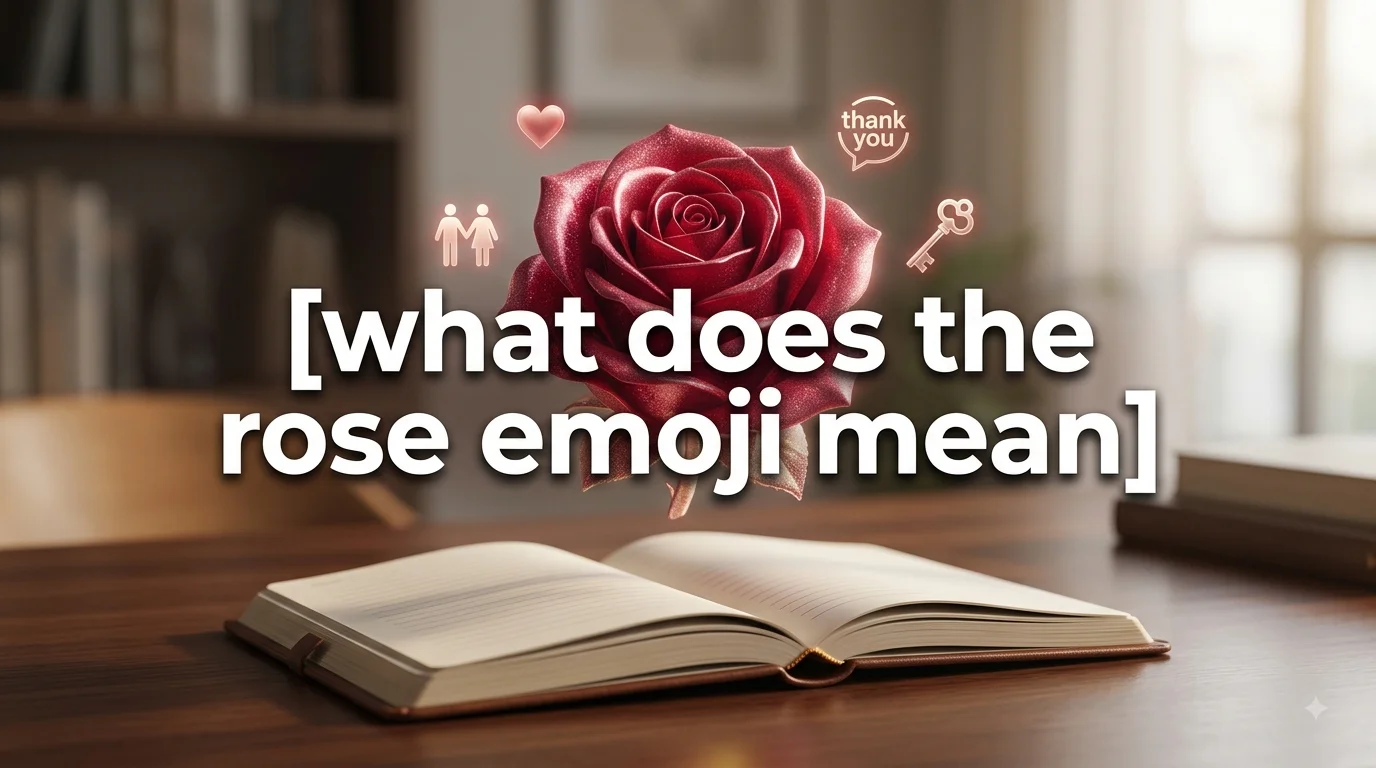
At its core, the rose emoji represents romance, passion, deep affection, and classic elegance.
It acts as the digital equivalent of handing someone a fresh, long-stemmed red rose in real life.
However, its meaning shifts fluidly depending on who sends it, where it appears, and the words accompanying it.
- Romance and Attraction: Used to express love, crush-level admiration, or romantic interest.
- Sympathy and Respect: Sent during times of grief, loss, or to show deep honor toward someone.
- Political Solidarity: Functions globally as an emblem for democratic socialism and social justice movements.
- Platform Praise: Dropped in comment sections to compliment beauty, talent, or exceptional content.
“Thanks for helping me prep for that interview today 🌹” — A gesture of genuine gratitude and warmth.
“You looked absolute stunning tonight 🌹✨” — A clear, direct romantic compliment.
“Rest in peace to an absolute legend 🌹” — A signal of solemn respect and mourning.
Origin & Background of the Rose Emoji
From Unicode Standard to Screen Screens
The rose emoji was officially approved as part of Unicode 6.0 back in 2010 and added to Emoji 1.0 in 2015.
Before smart devices rendered detailed vector graphics, text-based floral emoticons were already popular in early chat rooms and forum signatures.
As display technology evolved, digital designers crafted the icon to mirror the classic red Rosa species, complete with a green stem and subtle leaves.
Cultural Influence and Evolution
For centuries, red roses have symbolized passion, beauty, and devotion across literature, art, and folklore.
Shakespeare utilized floral symbolism extensively, and Victorian floriography assigned strict, secret meanings to specific flowers.
The digital rose inherited this rich cultural legacy, making it instantly recognizable across languages and geographical borders.
Social Media Impact
Platforms like TikTok, Instagram, and X (formerly Twitter) reshaped how the rose functions everyday.
It transformed from a purely romantic symbol into a universal badge of aesthetic appreciation and personal identity.
Today, seeing a rose in someone’s profile bio can reveal their political alignment, artistic taste, or relationship status in a single glance.
Real-Life Conversations
WhatsApp Chat: Early Stage Flirting
Person A: I had such a great time grabbing coffee with you today!
Person B: Me too! We definitely need to do it again soon 🌹
Person A: Name the day, I’m free all weekend!
Instagram DMs: The Direct Compliment
Person A: Posts a story wearing a dress for a formal event
Person B: Unbelievable look 🌹 drop dead gorgeous!
Person A: Thank you so much! You’re sweet 🥰
TikTok Comment Section: Creator Support
Person A: Uploads an incredible vocal cover of a classic soulful song
Person B: Voice of an absolute angel 🌹 viral moment incoming!
Person A: Ahhh thank you for listening!! ❤️
Text Message: Showing Sympathy
Person A: Hey, I heard about your grandmother passing. Thinking of you today.
Person B: Thanks so much for reaching out, it means a lot to the family.
Person A: Sending you guys so much love and light 🌹
Emotional & Psychological Meaning
What Emotion Does It Express?
Sending a rose conveys intentionality, warmth, and deliberate sentimentality that faster, casual emoticons cannot replicate.
Unlike a generic yellow heart or a laughing face, the rose slows down the pace of a conversation.
It communicates emotional depth, suggesting the sender took an extra second to select a symbol associated with grace and value.
Why People Use It Over Other Icons
Standard red hearts can sometimes feel overly intense, while simple thumbs-up icons feel cold or transactional.
The rose offers a unique middle ground—it feels warm and expressive without always forcing a strong commitment.
Psychologically, receiving a floral icon activates associations with physical gifts, triggering feelings of being valued, noticed, and pursued.
A Real-Life Perspective
During my early years analyzing digital discourse, a colleague shared how a simple rose emoji altered a professional connection.
An acquaintance sent a rose along with a thank-you note following a collaborative workshop.
The gesture subtly shifted their interaction from strictly business to a warm, lasting mentorship, proving how small visual cues soften human interaction.
Usage in Different Contexts
Social Media Feeds and Profiles
On social platforms, users place the rose in bios to showcase an aesthetic vibe, romantic nature, or socio-political belief.
In comment sections, it serves as high praise for stunning photography, impressive art, or captivating performances.
Friends and Relationships
Between close friends, the rose offers gentle encouragement, celebrates personal milestones, or expresses heartfelt gratitude.
In romantic settings, it signals interest, keeps a flirtatious spark alive, or celebrates anniversaries and sweet moments.
Work and Professional Settings
Exercise extreme caution using this emoji in corporate channels like Slack, Teams, or professional emails.
Unless you share a close, long-standing rapport with a coworker, colleagues might mistake the symbol for workplace flirting.
Casual vs. Serious Tone
In casual chats, pairing the rose with playful sparkles ✨ lightens the mood and keeps things friendly.
When used alone or in solemn contexts, the icon maintains serious, respectful weight suitable for condolences or formal praise.
When NOT to Use It
Professional and Workplace Communications
Avoid adding a rose emoji when emailing clients, managers, or new professional contacts.
Professional communications require clear boundaries, and romantic symbols can blur professional lines unnaturally.
Serious Conflicts or Arguments
Sending a rose during an active disagreement can appear passive-aggressive, condescending, or dismissive.
Real emotional resolution requires sincere words rather than decorative botanical symbols.
Situations Prone to Misinterpretation
If you want to maintain purely platonic boundaries with someone who harbors a crush on you, avoid sending roses.
The underlying romantic undertones can easily give someone false hope or mixed signals.
Common Misunderstandings
Overlooking the Political Meaning
Many users remain unaware that the red rose represents democratic socialism globally.
Adding it to a bio purely for aesthetic purposes might inadvertently broadcast a political stance you do not hold.
Confusing Romance with Platonic Admiration
People frequently mistake a friendly compliment for a romantic declaration when a rose appears in a message.
Always examine the overall text context rather than focusing strictly on the emoji itself.
Literal vs. Figurative Intent
Sometimes a rose is just a rose—the sender might simply love gardening, floristry, or nature photography.
Avoid over-analyzing every single floral icon when the surrounding conversation remains entirely neutral.
Emoji Comparison Table
| Symbol / Slang | Primary Meaning | Tone / Vibe | Best Used For |
|---|---|---|---|
| Rose Emoji 🌹 | Romance, elegance, respect, solidarity | Warm, classic, intentional | Flirting, compliments, condolences |
| Red Heart ❤️ | Deep love, strong affection, family bond | Passionate, direct, intense | Close loved ones, partners, family |
| Wilted Flower 🥀 | Heartbreak, sadness, loss, burnout | Melancholic, dramatic | Expressing grief, disappointment |
| Bouquet 💐 | Celebration, congratulations, gratitude | Joyful, formal, celebratory | Birthdays, achievements, mother’s day |
| Hibiscus 🌺 | Exotic beauty, summer, casual warmth | Relaxed, cheerful, artistic | Vacation posts, friendly praise |
Key Insight
While hearts express direct, personal emotion, floral emojis add decorative nuance, letting you modulate intensity without losing emotional warmth.
Variations and Related Types
The Wilted Rose 🥀
- Short Meaning: Heartbreak and sadness.
- Explanation: Represents faded love, emotional pain, exhaustion, or deep personal disappointment in a situation.
The Bouquet 💐
- Short Meaning: Celebration and pride.
- Explanation: Used to congratulate someone on big accomplishments like graduations, weddings, or career promotions.
The White Flower 💮
- Short Meaning: Purity or well-done work.
- Explanation: Often used in Asian school contexts as a stamp of approval or high achievement.
The Cherry Blossom 🌸
- Short Meaning: Innocence and spring.
- Explanation: Symbolizes new beginnings, gentle beauty, soft aesthetics, and seasonal changes.
The Sunflower 🌻
- Short Meaning: Pure happiness and loyalty.
- Explanation: Radiates positivity, warmth, sunshine, and bright, unconditional friendship.
The Hibiscus 🌺
- Short Meaning: Island vibes and delicate charm.
- Explanation: Perfect for travel posts, summer outfits, and relaxed, friendly compliments.
The Tulip 🌷
- Short Meaning: Fresh starts and gentle affection.
- Explanation: Represents spring energy, quiet romance, and thoughtful care for another person.
The Blossom 🌼
- Short Meaning: Simplicity and peace.
- Explanation: Communicates serene energy, nature love, and lighthearted, uncomplicated joy.
How to Respond When Someone Uses It
Casual & Friendly Replies
- “Aww, thanks! You’re the best 😊”
- “Appreciate the love! Hope your week is going great.”
- “Thank you! That just made my afternoon.”
Flirty & Playful Replies
- “Careful, or I might think you actually like me 😉”
- “A rose for me? You shouldn’t have 🌹”
- “Does this mean I get a real one on our date?”
Mature & Professional Replies
- “Thank you for the kind words, much appreciated.”
- “I really value your support on this project.”
- “Thank you for thinking of me during this time.”
Respectful Condolence Replies
- “Thank you for your warmth and prayers, it means the world.”
- “Your support brings comfort to our whole family right now.”
- “Grateful for your thoughtful thoughts today.”
Regional & Cultural Usage
Western Digital Culture
In Western nations, the rose predominantly signals romance, dating culture, Valentine’s Day energy, and chivalry.
It remains a go-to icon for online dating profiles on Tinder, Hinge, and Bumble to signal romantic intent.
Asian Digital Spaces
In many Asian cultures, floral icons carry broader associations with respect, seasonal aesthetics, and politeness.
While romantic uses exist, sending flowers frequently expresses polite gratitude or honors elder achievements without romantic undertones.
Middle Eastern Contexts
Across Middle Eastern digital communications, floral icons—especially roses—are standard additions to everyday greetings.
They serve as tokens of deep hospitality, warmth, respect, and honorable friendship between acquaintances.
Generational Shifts: Gen Z vs. Millennials
Millennials tend to use the rose emoji in a traditional, literal sense for romance, affection, and sweet compliments.
Gen Z often employs the icon ironically, artistically in bio aesthetics, or strictly to signify democratic socialist ideology online.
Is It Safe for Kids?
Yes, the rose emoji is completely safe for children and teenagers to use across digital platforms.
Unlike certain double-entendre emojis, the rose maintains a clean, classic reputation tied strictly to beauty, romance, and art.
Parents should simply ensure kids understand standard internet safety regarding online friendships and privacy boundaries.
Frequently Asked Questions
What does the rose emoji mean from a guy?
When a guy sends a rose emoji, it usually signals flirtatious interest, romantic attraction, or a polite compliment about your appearance or personality.
What does the rose emoji mean in a Twitter or X bio?
A rose in a bio often indicates political alignment with democratic socialism, or simply serves as a decorative, romantic aesthetic choice for the profile owner.
Is the rose emoji romantic or platonic?
It can be both. While primarily romantic, context determines whether it expresses deep love, sweet platonic support, or solemn respect during grief.
What does the wilted rose emoji mean compared to the fresh rose?
The wilted rose 🥀 signifies heartbreak, lost love, emotional exhaustion, or grief, directly contrasting the fresh rose’s 🌹 life and passion.
Does the rose emoji have a political meaning?
Yes, globally, the red rose serves as a historical symbol for democratic socialism, labor rights movements, and social justice organizations.
Conclusion
Understanding digital nuance turns confusing text exchanges into clear, confident connections.
The rose emoji remains one of the most expressive symbols in our digital lexicon, bridging the gap between historical romance and modern internet culture.
Whether you use it to flirt with a crush, support a favorite creator, or express heartfelt sympathy, this timeless icon adds grace and emotion to your messages.
Use it intentionally, read the room carefully, and let your online conversations bloom naturally.